Our Last Season – Part 4
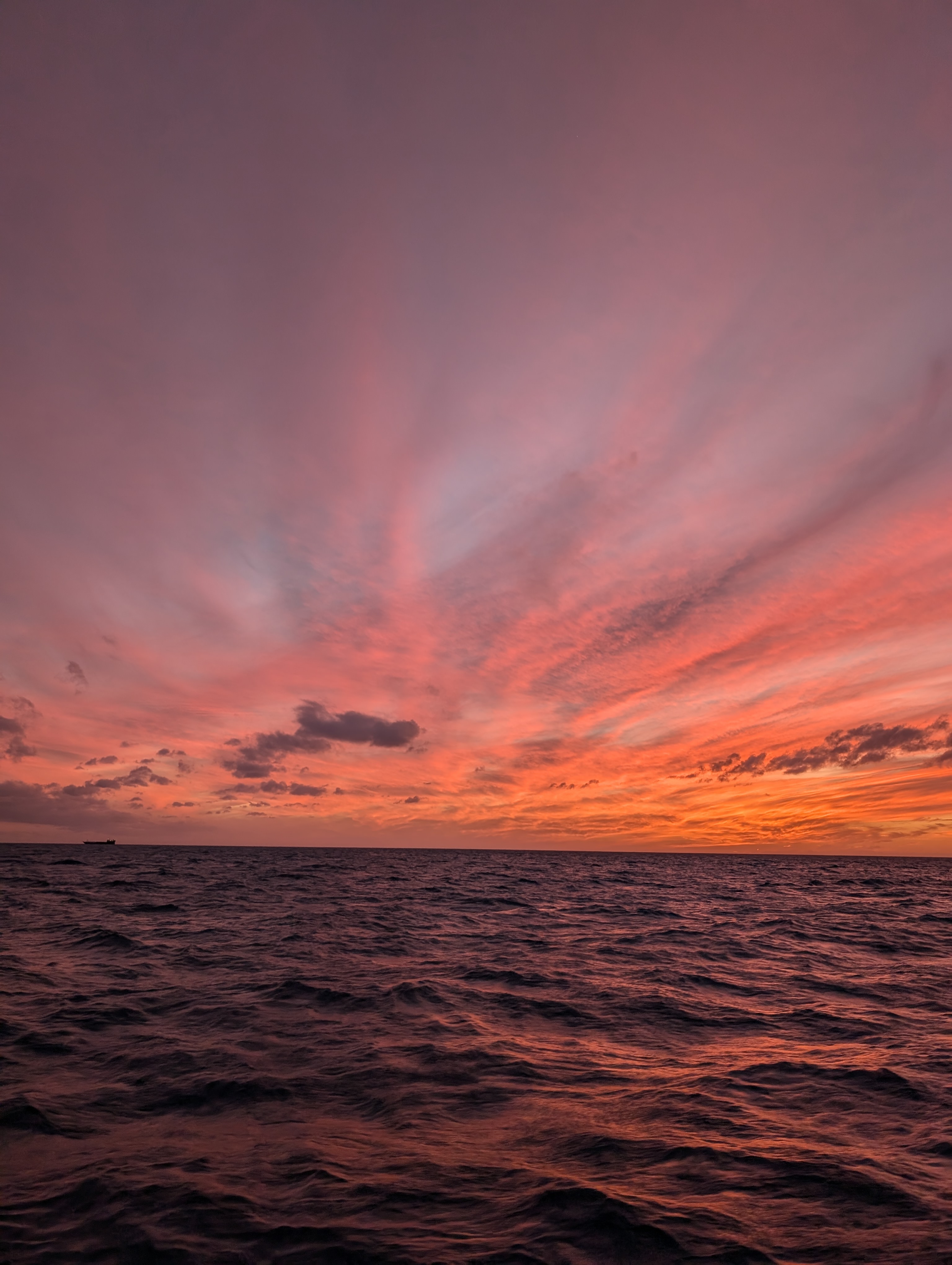
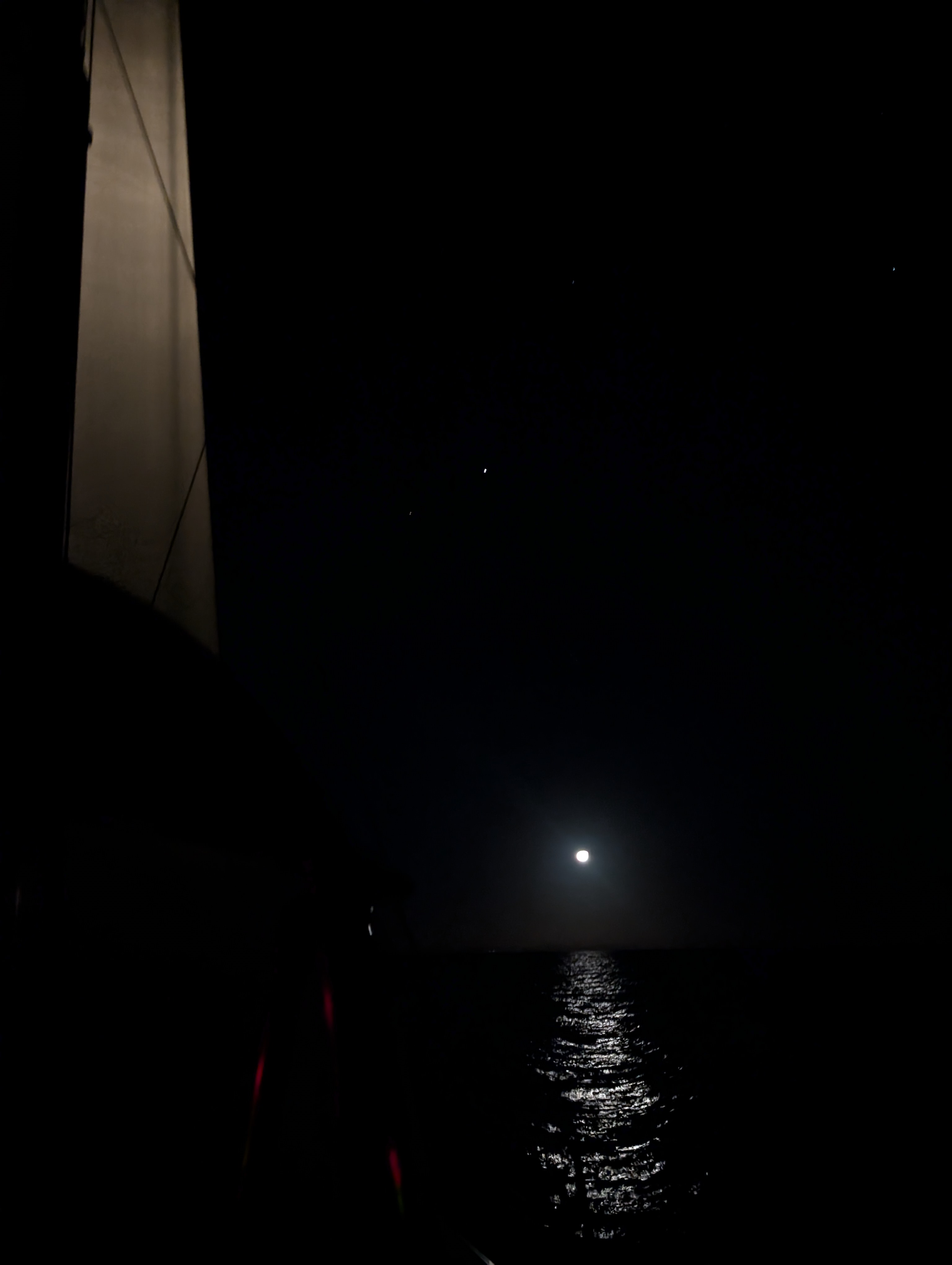
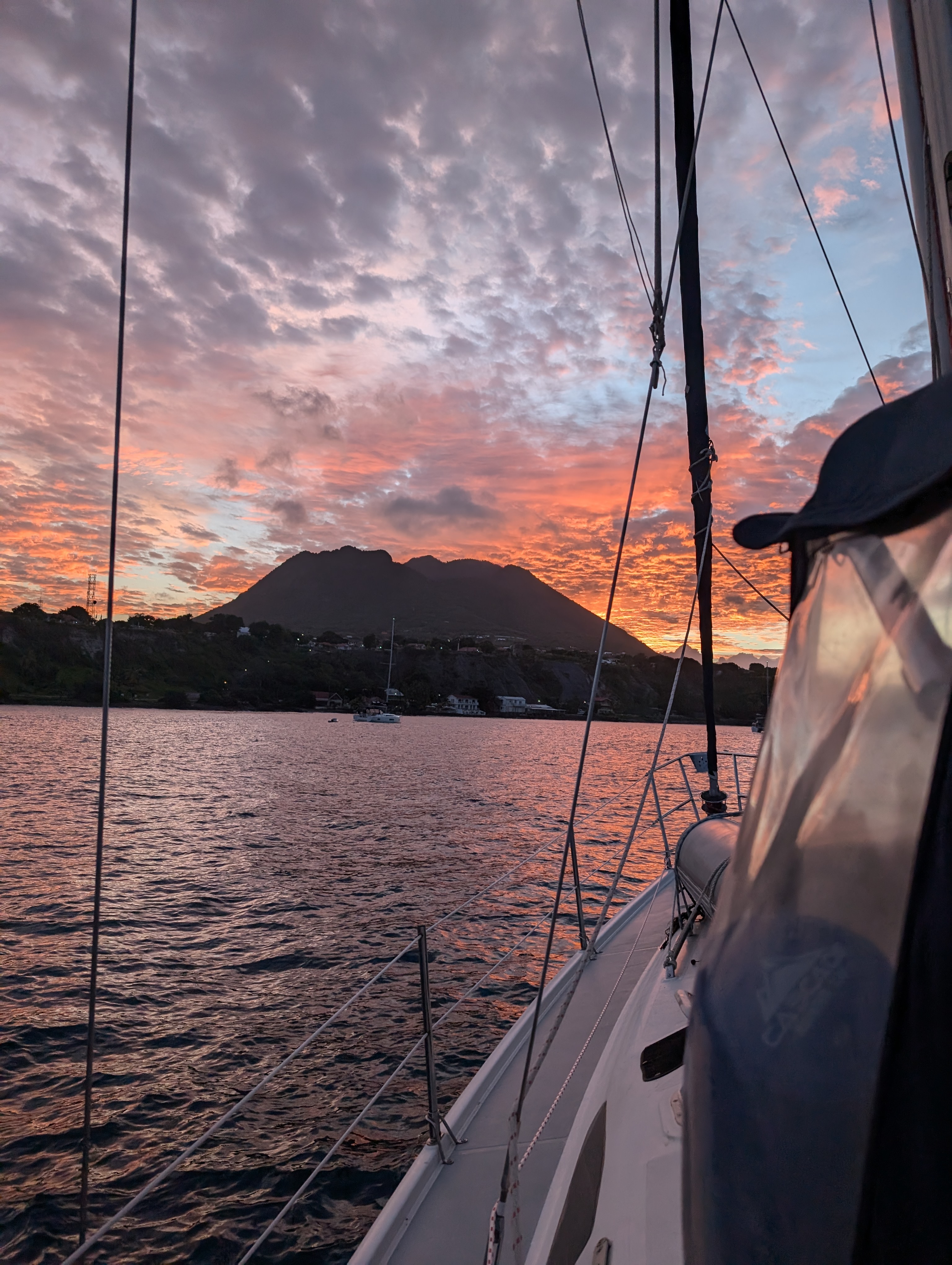
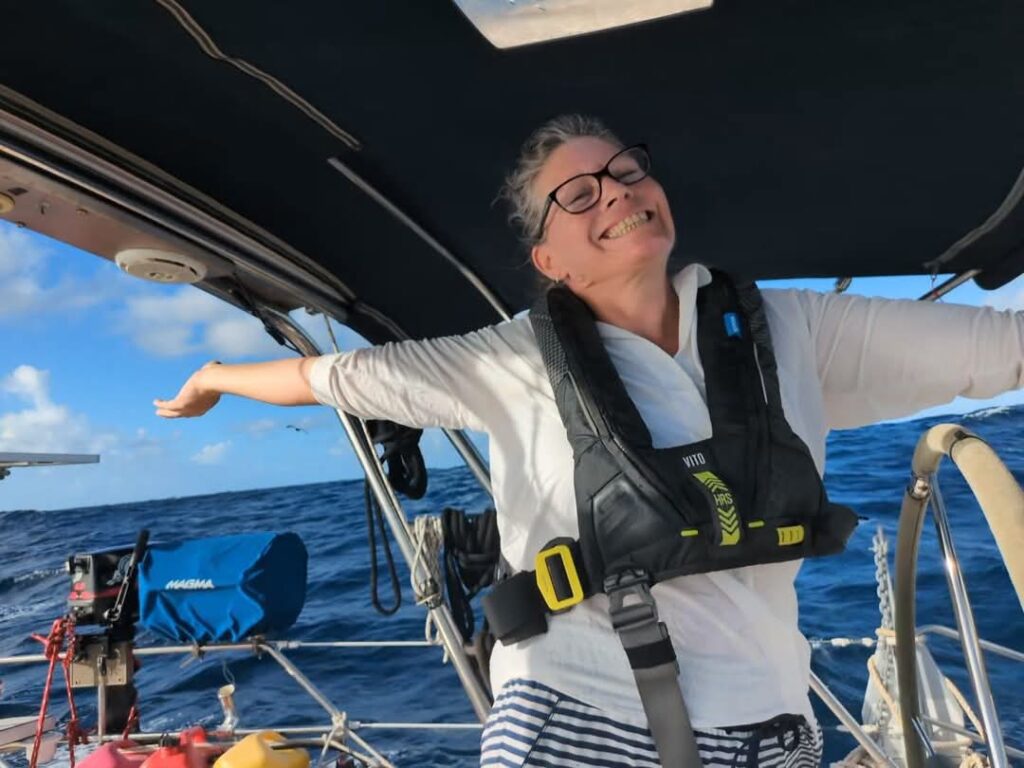
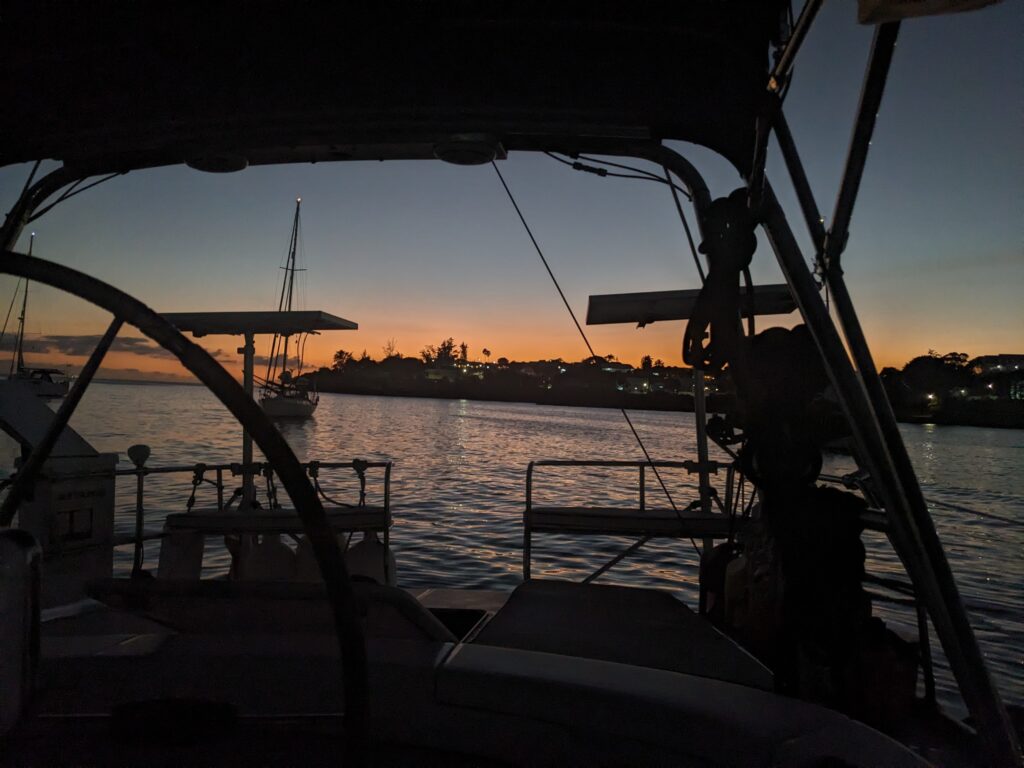
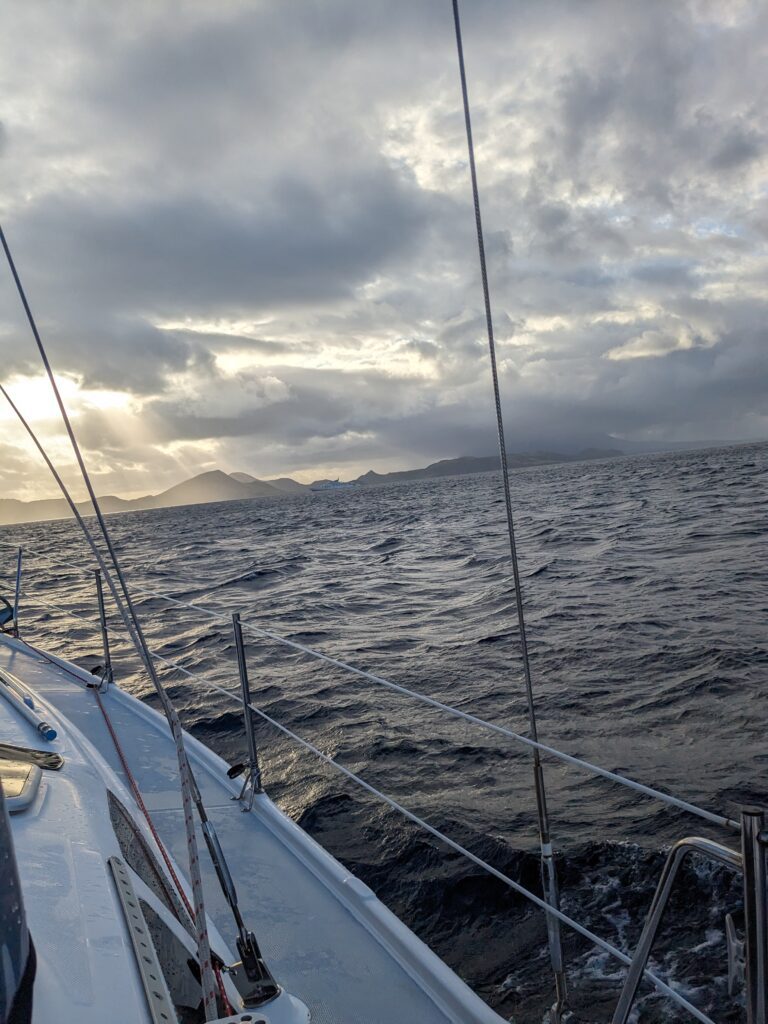
The last sunset at sea of our adventure, and it was amazing.

After our failure to get to the Bahamas in one go, we spent several days in Samana, at the fanciest marina I have ever seen. We did go into town one day, but mostly we stayed around the boat fixing the issues, doing chores and resting. Douglas did something to the shaft to fix it and we all felt confident moving on after a few days. So we headed back out for the Bahamas at 9AM on the 12th of January. This time everything went fine and we arrived in Great Inagua 44 hours later on January 14th, and dropped anchor outside of the harbour to wait for customs to open. We had travelled 305 Nm to get there from Samana. 
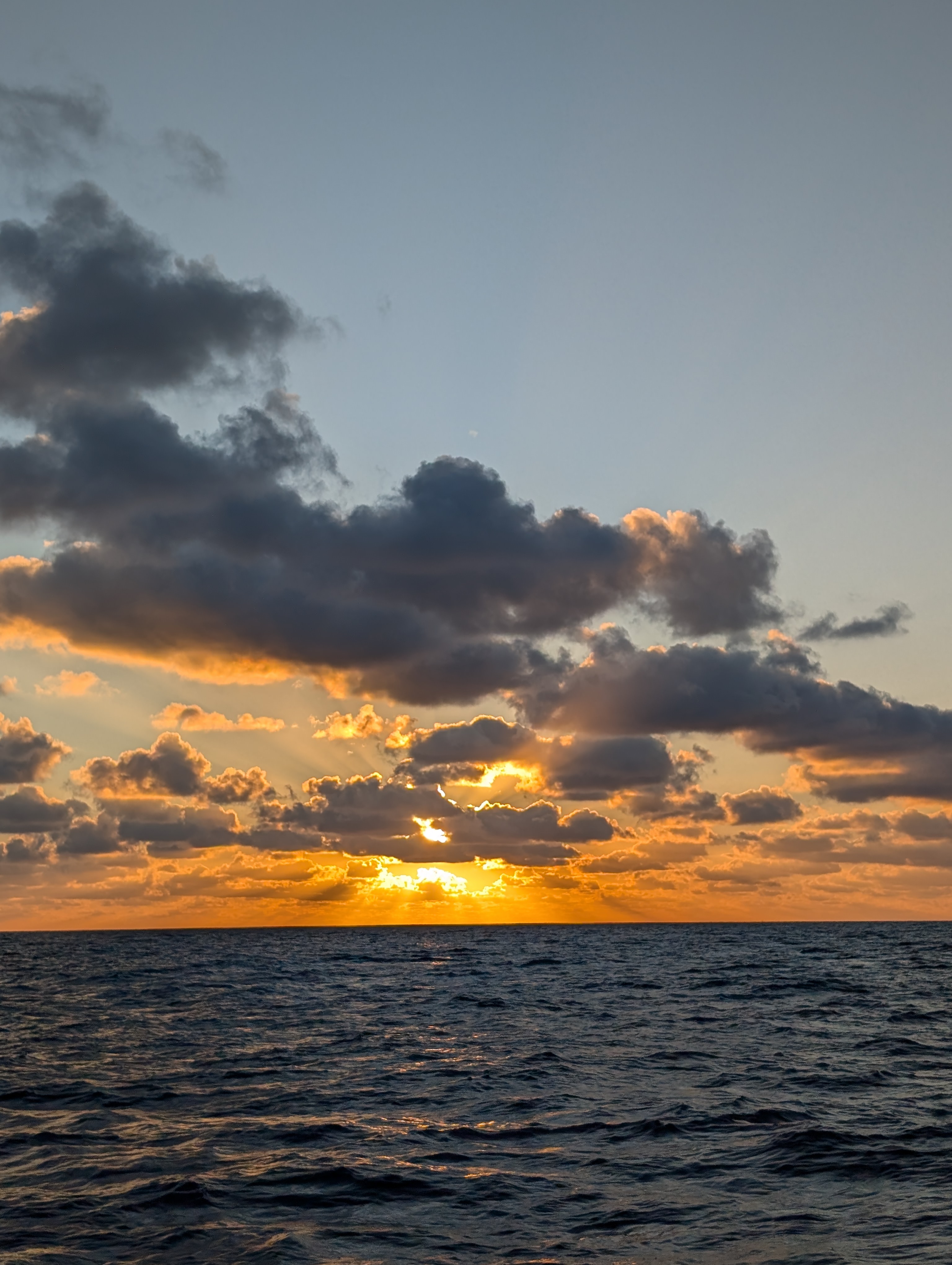
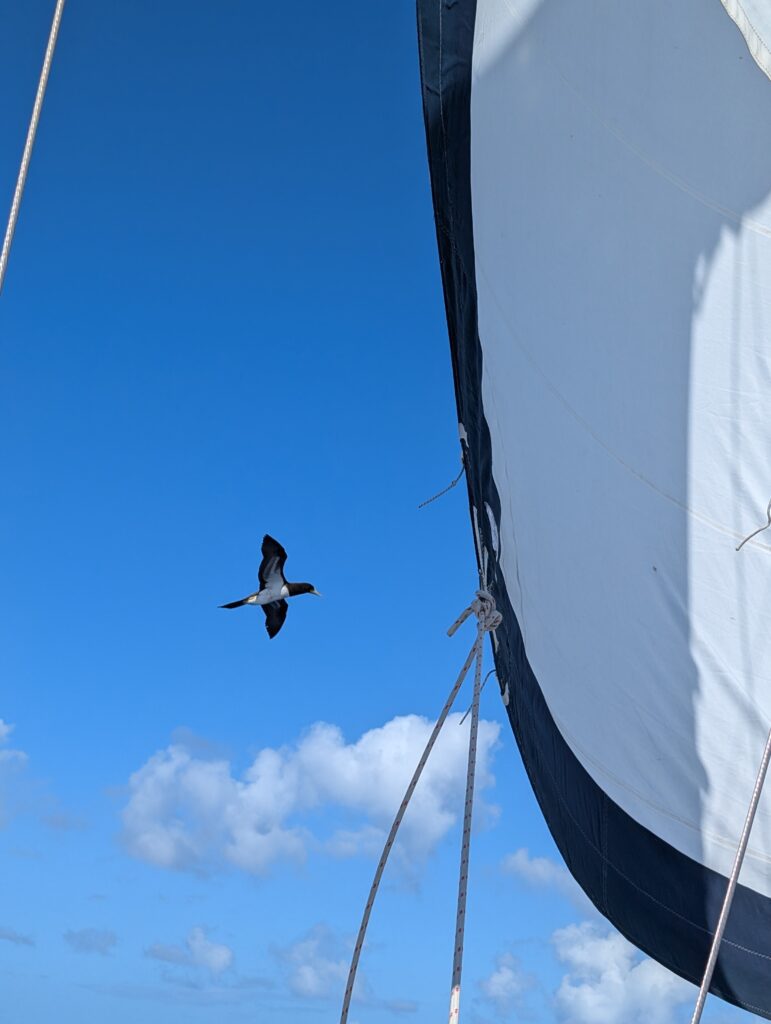
Just another beautiful view!

Once we cleared customs and took on more fuel we went back out to anchor in the harbour. It was a real shame that we couldn’t stay longer because the island and the people seemed so lovely. A lady from the tourism department had even come down to meet us and tell us what to do on the island. There was also a group of Haitian men there loading up a ship to sail over to Haiti to unload goods there. It was sail only and everything was made out of wood. It was so loaded down with cargo that it was barely out of the water. Some people are way braver than us! 
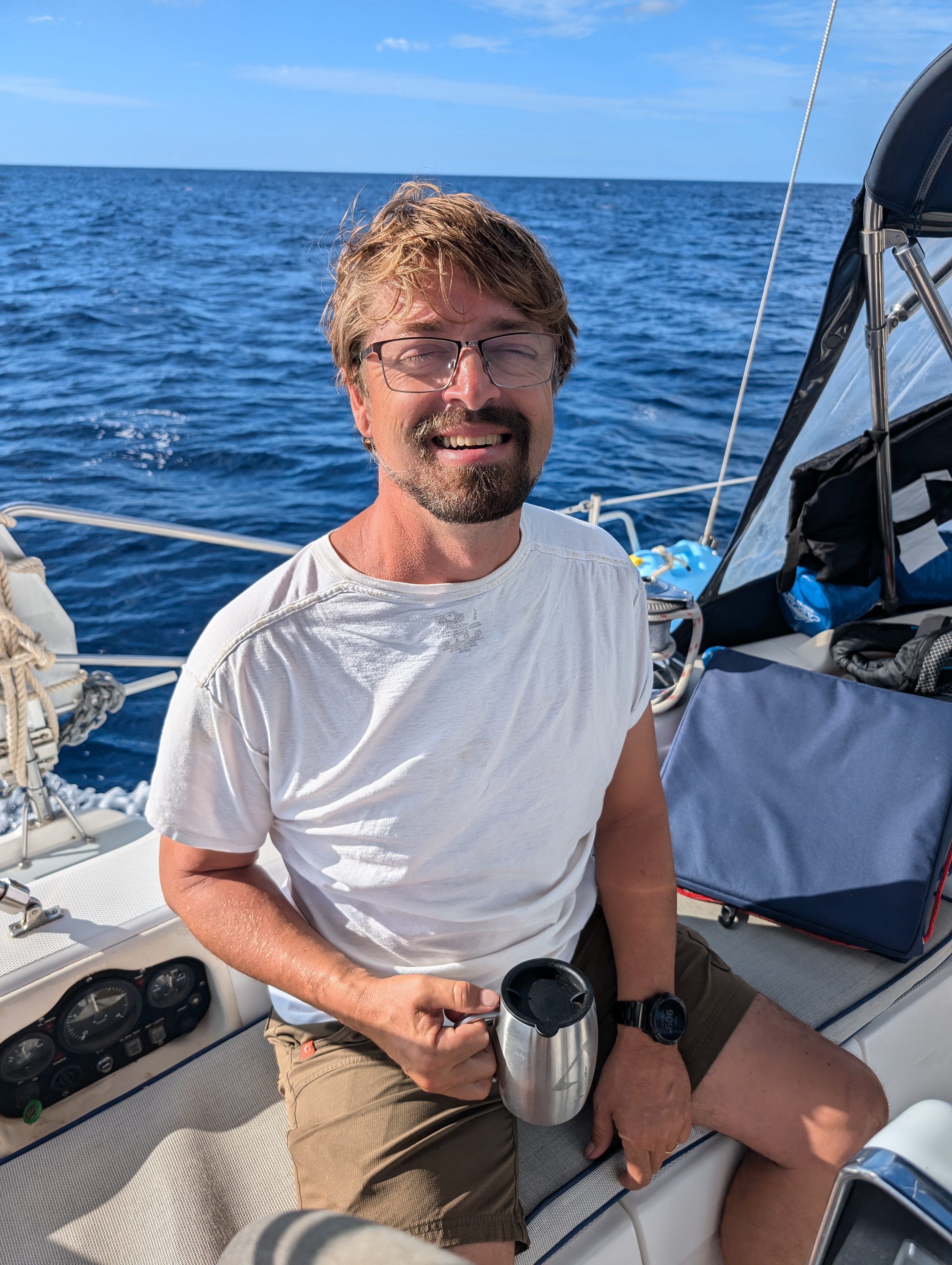
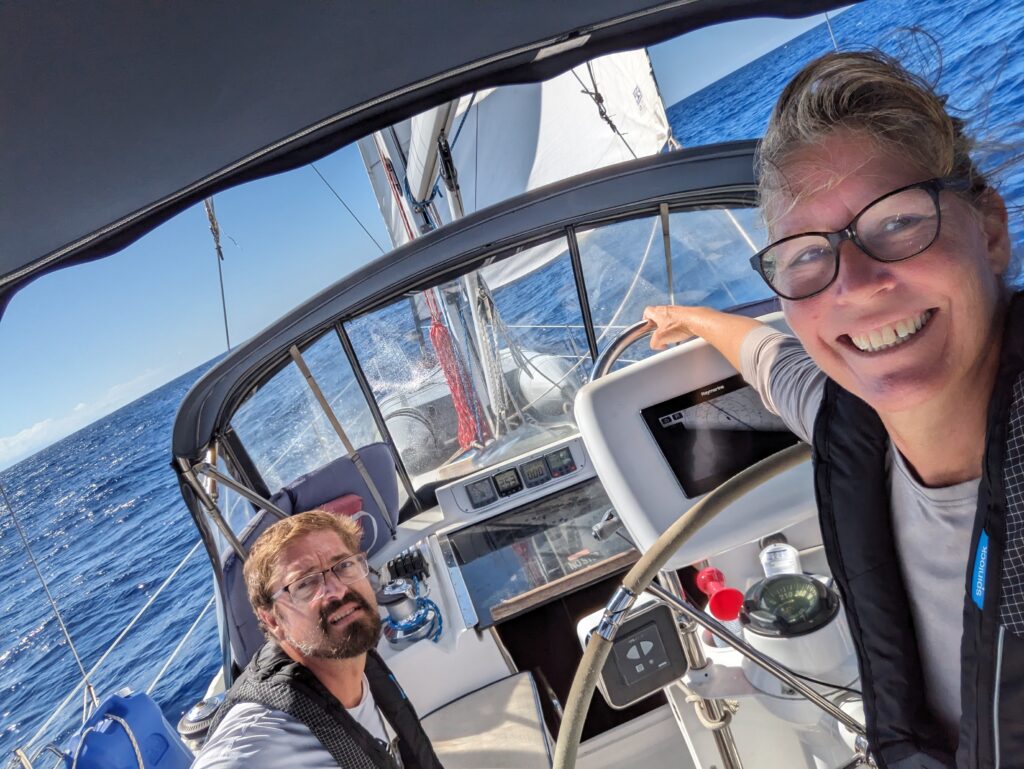
Doug does not do well without good sleep… note the shirt.

The weather was not in our favor and was forecast to get worse over the next few days so we moved on that evening, and had a rough 80 NM night crossing to Castle Island. We stayed there all day on the 15th because Douglas had a job interview. He confined Tony and I to our separate quarters during the interview so we would be quiet. But the boat had other plans. We had put out a stern anchor to keep it more level before his call, but during the interview the wind shifted and we started to swing over the anchor. My anchor alarm went off, embarrassing Douglas, and I had to climb out a hatch to go get the anchor off our keel. Everything was fine, and he got a request for a second interview! 
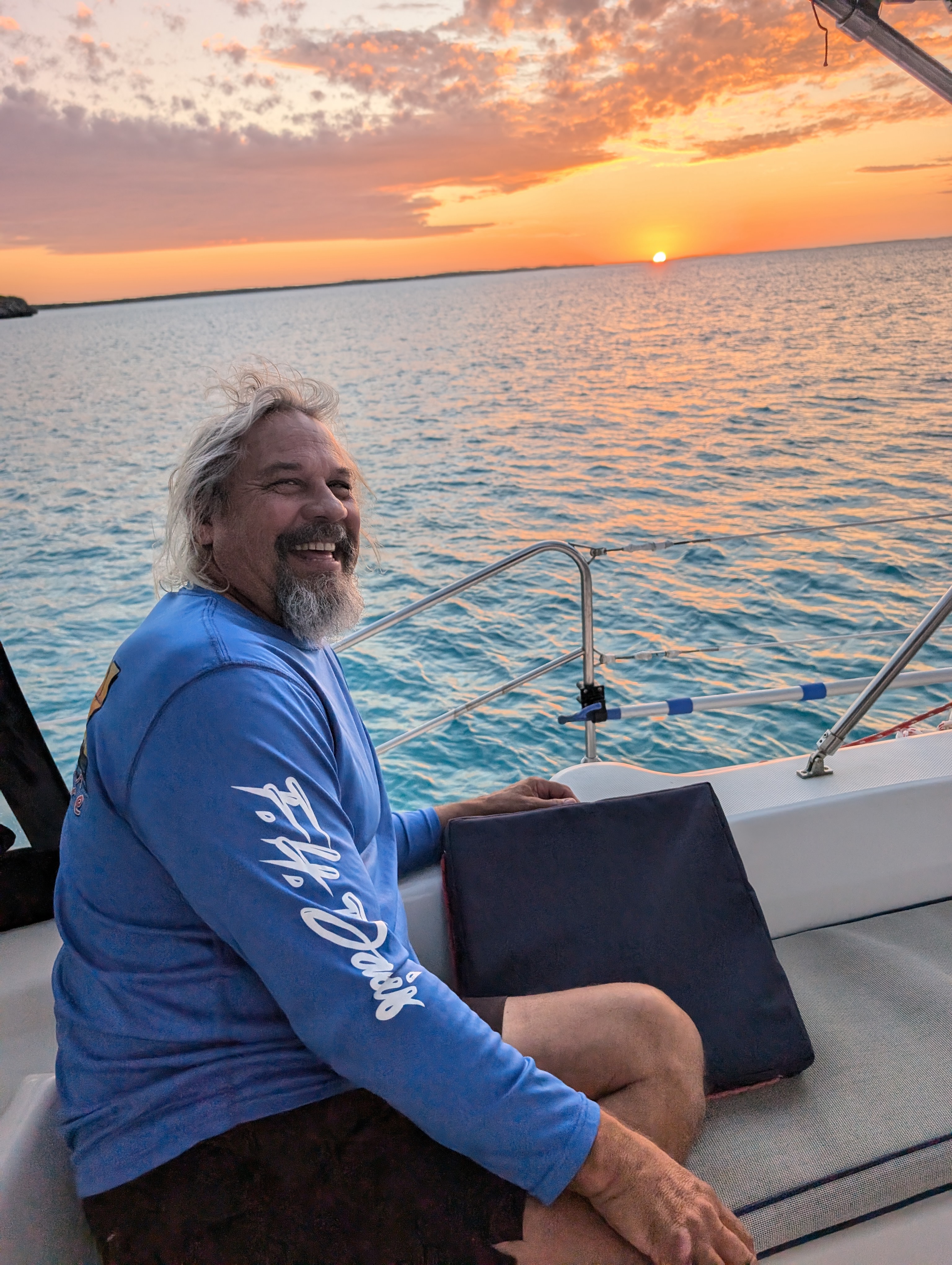
Tony, plotting his next cribbage win…

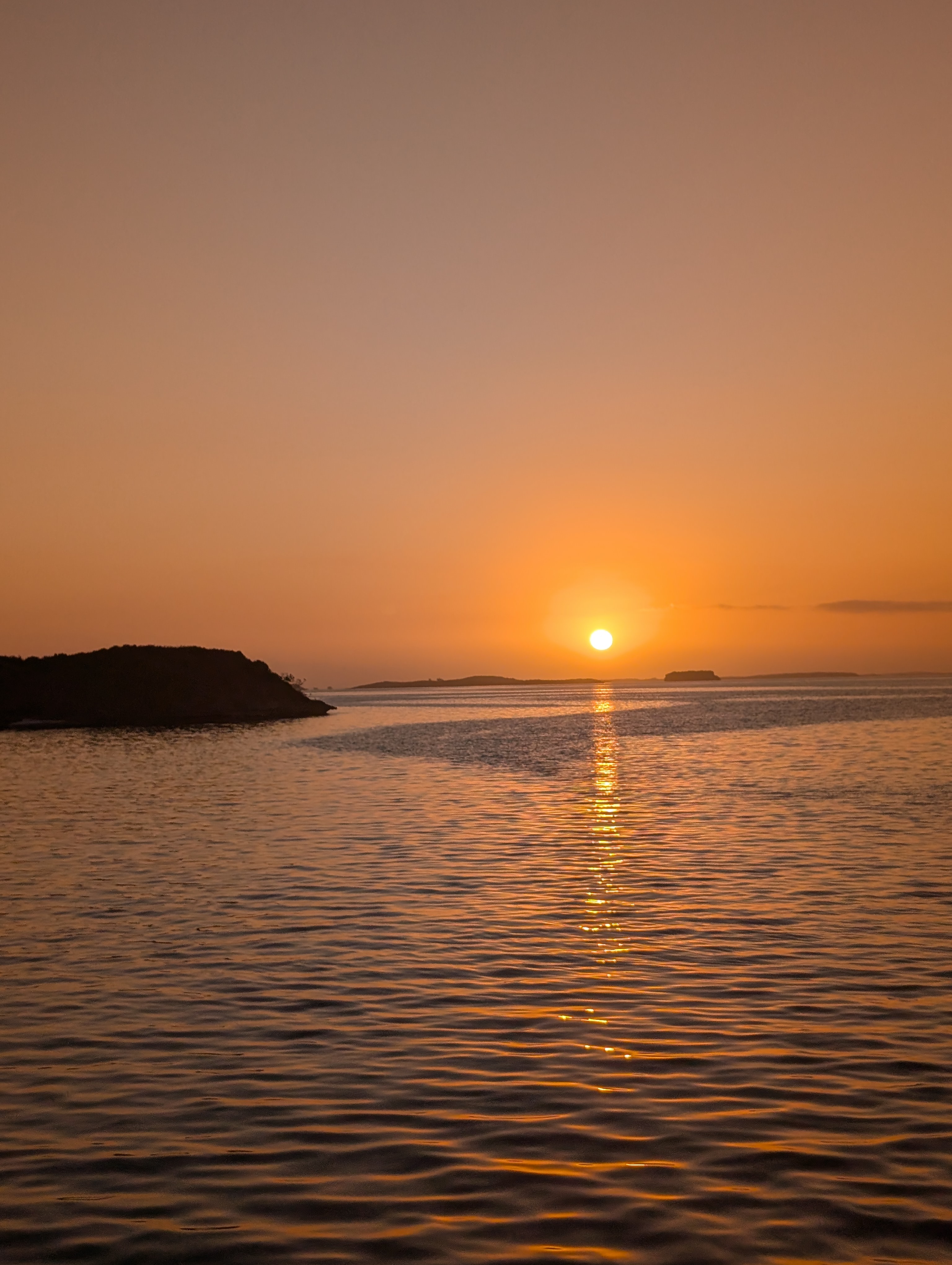
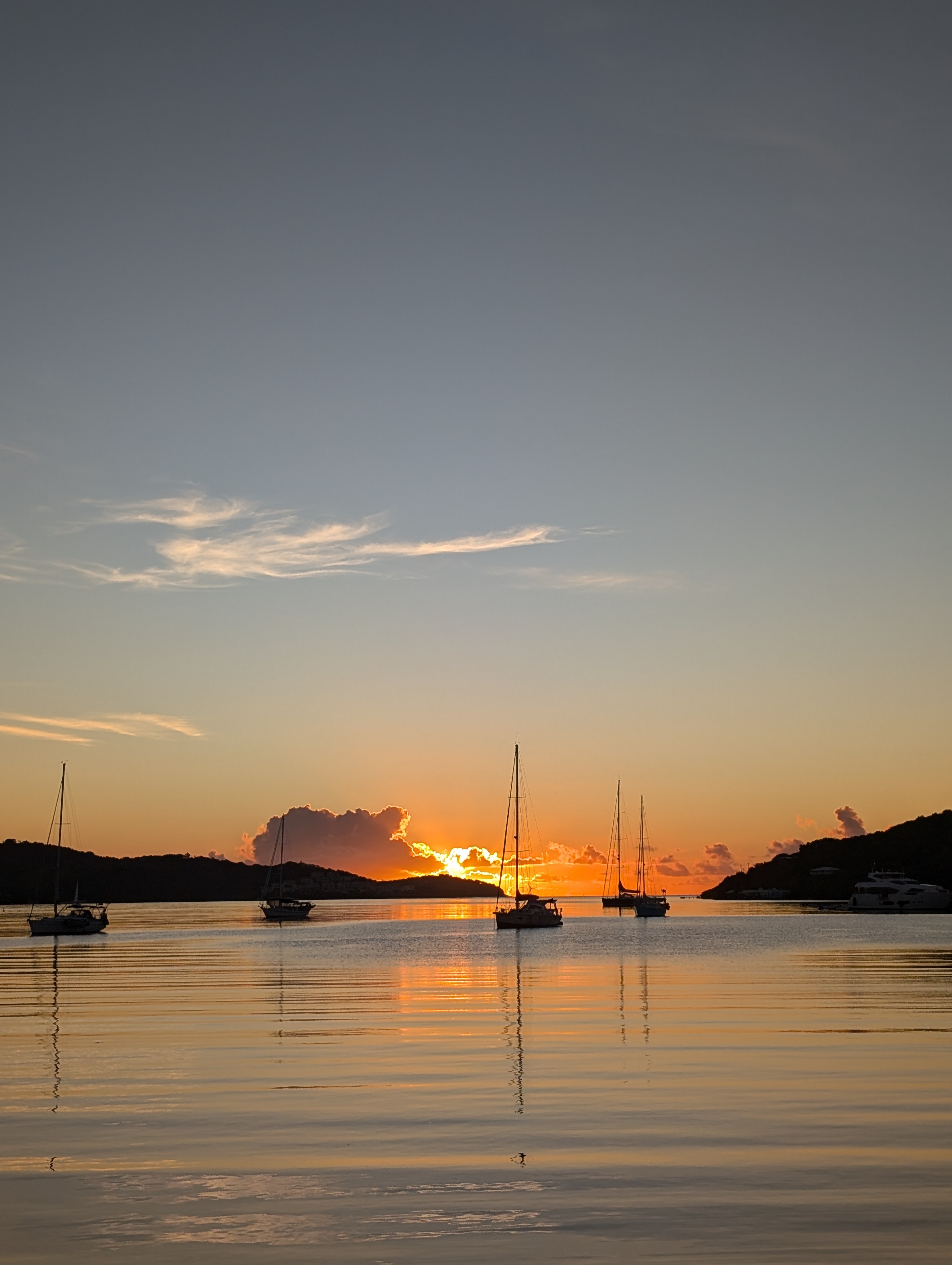
From Castle Island we left for Rat Cay in the early afternoon on January 16th, after holding out for lower seas. It was a long 150 NM hard slog with rough seas and a lot of marine traffic. Eventually the wind shifted and we had to motor sail. We arrived at Rat Cay in the late afternoon of January 17th, just in time to enjoy a beautiful sunset with small scrub islands as the backdrop. We decided to let the weather calm down a bit more before heading out, so spent a day at Rat Cay snorkeling and relaxing. 

On January 19th we set out early in the morning and reached the mooring field at Shroud Cay, 68 NM away that evening. We moved on the next morning, making the 50 NM to Nassau on the 20th, just in time for Doug’s interview the next day. We rented a slip so that he could kick Tony and I off the boat this time and not have to worry about it moving during the interview. He got the job! Which was great, except that the start date was February 4th, in person, in Seattle…. Yikes! We never had a schedule like this before, and a big unpredictable passage through the gulfstream. 
We knew we had to wait it out for the right weather window. The gulf stream just isn’t safe in the wrong weather. We decided to wait it out, anchored off Athol Island in Nassau, so that if we didn’t get a window we could put Douglas on a plane and Tony and I would continue on alone. We waited from the 22nd of January to the 26th in fact. The days were spent resting, swimming when it wasn’t freezing, and playing cribbage. We all watched the weather like hawks, and although we would have liked to have moved a bit closer to Florida, the more Western islands were being hammered with wind and waves and there were no good airports there just in case we needed one. 

Finally, mid-morning on the 26th we had our weather window and we took off. It was a very uneventful last sail. The sunset was beautiful, the gulfstream was calm and nothing broke. We arrived off the coast of Florida the next morning and at some point while we were looking ahead of us the US coast guard pulled up a quarter of a mile off our stern. They hailed us and required all the names and passport numbers of all citizens on board, as well as our registration number. After a few minutes they gave us the green light to proceed. 
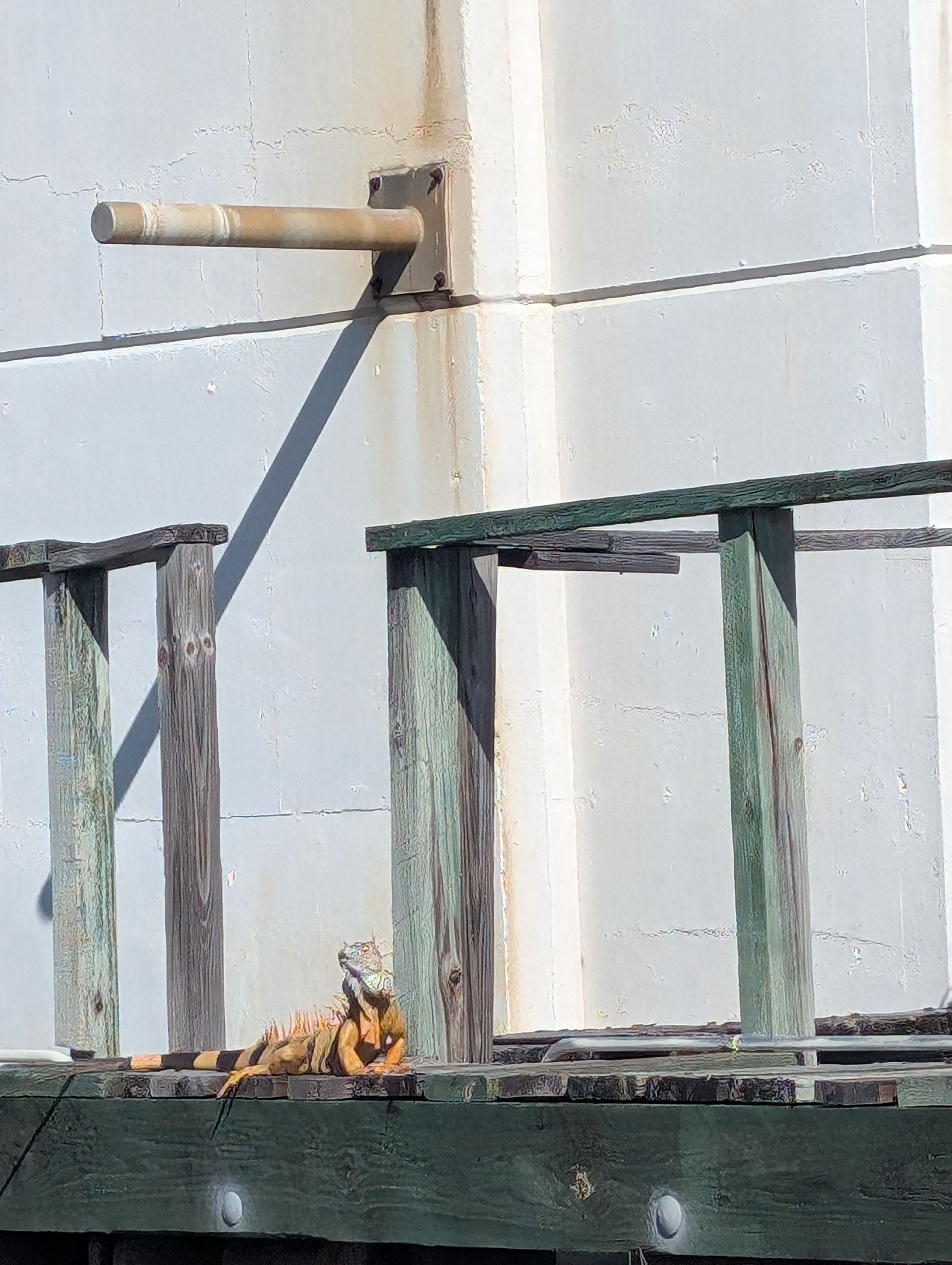
Our welcome to Florida!

We made our way into a very narrow passage to the Intercoastal Waterway, while a towboat sat by in the entrance hoping for business. I think they get a lot of it with the fast current and sandbars, but not us that day. It took a few hours to get through all the bridges to the dock we had rented a few miles up the ICW. From Nassau this last trip was 180 NM, and we were all pretty tired. Luckily, our boat broker was waiting for us at the dock and got us tied up for the very last time. 

It was pretty emotional for me leaving the boat. In another lifetime with another set of circumstances I would have kept sailing in the Caribbean for years. Yet, this is the life we have, and my home is where Douglas is. Although he was ready to give up the boat life, he is very glad that we did it, and although I was not ready to give it up, I agree that it was the right decision. 
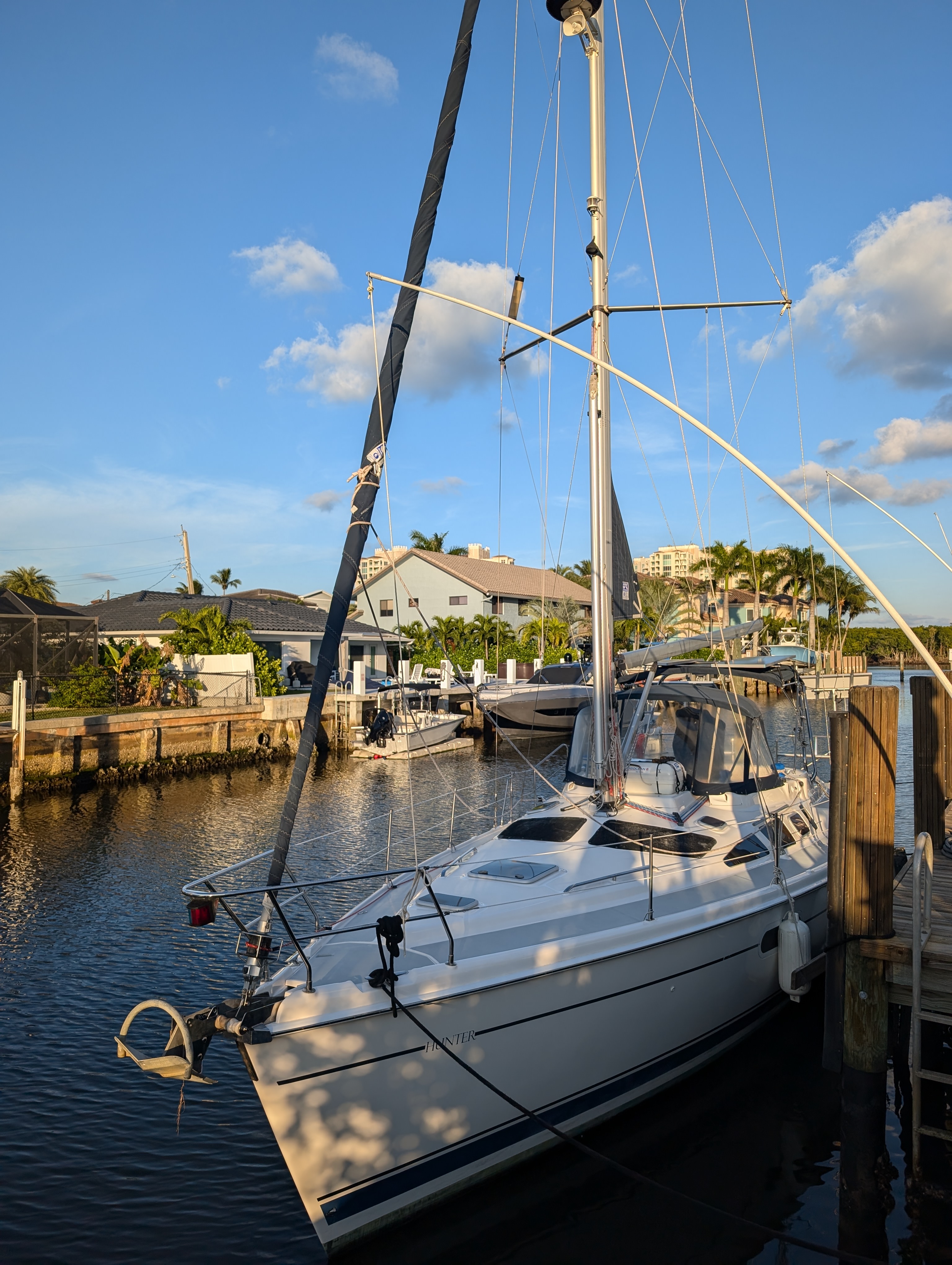
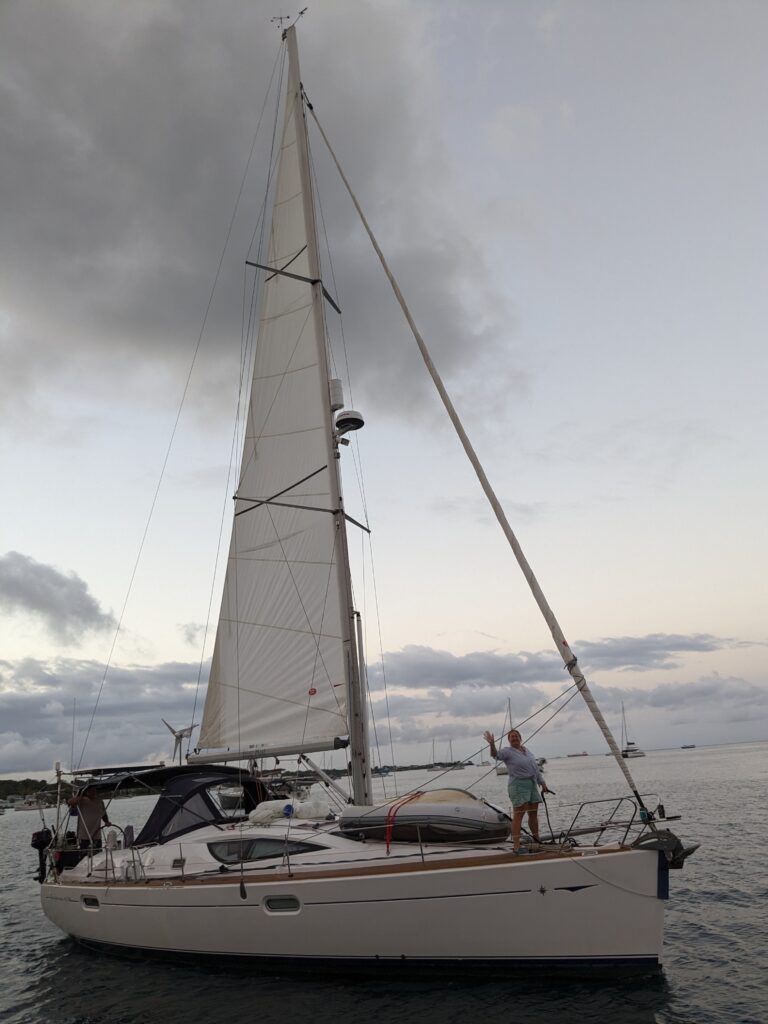
Sitting pretty, waiting for her next adventure!

All in all, we had a wonderful adventure, and we will never forget the experience or the courage it took to make it happen. My hope going forward is that we continue to do things that push our limits, and our comfort zones as individuals and as a couple. It is hard to adjust to life back on land, even writing this months after our last voyage. There is something majestic about living on the water, something freeing about travelling everyday, and something meaningful about having the time to slow down and spend hours watching birds and sunsets. 

In our time living on the boat we sailed  over 5,700 nautical miles. We visited 9 states in the US, plus the US Virgin islands and Puerto Rico. We entered 10 different countries, and close to 50 different islands throughout the Caribbean. Yet, most importantly we made countless new friends, became closer as a couple, and became tougher, more confident people. It was an adventure of a lifetime and a life well lived!
Our Last Season – Part 3

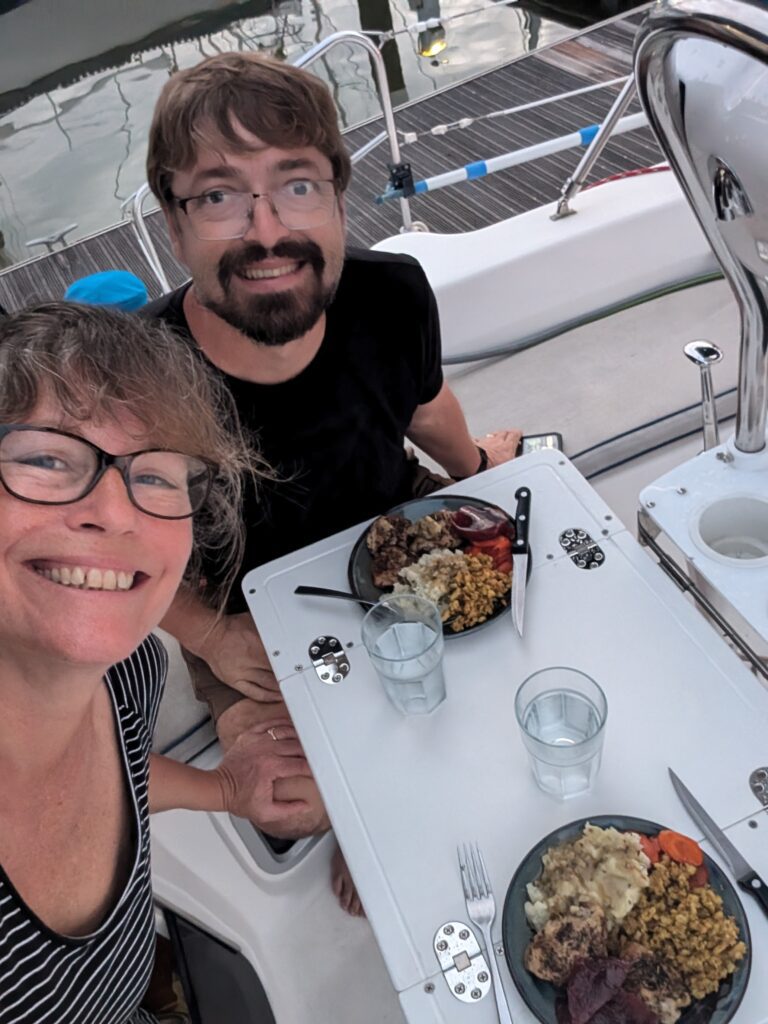
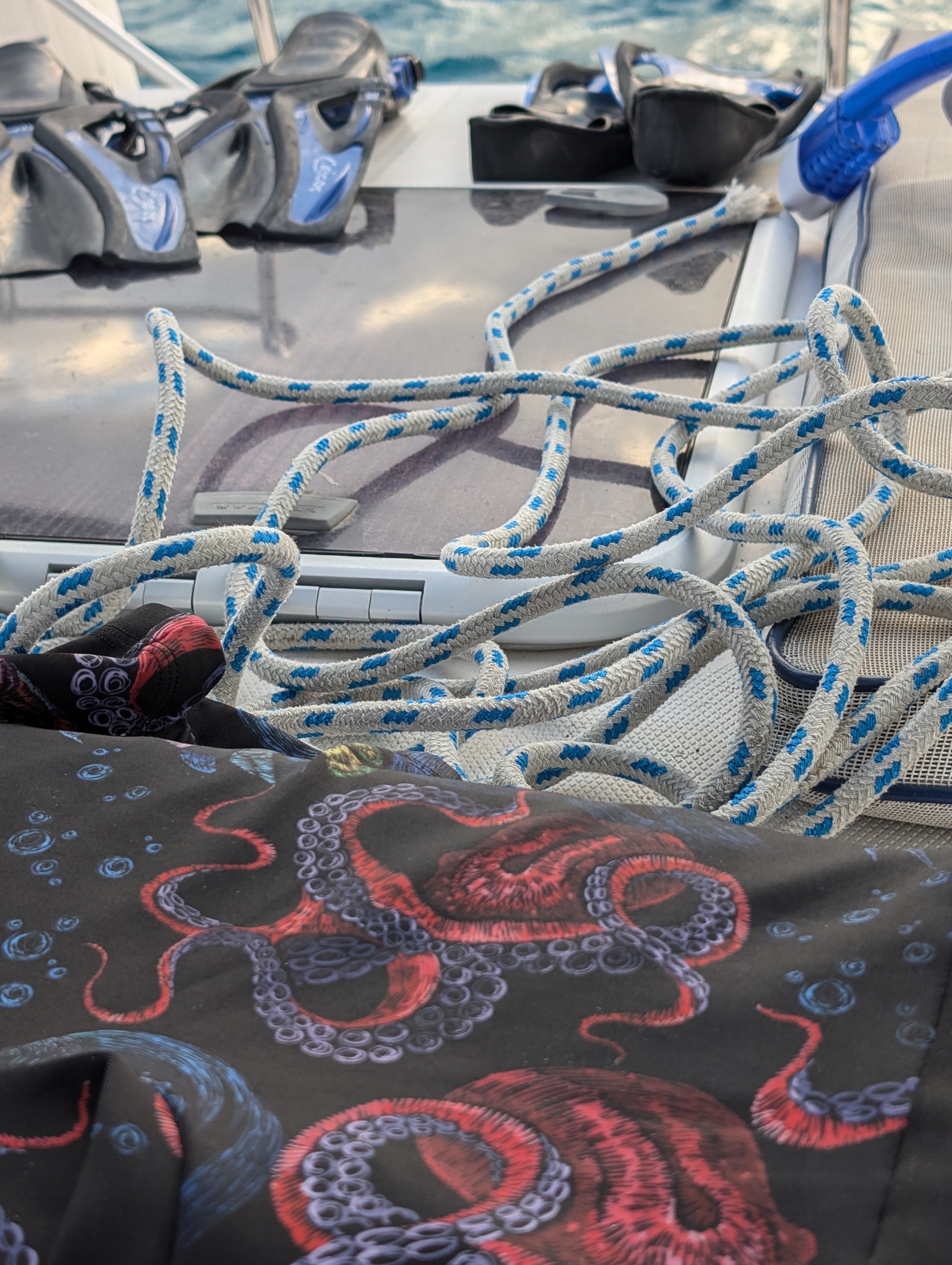
We spent Christmas week bouncing between the inner harbor of Dutch St. Maarten (where the better provisions are), and the more beautiful anchorages on the french side of St. Martin. I made a full Christmas dinner and we had champagne for New Year’s eve with new friends. We snorkeled in Grand Caisse a lot, and one day we saw an octopus. It was the first one we had seen in the wild in all that time. We followed her around for a long time. It was amazing how she could not just change her color but her shape too. Definitely a highlight of our trip. 

We didn’t get a picture of the octopus but I took this picture of the shorts Doug had been wearing drying after the swim… Do you think that’s what attracted her? They do look cute.

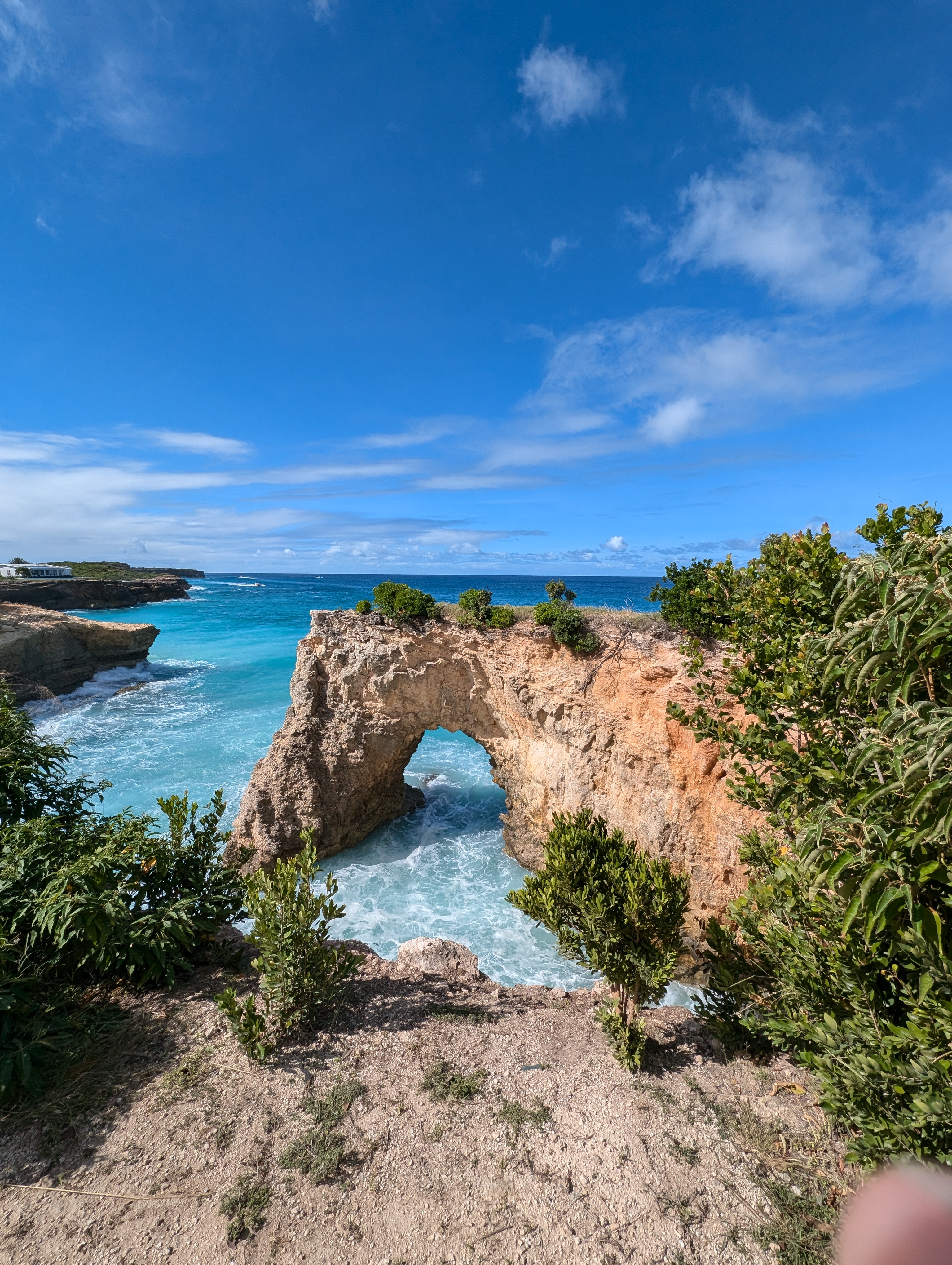
We were watching for a good weather window to make our crossing of the Anegada passage between St. Martin and the British Virgin islands. As we waited, I did a little side trip to Anguilla, a short ferry ride from St. Martin. It was another lovely island with lovely beaches and lovely people. It is also the favourite Caribbean island of my aunt and uncle, so I made sure to send them pics of me eating lunch at their favourite restaurant there. 

A beautiful sea arch in Anguilla.

We finally got our weather window on January 1st, and set sail at about noon to avoid getting in while it was still dark. We decided to skip the Virgin Islands all together to save time and headed straight to Culebrita, 130 NM away, about 18 to 20 hours. We encountered an extraordinary number of cruise ships and cargo ships on the way, and had to be watching AIS constantly and making sure no one was on a close course with us. 

At one point I was watching a Disney ship when it lit off an amazing display of fireworks! Then at 3 AM my depth alarm went off and freaked me out. The sudden crazy maneuver I made in a stupid attempt to turn back into deeper water woke Doug up, (oops). It must have been a school of fish because we were in hundreds of feet of water, but when you are tired your mind is not very reliable and your fast decisions are sometimes pretty stupid. A few hours later we arrived at the small island of Culebrita, off the coast of Puerto Rico, and after we dropped anchor we got some much needed rest. Later on we did some snorkeling before having a lovely dinner with friends we had met in the Dominican Republic who were anchored next to us. 

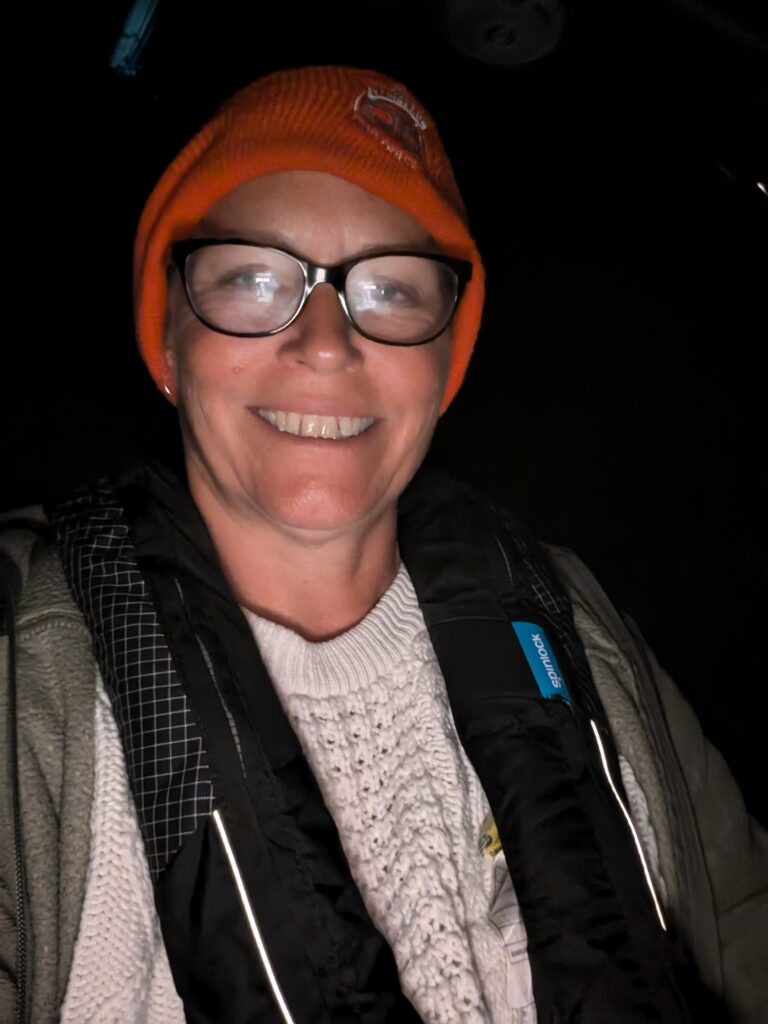
That’s me at 3 AM – Brain off – Smile on. I love sailing at night.

We now had a plan to pick up our friend Tony on the west coast of Puerto Rico on January 7th to help us get back to Florida faster. So now we were really on a schedule! We pulled out of Culebrita on January 3rd, just hopping over to Culebra, another island, for a night. There I discovered that while we had been heeling over for about 18 hours of sailing a leaking jar of honey had spread its contents through the entire spice shelf. What a mess! On the 4th we went to the island of Vieques, which we had missed on the way through the first time. It had lovely snorkeling but we didn’t make it to land. Next time! 

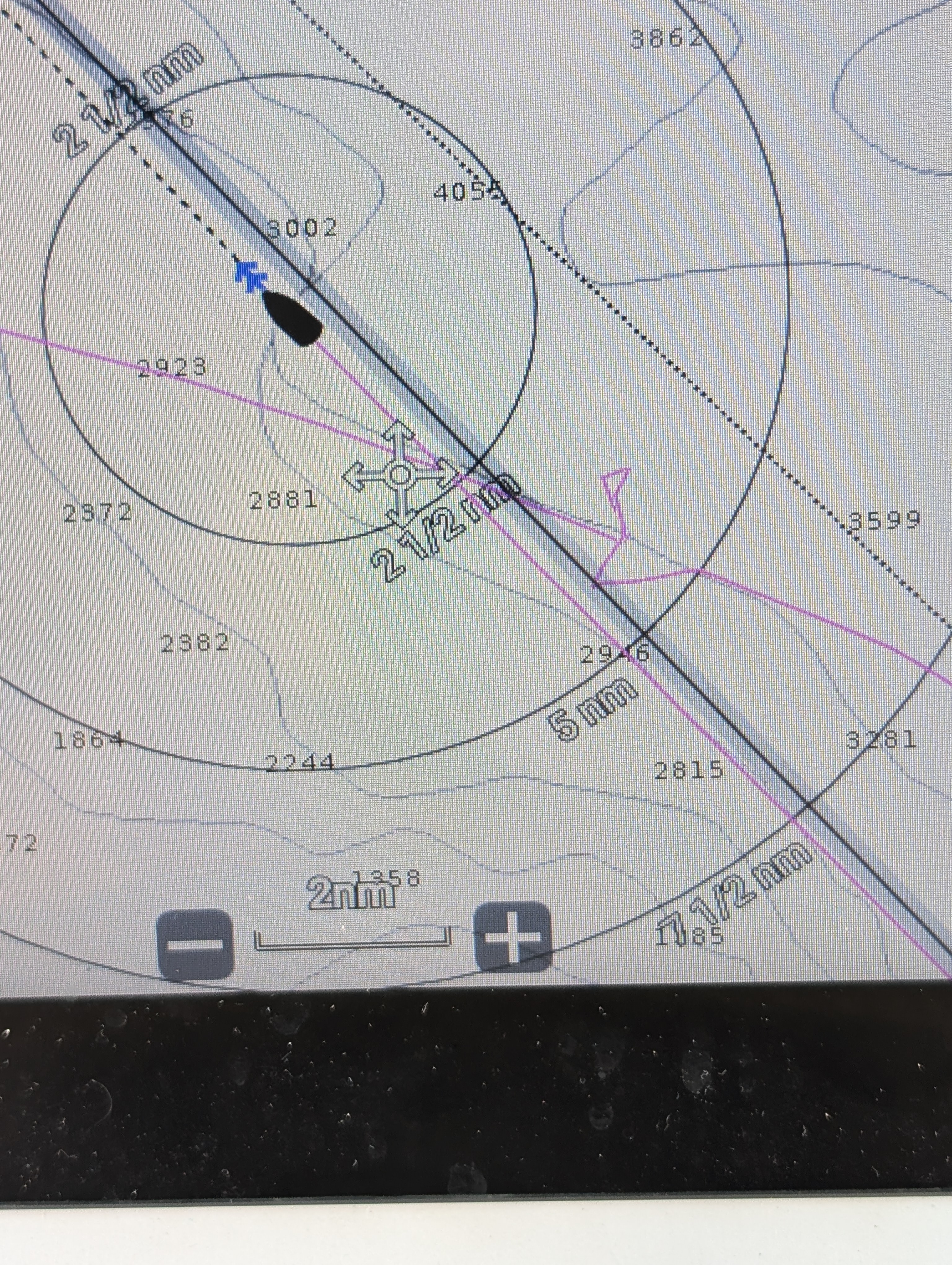
From Vieques we were now feeling the stress. Tony would be here in days and we were still over a hundred and 15 NM away from our meeting point. We set off and made it to Salinas, closing 50 miles the next day. The day after that we covered the remaining 65 NM in amazing time with good wind. At one point we had our speed over ground up to 9.5 knots. We arrived at the marina earlier than expected, and beat Tony there by a day. This worked out great because it allowed us a much needed rest day and Tony a day to rest from his flight. 

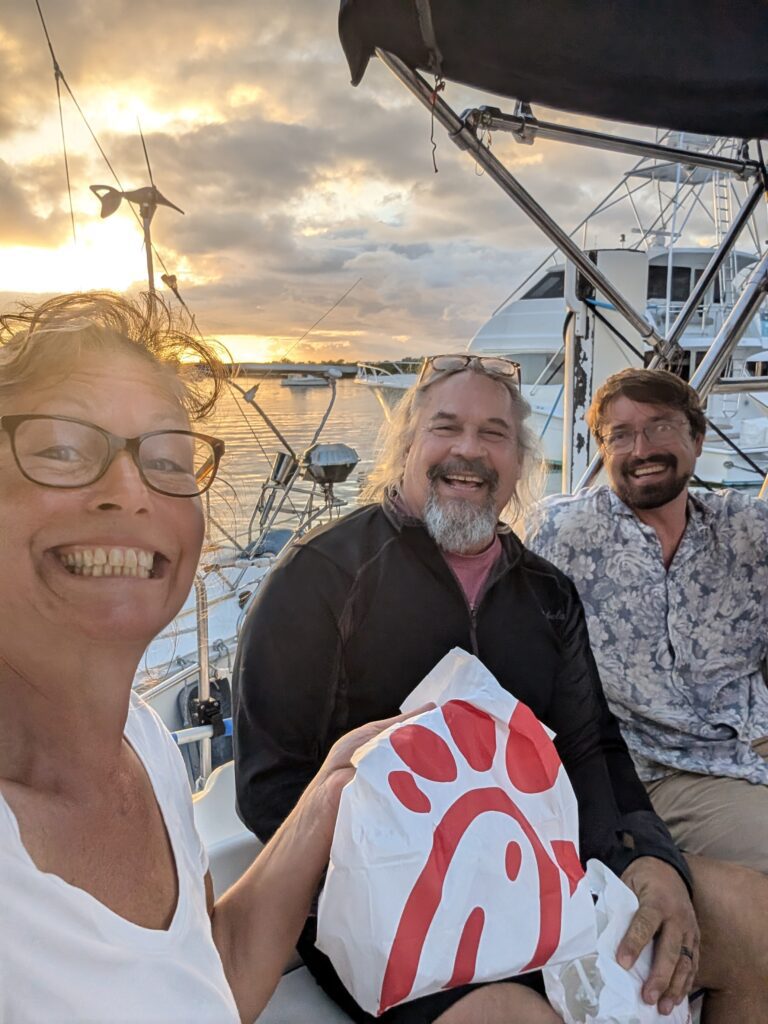
I was happy to see Tony, but I was really happy to see that he brought Chick Fill A!

Having Tony along meant that we could do longer trips with more overnights while each of us could still get rest. We decided that we would go straight from Puerto Rico to the Bahamas in a leap of about 450 NM. We set off in the early morning of January 8th. The seas were heavy but the wind was not great so we were doing a lot of motor sailing. At some point after we were past the worst of the Mona Passage, and just coming into night our shaft started to get really hot. We turned off the motor and continued on under sail power. 

We crossed our path in the Mona passage where our buddy boat had lost their motor on our way down, and we all sailed around aimlessly while they fixed it. Much straighter this time through.

It didn’t seem reasonable to continue such a long trip without being able to depend on the motor so we changed course for Samana on the east coast of the Dominican Republic. Tony and I fought with light wind all night, adjusting our course and adjusting our sails trying to get at least a reasonable speed out of it. We arrived there at 9 AM on January 9th, and dropped anchor outside of the marina while we called them to see if they had space. We moved onto the dock at about 10AM and went to sleep. We had travelled just 152 NM, a far cry short of our goal, but better to be safe than sorry. 

It sure was beautiful, but sadly a real lack of wind for sailing!


Our Last Season – Part 2

We left the Rodney Bay marina on December the 6th, fueled up at the fuel dock, and then motored around for about an hour before dropping anchor in the outside bay. We were now confident in the fuel system, and set off the next morning for the 45NM trip to St. Pierre, Martinique. We had a great sail, only needing the motor for the last bit to get to the mooring. Figures it would work when we didn’t need it! 

We stayed in St. Pierre for a few days, listening to the incredible notes of opera performances at a local venue as they floated over the water. It was magic. We met another couple from Nova Scotia who had sailed there on a tiny, maybe 20 foot boat. They were on their way to St. Vincent to help establish a sailing school. We gave them all of our sailing books and the old sextant that Doug had been given by his uncle and we had never learned to use. We figured it would be a fun historical artifact to show kids, to demonstrate how easy sailing is now compared to BE – before electronics. 

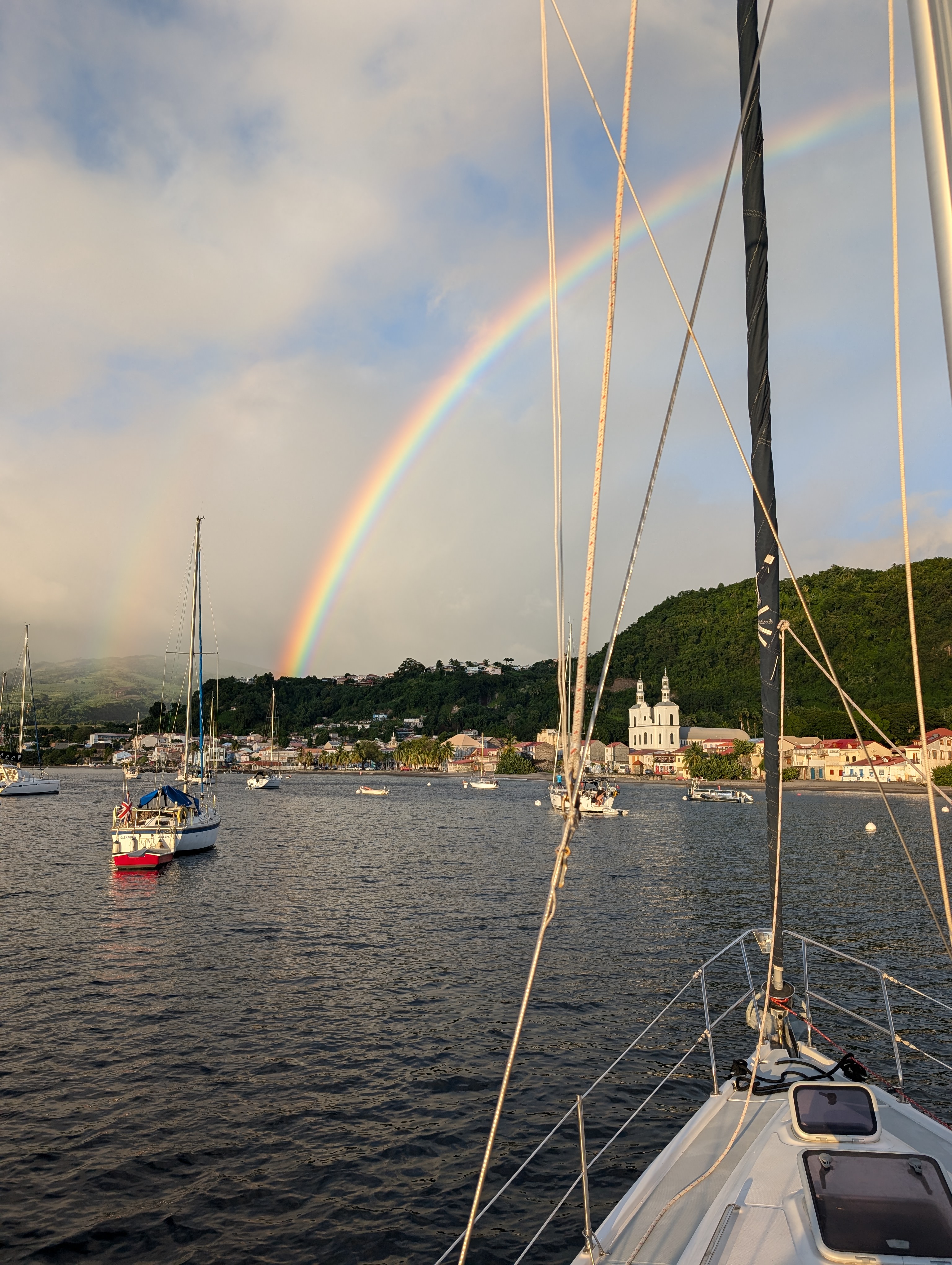
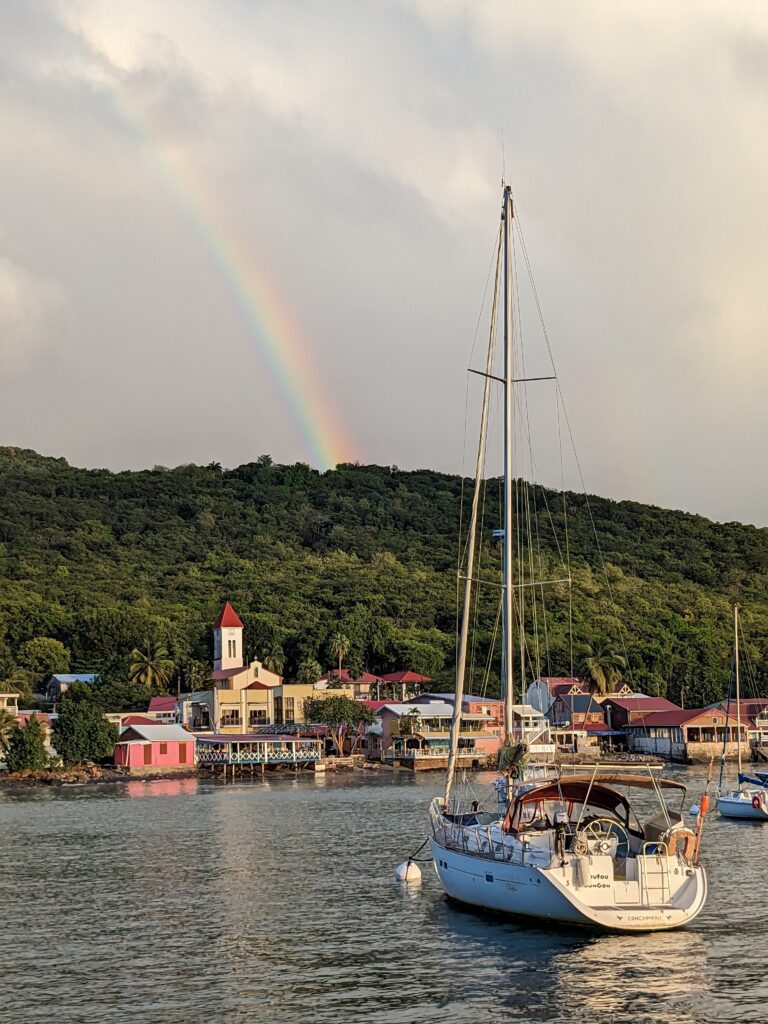
Those Caribbean rainbow views never get old!

On December 10th we pulled out of Martinique and had a very sporty 55 NM sail to Dominica. The forecast was for 15 knot wind, with 20 knot gusts. We didn’t see wind less than 20, and the gusts were up to 35. We were reefed well and had no issues. As we were watching a catamaran fairly near to us with all its sail out, I saw a squall coming and bore off the wind a bit. A few minutes later the squall hit the catamaran and just about knocked it down. They spun around into the wind, with every bit of those full sails beating on the rigging. They got it under control and turned back in the right direction eventually. A good reminder to reef early, before you need to be reefed. 

Still conscious of trying to make good time, we only stayed in Dominica for a few days, despite the fact that it is one of our favorite islands. We did get to catch up with our old friends Omar and Abbey one night, and finally got to meet the famous Cobra who we had heard about from other sailors. Cobra helped to establish the co-op that runs the mooring field at Portsmouth. It is an amazing community led organization that provides moorings, barbeques and other services for sailors, including island tours.

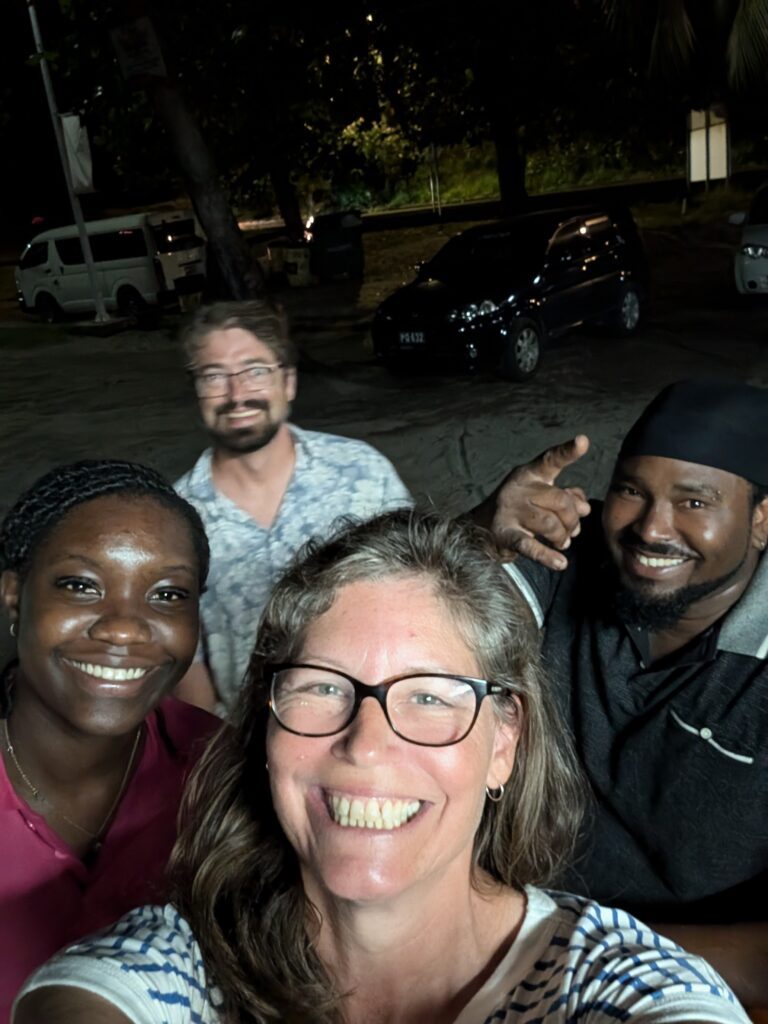
Catching up with our friends Omar and Abby in Dominica.

From Dominica we made the 20 NM jump to Guadeloupe on December 12th, with a very brief visit to another of our favourite islands, Terre de Haut, for french patisserie. Then on to Deshais on the north coast, the next day. We moored for the night there to stage for crossing to Antigua, since we missed it on the way down the chain. I was stoked to see a new country, but we knew with the weather that we wouldn’t have a long time there before we had to move on. We wanted to be in St. Martin for Christmas. 

As soon as we arrived in Antigua we arranged a tour of the island for the next day, and got to work provisioning and visiting the marine store. Provisions were good; there was a decent, but expensive, grocery store and a bunch of fruit vendors on the street near our marina. Our tour of the island was very nice, and included a stop at a local fundraising event where locals were selling traditional breakfast in the streets. We also visited the Nelson Dock yard, a very old dock yard from the colonial era. It felt like a whirlwind visit, but at least it was a new country to add to my list! 

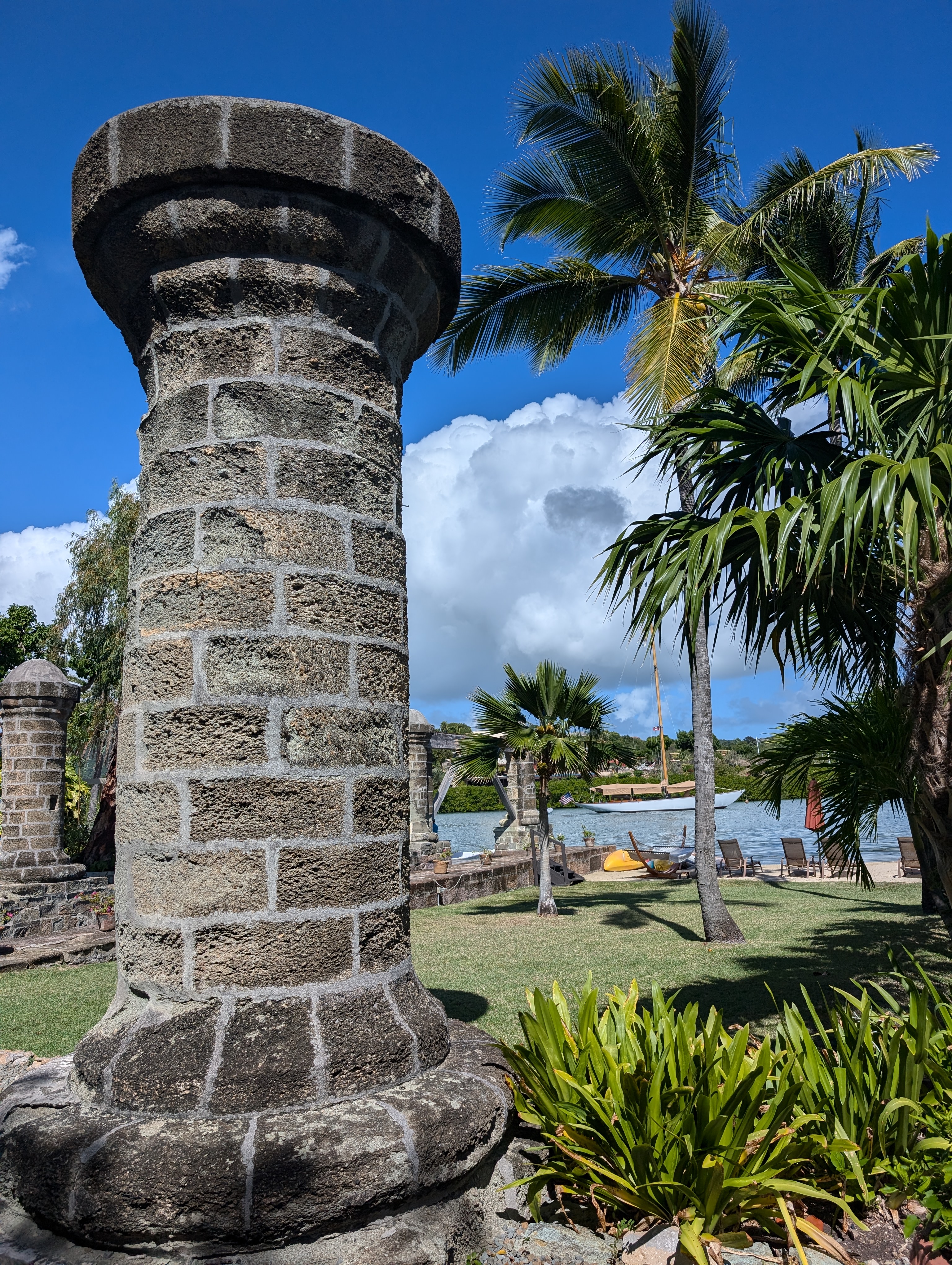
A part of Nelson Dockyard Antigua.

Keeping on schedule, we left Antigua on the 17th of December and motor sailed 48 NM to Nevis. We really liked Nevis when we visited before, but one disappointment had been that their first brew pub was in the process of opening and hadn’t been making beer yet. The owners are from Canada and we really wanted to see how they were getting along, and if their beer was good!  We moored near the brewery and headed there after checking in with customs the next day. It was great; the vibe was fun, the food was good, and Douglas loved the beer. Well worth the sail to check it out! 

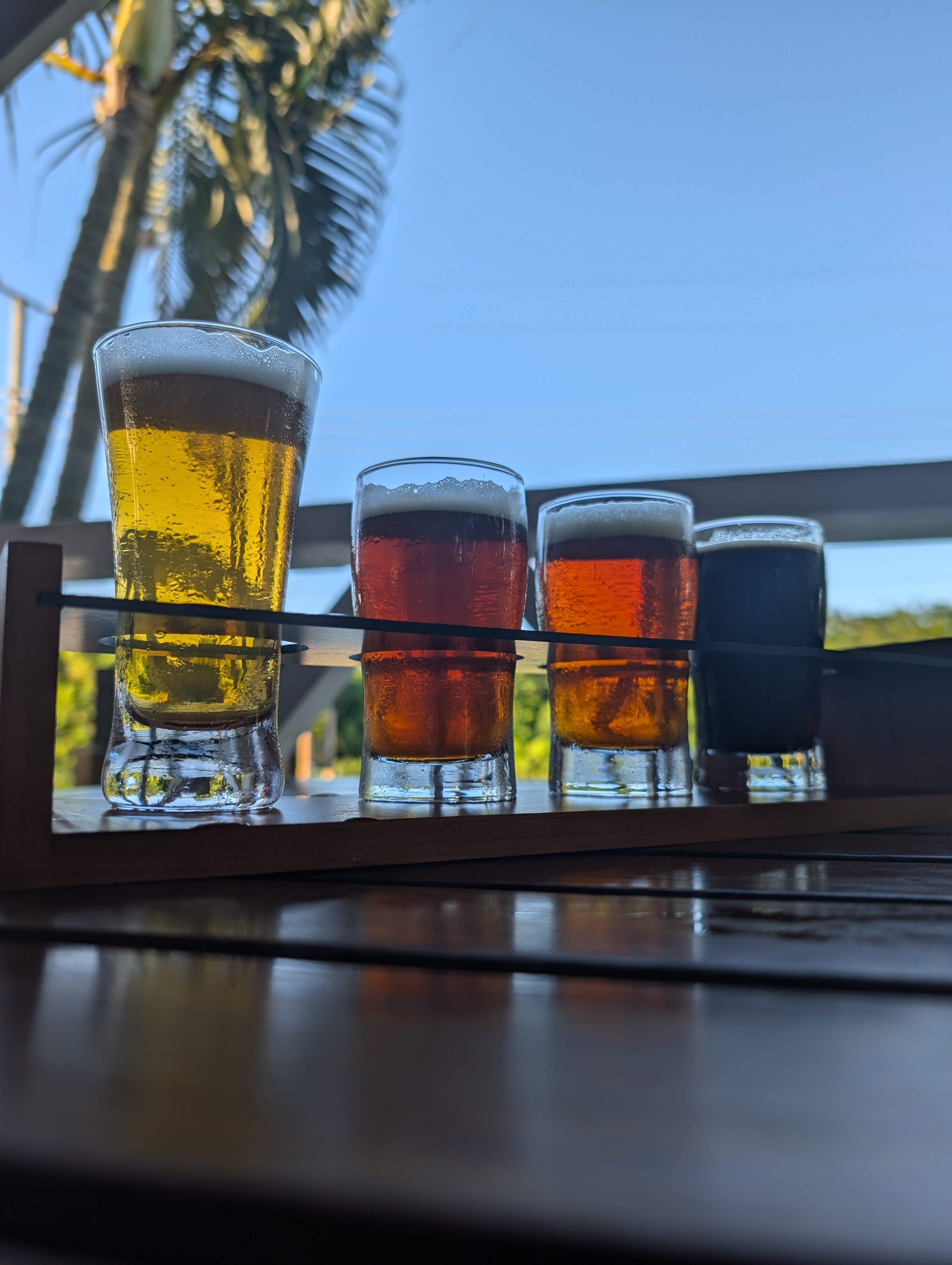
Well worth the extra miles for good beer!

We stayed in Nevis for a few days waiting for the waves to die down before heading out. We had originally thought we would head directly to St. Martin from there, but the wind and waves would have been too uncomfortable, so we looked at other possible destinations and came across St. Eustatius. We did a little research and it looked cool, so we decided to go for it. 

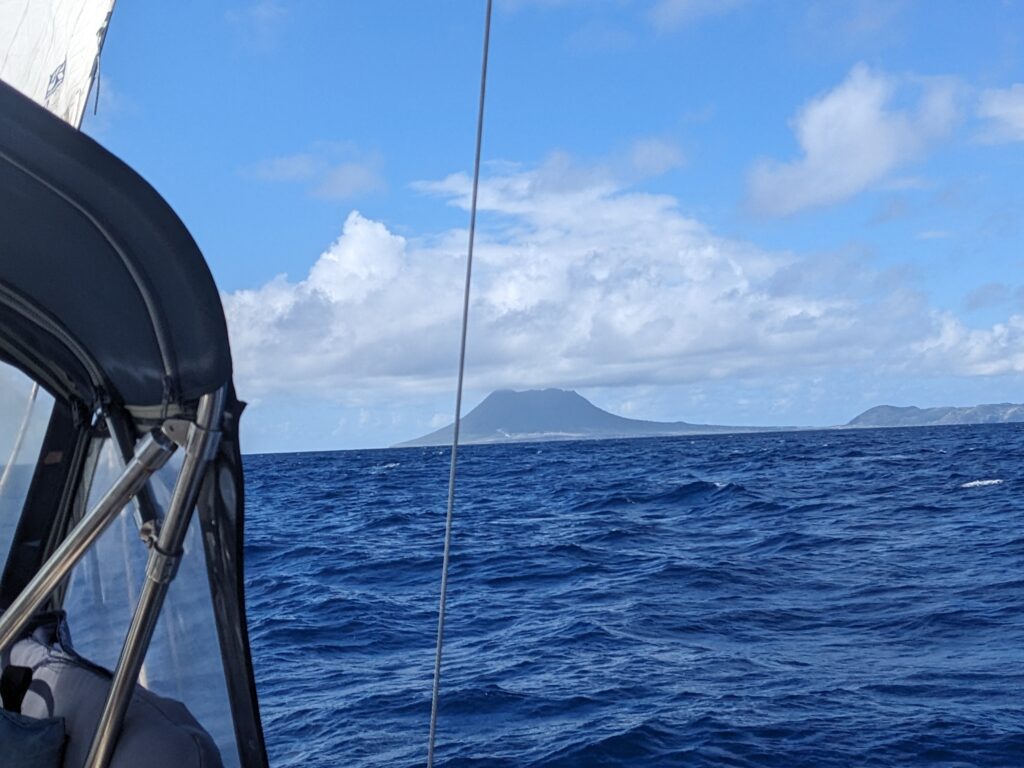
We left Nevis on December 20th and had a beautiful sail while being protected by St. Kitts. However, when we got out of the shadow of St. Kitts and into the open water between the two islands it became very gusty and the waves were unpleasant. What should have been a big hint, but we missed, was that the waves and wind didn’t stop after we reached the coast of St. Eustatius. If anything the wind picked up and the waves continued on. It was not fun weather to get the sails down and anchor in, but the worse was yet to come. 

We dropped anchor at about 3PM in what could loosely be called a bay, but is really just a small indent in the landscape. We had never been in an anchorage that was this rolly before. We called into shore and found out that customs was already closed so we were stuck on the boat. Making dinner was nauseating, eating it wasn’t much better. We decided to go for a swim after dinner to get off the boat. The current was so strong that I felt like I was getting carried away and got Douglas to rescue me. So much for that. Back on the boat we tried to let out more scope and adjust the bridle, and then Doug hung buckets over the side. Nothing worked, it was miserable, and it went on all night. 

It aint pretty, it just looks that way.

The next morning we were both exhausted and seasick. We went into land without breakfast or even coffee. We just wanted off the boat. While waiting for customs we talked to other sailors who had arrived the night before, and had planned to spend a week, but were leaving because of the roll. They also hadn’t slept all night and said it was the worst roll they had ever had on anchor after sailing around the actual world! 

Douglas and I had to make a decision. We wanted to see the island, but we needed sleep, so maybe we should leave. But on the other hand, sailing in rough seas after a terrible night of no sleep was going to be miserable. We decided to think about it over breakfast and found a beautiful hotel restaurant down the street. Breakfast was divine. When we finished eating we watched our boat rolling from side to side, and I came up with an idea. We went to the front desk of the hotel and asked if they had rooms. They did. 

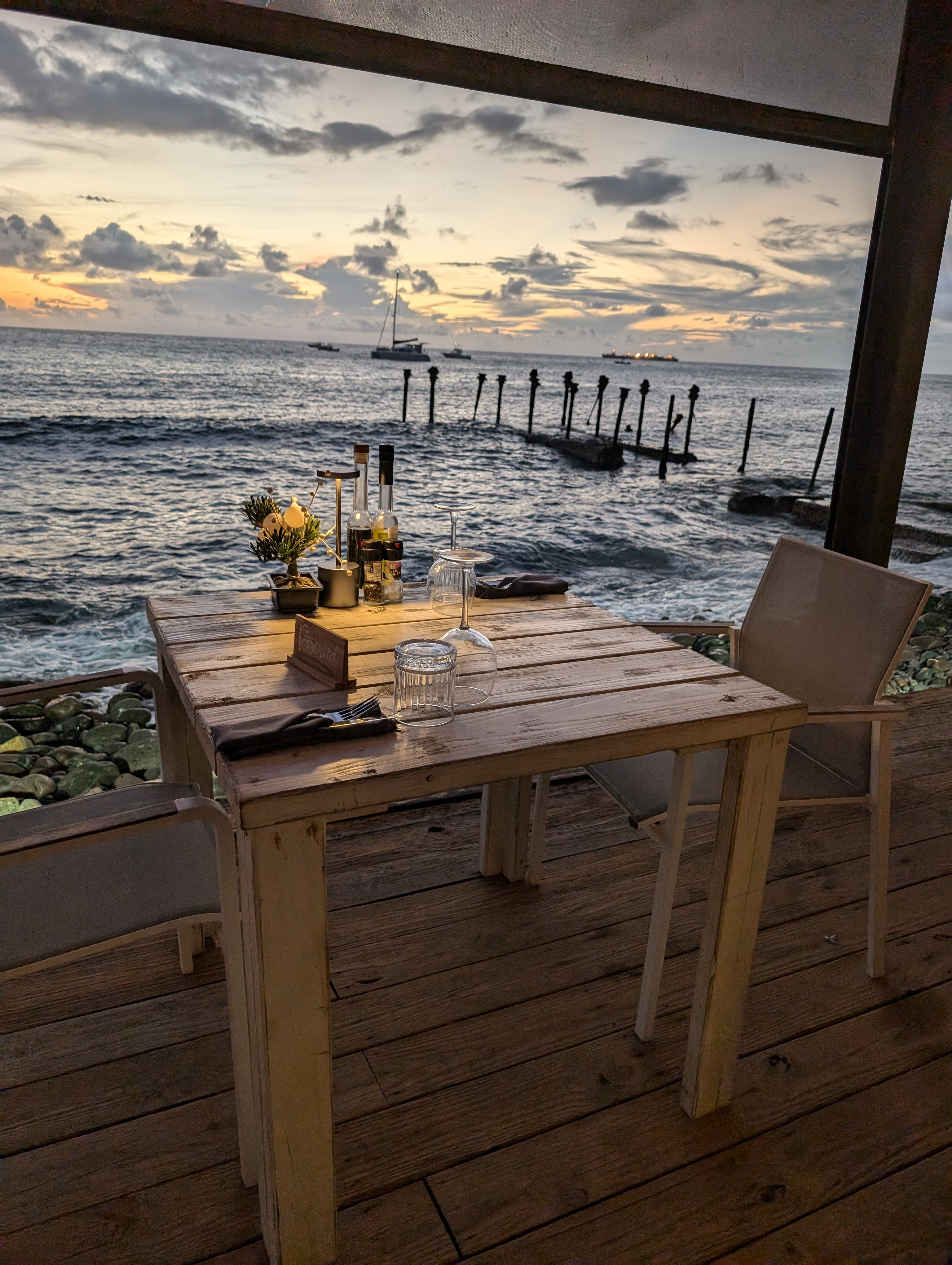
We never thought that we would leave our boat on anchor in a strange place and stay at a hotel, but boy are we glad we did. We had an amazing day of snorkeling and exploring the town and historical sights. For dinner we went to a nearby 5 star restaurant and had one of the most memorable dinners of our lives. The dining area was right on the beach with waves splashing just feet away from our table. And through the whole meal we watched our mast light rolling back and forth in the bay. We were so glad not to be on the boat! 

One of those boats is ours, and we were happy to be at that table!

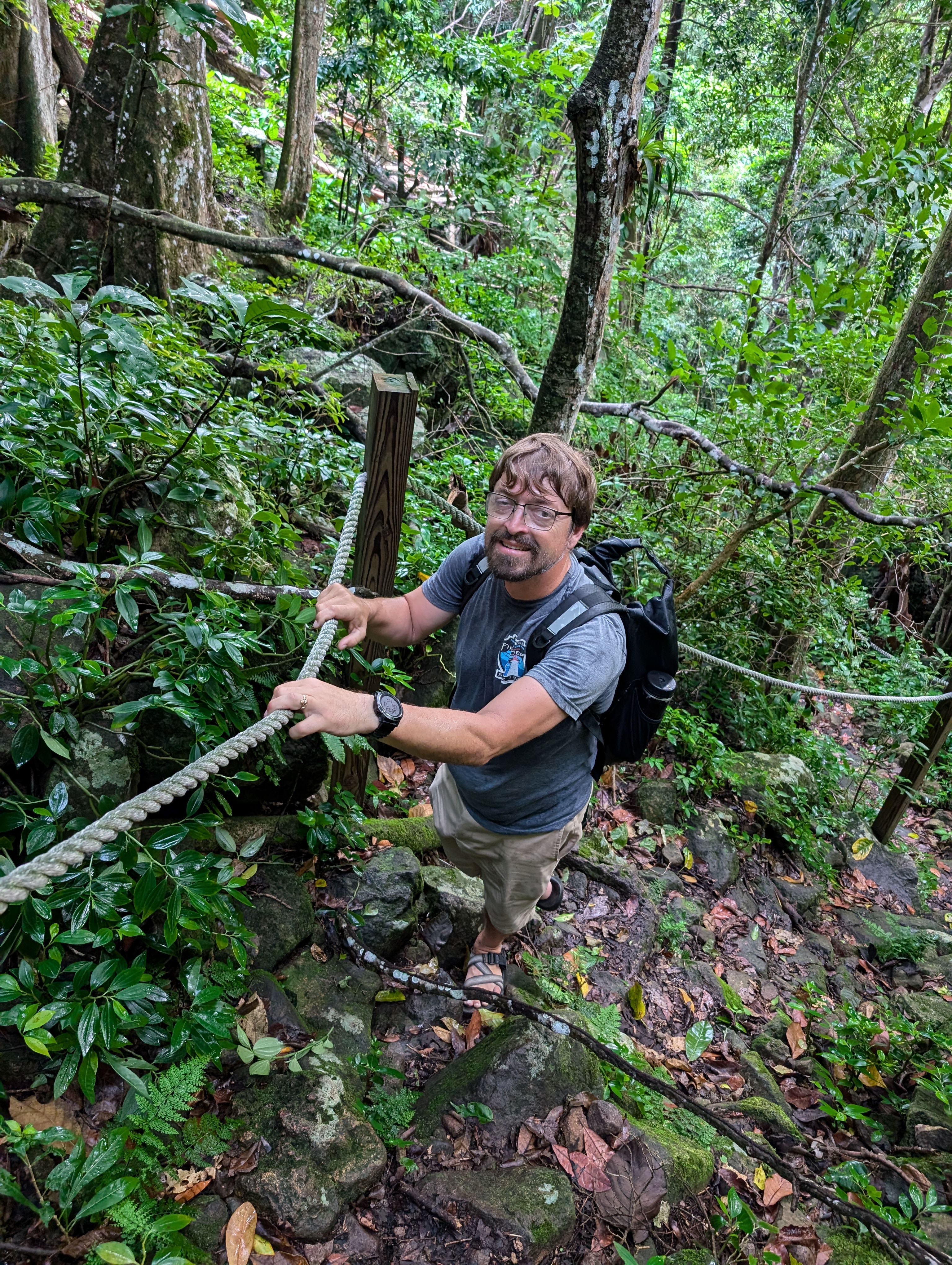
We only stayed at the hotel for one night, and then did a very cool hike to a dormant volcano the next morning before heading back out to the boat to prepare to leave. We found that the companionway panels had jumped the track and the dodger had come apart during the night. Easy fixes, but show how crazy the roll was the night before. It must have been terrible, thank god we were not on the boat that night, what a good choice. 

Douglas going down into the volcano.

Setting off from St Eustatius at midday on December 22nd, meant we wouldn’t have time to make St. Maarten before dark. We decided to head to Forchue instead but had to make speed, so although the wind was okay, we used motor assist for the 30 NM trip. Forchue is a tiny island owned by French St. Barths, but you can stay here without checking in if you put up a quarantine flag. We picked up a mooring at 5:30PM, in time to watch the sunset and turtles swimming around the bay. The next morning we made the short jump to St. Maarten in time to get the 11:30 AM bridge opening to enter the inner harbour. We had made it to St. Martin for Christmas! 

Christmas day in St. Maarten.


Our Last Season – Part 1

Me in my happy place!

When we left the boat in St. Lucia in May 2024 to spend hurricane season at home in Nova Scotia, Douglas was ready to move back to land permanently. He wanted to be closer to our family and friends, and live in a house that didn’t need constant maintenance. I agreed that it wasn’t the right life for us. It had not given us the freedom that we had hoped for, given how stuck you are to the boat in remote places. On the other hand, I would have happily sailed between Grenada and Puerto Rico for the rest of my life. We made the decision to sell the boat in St. Lucia. Although we found a buyer right away, that didn’t work out, so we stored the boat on the hard in St. Lucia for the season. 

Getting reunited with our baby boat after a summer away.

In November we found ourselves flying back to St. Lucia to get the boat in the water and take her north to sell in Florida. I was happy for the extra season. Douglas wasn’t thrilled with having to spend more time sailing before starting the next chapter in our lives. We decided to compromise and do the trip as quickly as we could, while taking the time to stop at a few islands we had missed on the way down. 

We found the boat in very good shape after her summer of storage, or so we thought. We took advantage of having her out of the water to change the cutlass bearing and do a few other projects. Then we spent a few days getting her all back together before she was splashed on November 22nd. The boat yard was amazing; very professional and very well organized. When our turn came to get in the water, they gave us all the time we needed to make sure the motor was running well, and everything was tight and right. All good! We left the well.

One of the fabulous dock workers in Rodney Bay. I’m not sure that helmet set up meets safety standards though!

As we were motoring over to the dock 3 minutes later, Douglas went forward to put a bow line on. The motor died! I tried to restart it, nothing. I yelled to Doug, he ran below, checking fuel lines and whatever else he does in these situations. He yelled for me to try to start it again. It turned over, but it would not catch. He couldn’t find an immediate fix, so came up to assess our options. We could drop anchor, but there were some underwater cables in the area. We could sail out of the bay, but the sails were still sitting down below. Our best option was a tow to the dock. 
I started blowing our air horn and calling the marina on VHF. Both got a response, but it was a guy in a dinghy that got there first and was able to push us to the end of a T dock. The marina sent out a boat with a professional captain and they arrived just as we were getting to the dock. They helped us get it tied up. We gave the dinghy captain a case of beer and gave $20 bucks to the marina captain. All in all, much cheaper than a tow boat. 

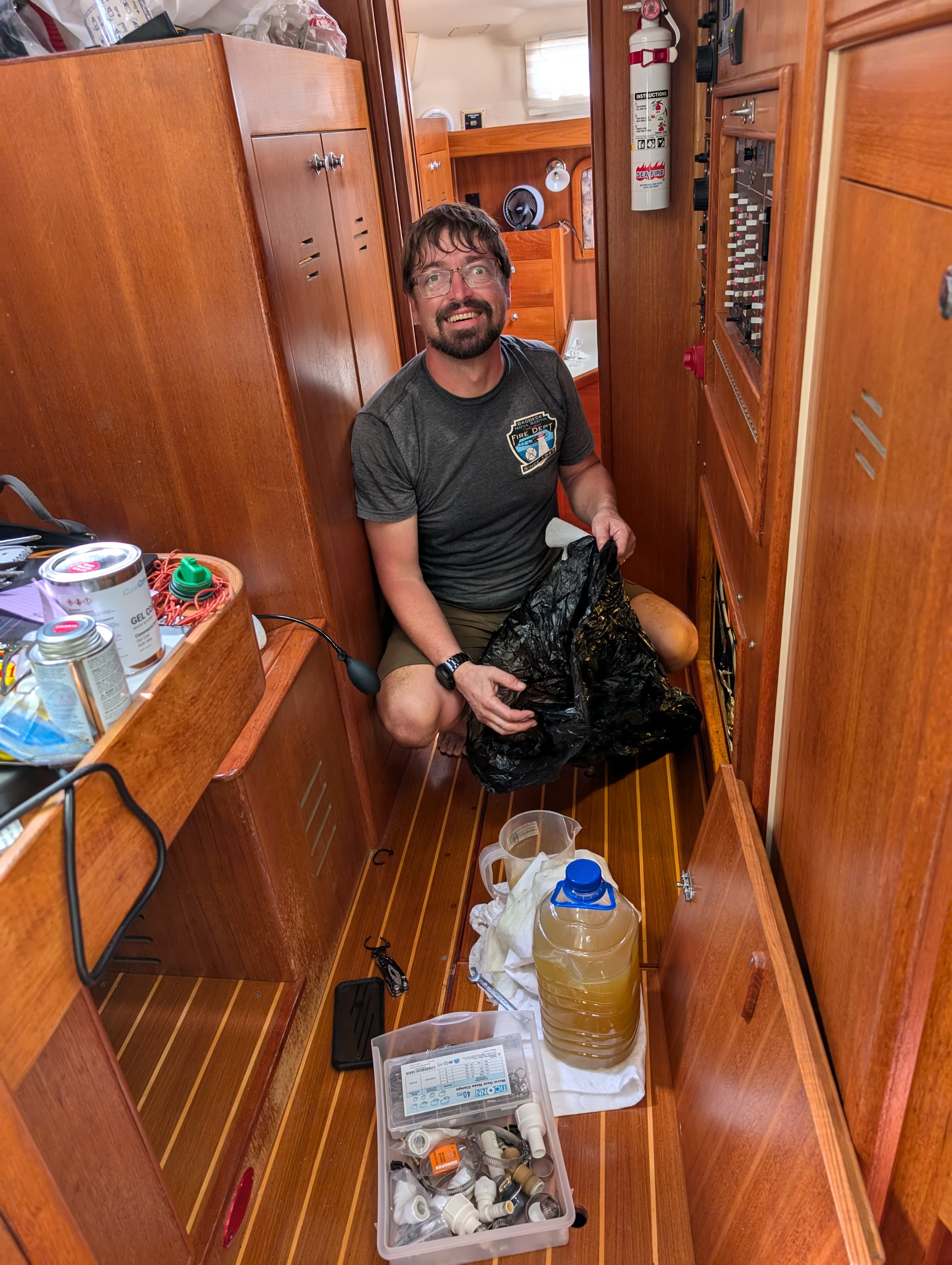
Once the boat was tied up safely, Douglas got to work figuring out the problem. As it turned out, half of our fuel tank was filled with water. After more consultation with fuel companies and mechanics, it seems that by filling our fuel tank, we had overfilled it for summer conditions. So as the temperatures got hotter the fuel expanded and loosened our fuel cap allowing water to come in and fuel to escape from the vent. Apparently it happens from time to time and the yards tell people to only fill your tank ⅔ of the way. No one had told us, but now we know. 

What a lot of water, what a lot of work!

This put a big wrench in our plans of leaving St. Lucia in a few days, and confirmed to Douglas that he was done with the sailing life. We had a fuel company come to the dock and pump out all of our fuel into barrels to be recycled. Then we had to replace and clean all the lines and filters. What a job. Needless to say, by the time everything was back together and sea worthy, we were happy to leave St. Lucia. We were a  week behind schedule and feeling the pressure to get moving. 


Final Stop for the 2024 Season: St Lucia

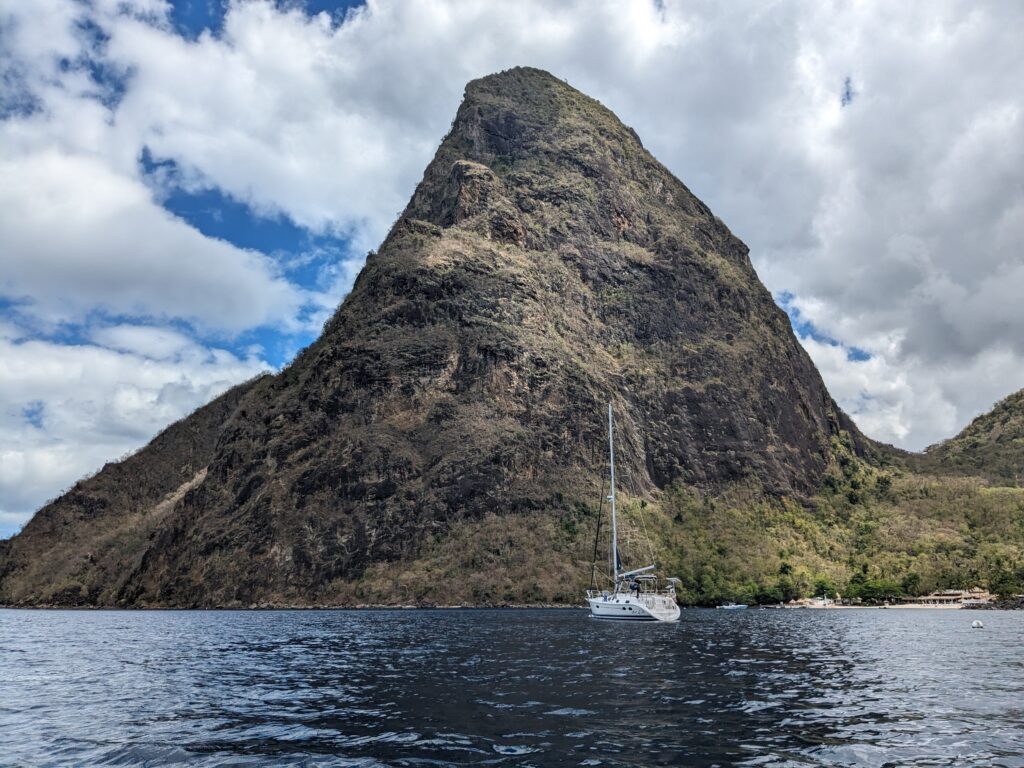
Sail La Vie parked by a Piton!

Although we had a few days to spare before our friends arrived, we decided to head over to St. Lucia a little early to make sure the weather didn’t change. We had heard that some people had been boarded and robbed recently in the country so we were a little nervous and decided to stay at marinas. 

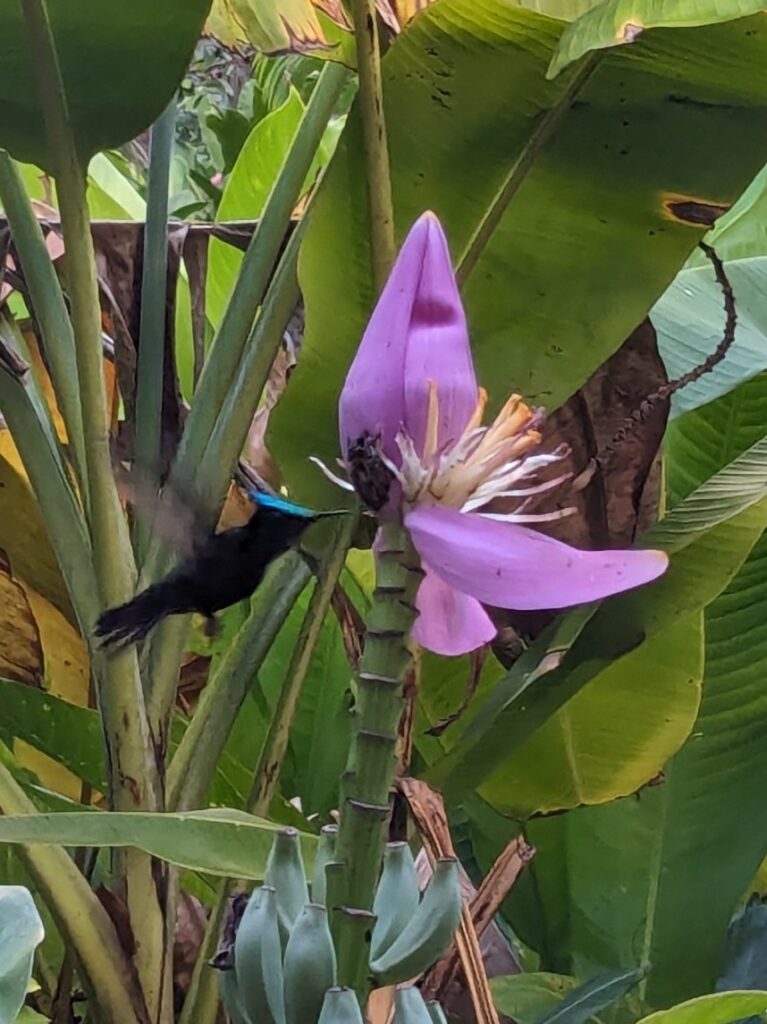
St. Lucia is filled with lush plants and amazing birds.

First we spent a few days at Marigot bay marina. From there we were able to hire a driver to take us down to see the Pitons and to a chocolate making experience and restaurant. We also spent a day relaxing at the resort there and catching up on sleep. 

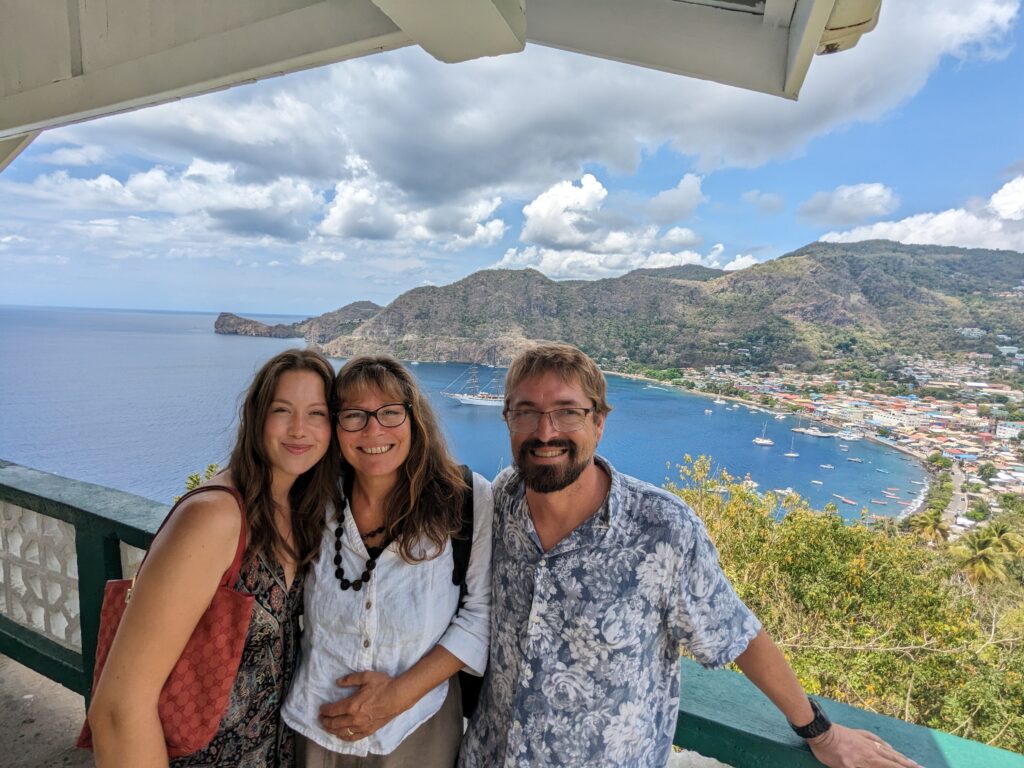
Just another day in paradise with the family!

Next we went to the marina at Rodney bay which would become our home for the next month or so. When we arrived, locals surrounded our boat offering to do fiberglass work, dive work and cleaning. We jumped too quickly at the chance to get things done and probably paid too much, but it is what it is. 

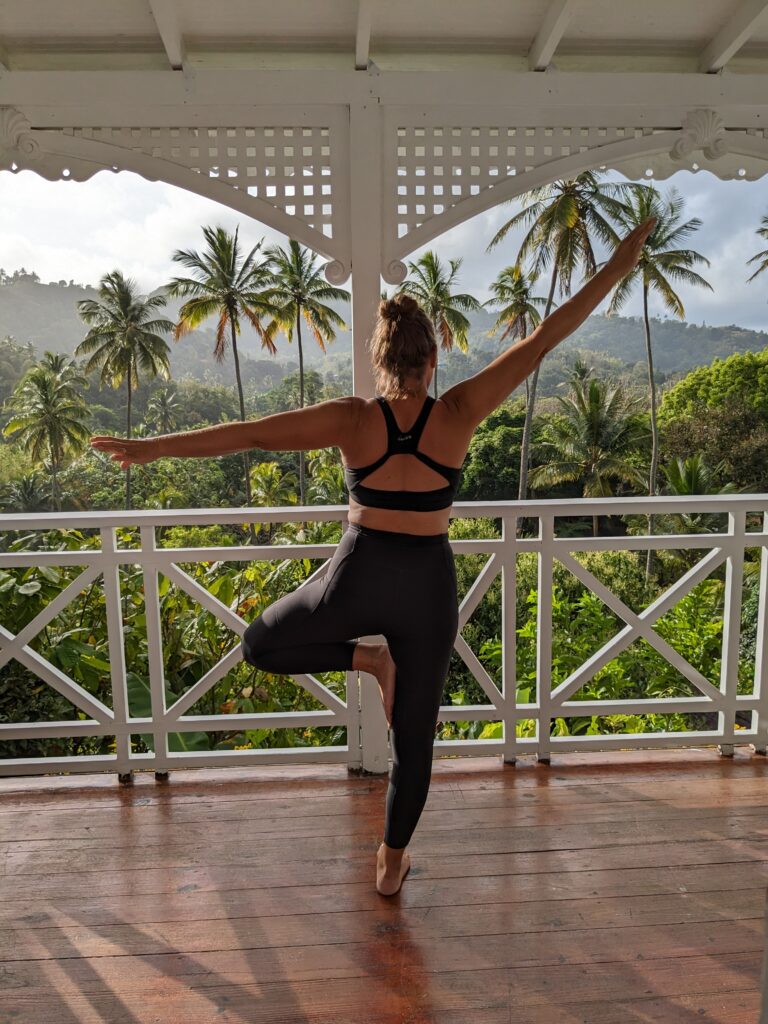
It is hard to be too upset about daily things when this is your day.

Our friends Darren and Alison flew in a few days after we arrived and we spent a week hanging out with them and seeing some of the cool things in St. Lucia. We did a really nice hike with great views of the pitons. Mostly we just hung out on the beach chatting and having a few drinks everyday. 

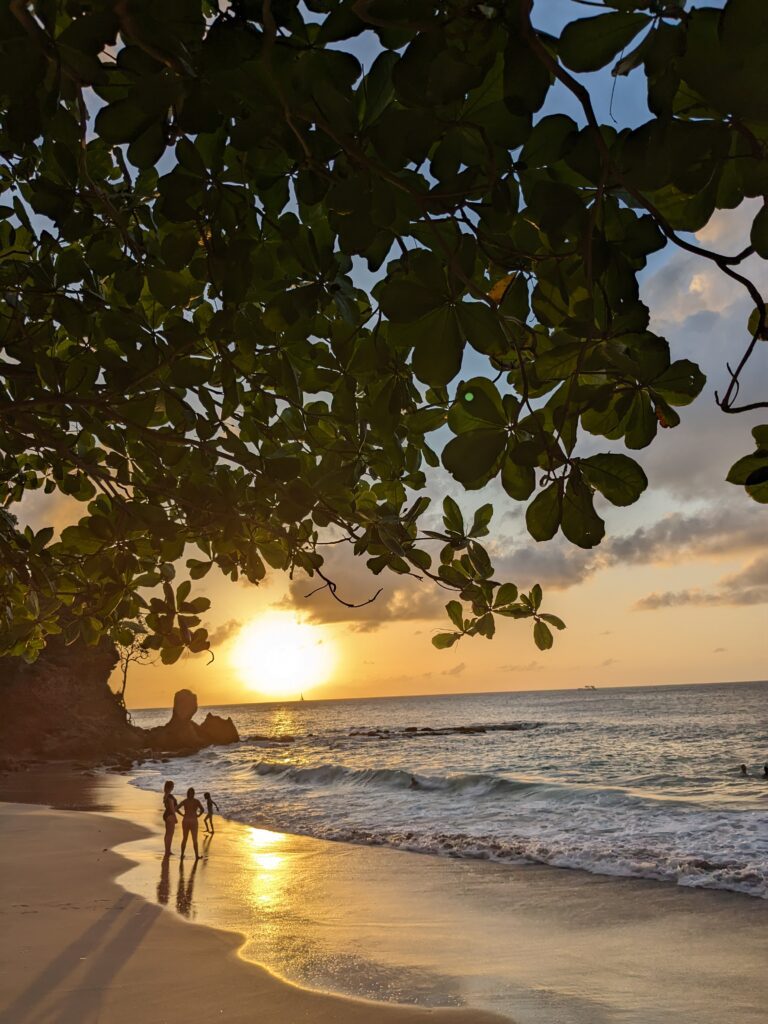
St. Lucia sunsets are pretty epic!

After our friends left, we finalized our plans for getting the boat hauled out and stored for hurricane season. We also spent some time traveling around the island, staying in an eco resort in the south and we did a day sail to the pitons and stayed overnight one night. 

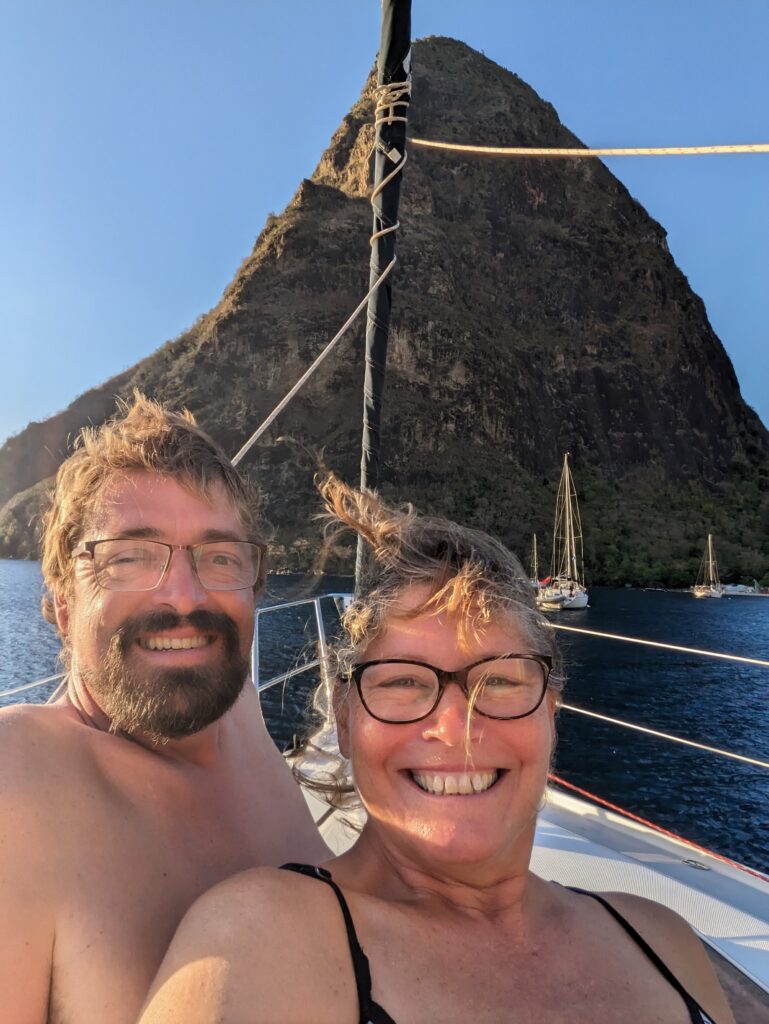
This was a total dream come true for me, to be anchored in front of the pitons.

Getting the boat ready for storage was hard! We had done it every year in Nova Scotia with our smaller boat, but here we had to worry a lot more about bugs, rats and mildew. We also had never had this boat hauled out before so that added to the anxiety. 
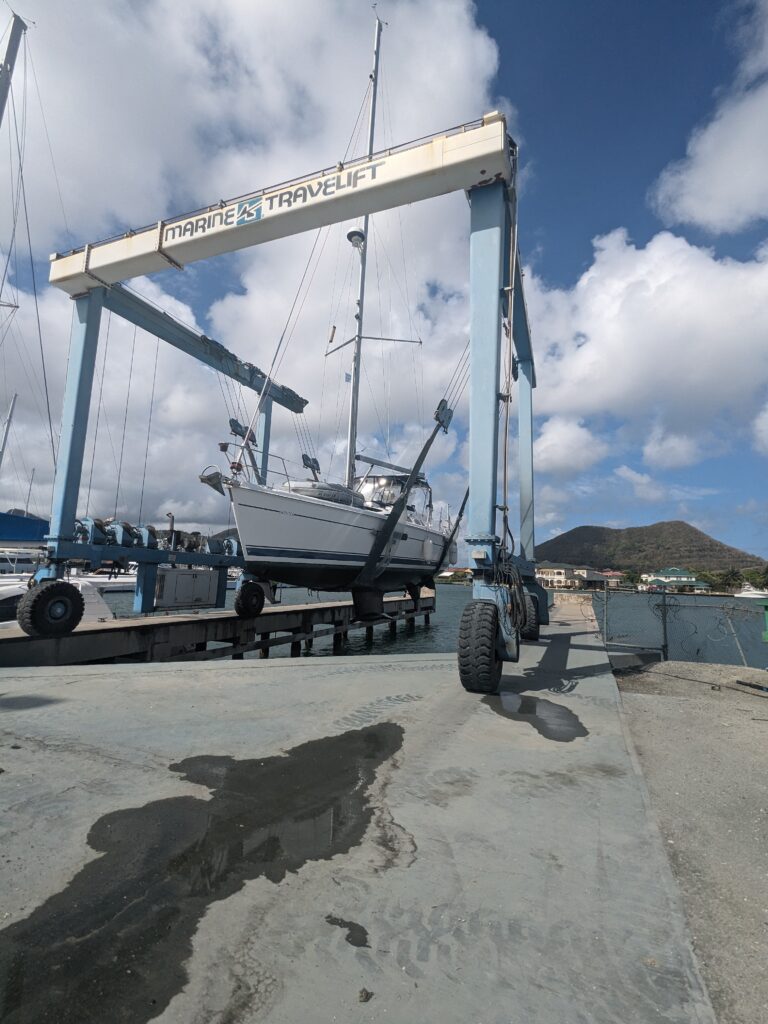
Lift out is so scary!
It ended up taking way longer than we expected but the haul out and storage was really professional. We also were able to find a local who agreed to check on the boat and send us videos once a month. We didn’t leave St. Lucia until the 20th of May – relieved to get a break from boat life and spread our legs on land for the summer in Nova Scotia! 

Sad to be leaving but happy to have a break!


A Short Stop in Martinique

We were sad to leave Dominica before we had explored more of the island; yet as always, the weather dictates the schedule. So, on March 26th we left Dominica, arriving later in the day in St. Anne’s Martinique. These day sails between islands is such a treat, it’s hard to even describe. 

Being close to land all the time feels a lot different from most of our trip!

One of my favorite parts of cruising life is how different each of these countries are. Where Dominica was lush and green and English speaking, Martinique is very French, with lush tropical scenes, but also more defined towns near where we anchored with a more urban feel. 

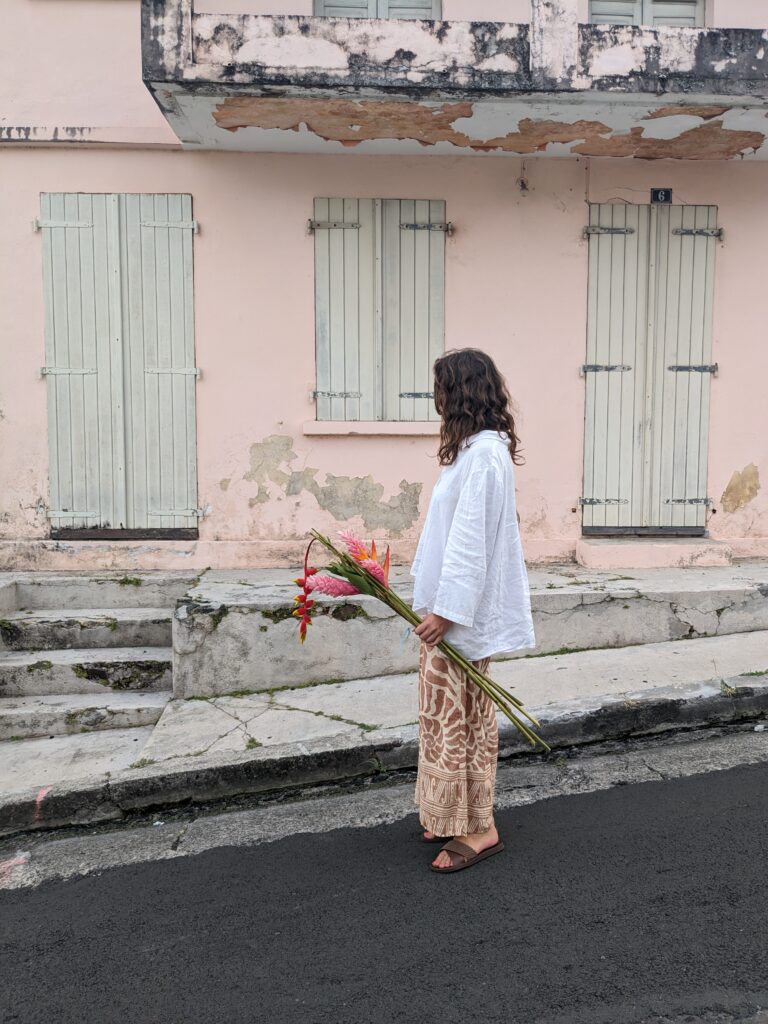
I got Gab to model these flowers walking down the street in town.

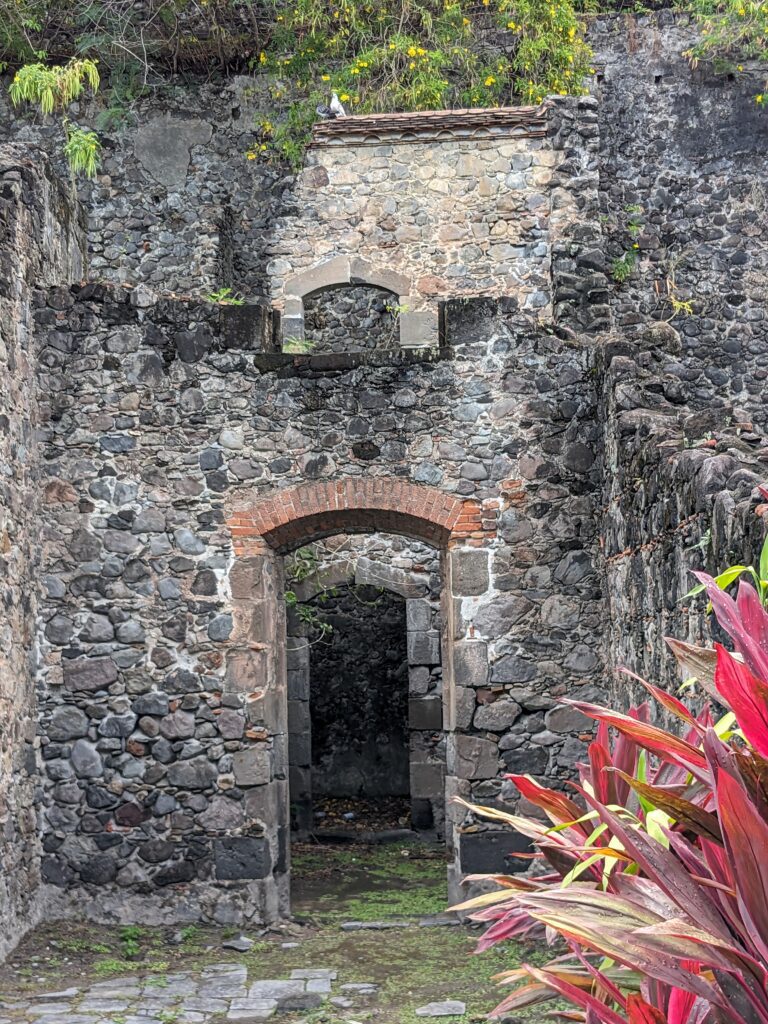
St. Anne’s was absolutely incredible. The town was built on the remnants of the original town that was destroyed by an unexpected volcanic eruption in 1902. During the eruption super heated gas descended on the town almost immediately.  This gas ignited everything flammable and killed over 30,000 people. Yet there were no solids in the eruption so all the stone walls and foundations were left behind. 

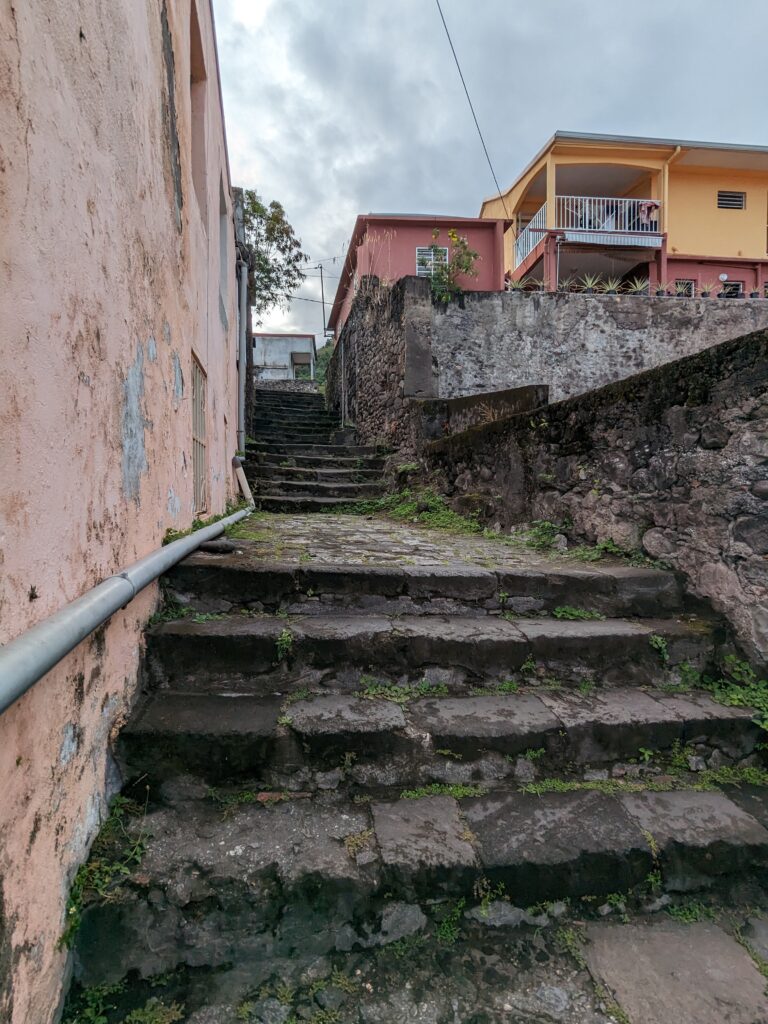
At that time there wasn’t labor or money to remove the destroyed buildings so the people used those old walls and foundations to rebuild when they decided to move back. The result is a very interesting aesthetic of ancient remains surrounding more modern homes. Sometimes the old walls are part of the newer structures while in other cases they act as garden walls or property dividers. 

We went to the museum in town that describes the catastrophe. It was extremely moving. One room was dedicated to all those who died during that eruption. It was mind boggling to imagine everyone in a town being killed within two minutes. Yet, the most amazing part to me is to think about how resilient people are to come back, and rebuild right over the top of all that loss and destruction. People are incredible. 

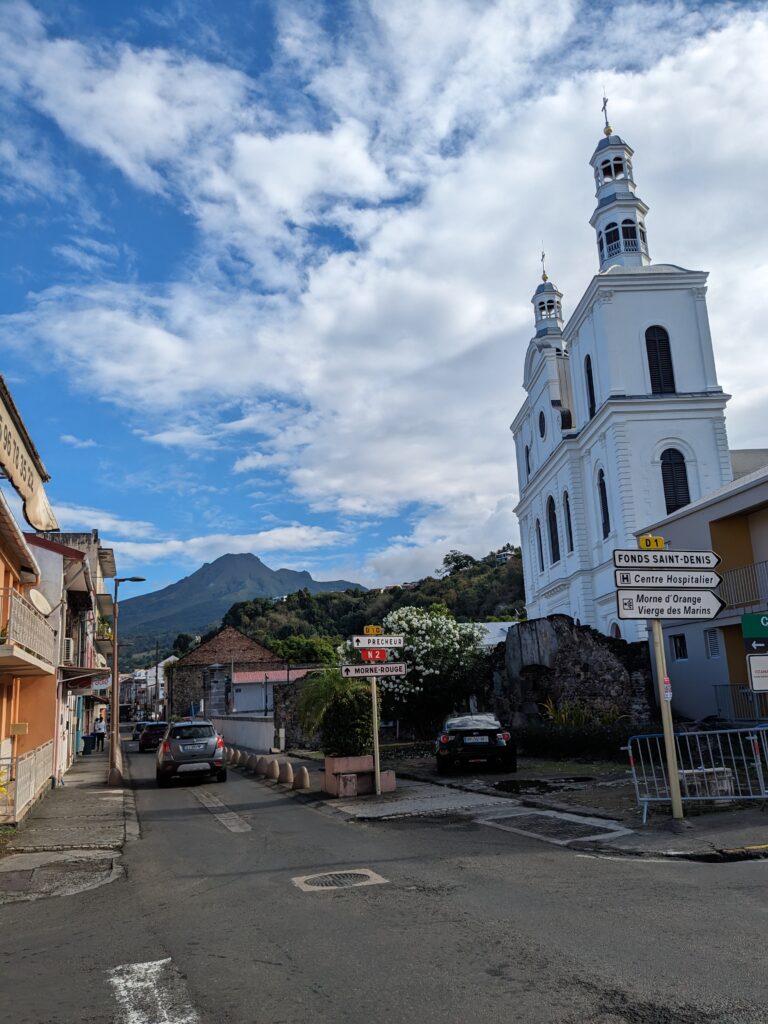
The volcano can be seen in the background here.

The one issue in St. Anne’s was that the anchorage had a terrible roll. We couldn’t stand it after a few days. Moving on from St. Anne’s we found Le Marin, which is a huge and well protected marina with tons of services like laundry and marine stores. We picked up a mooring there and spent a few days hanging out nearby. We enjoyed the town, doing laundry, going to the market, and several great restaurants. 

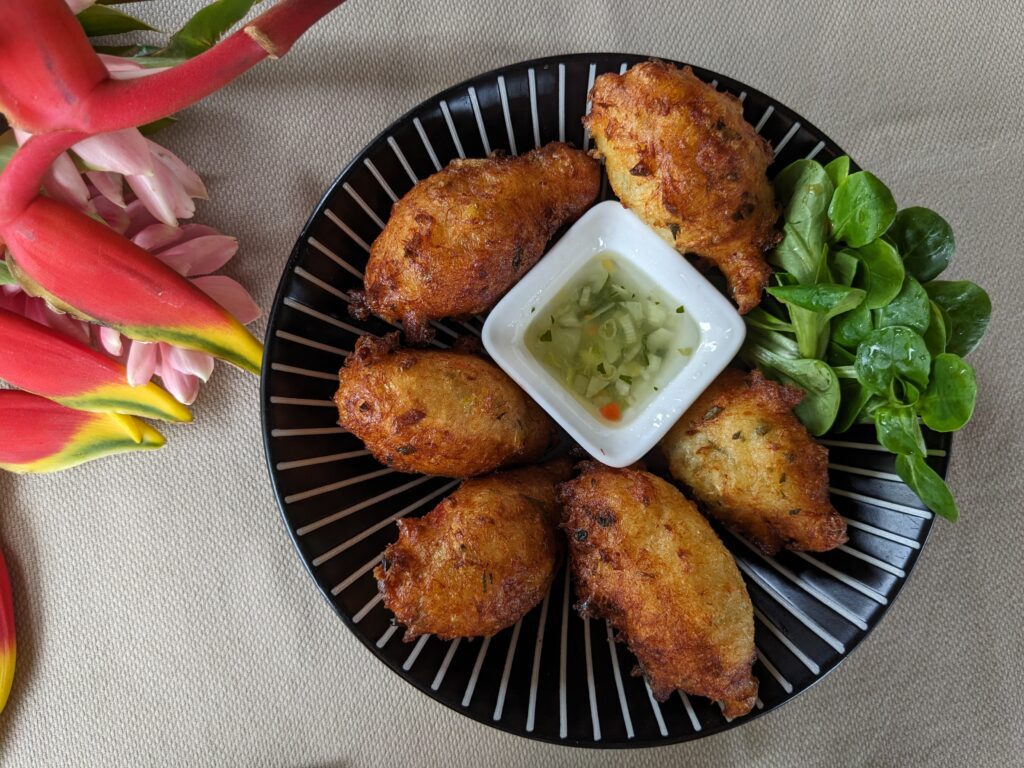
Salt cod fritters are a traditional food here, with cod historically caught in New England or Nova Scotia.

Unfortunately it was impossible to find cars for rent without advance notice, so we weren’t able to explore more of the island. Looking at the wave forecast we decided to head to St. Lucia a little earlier than planned so that we wouldn’t end up having a miserable trip. We certainly were left wanting more, but also super grateful for our time there. What an amazing adventure!

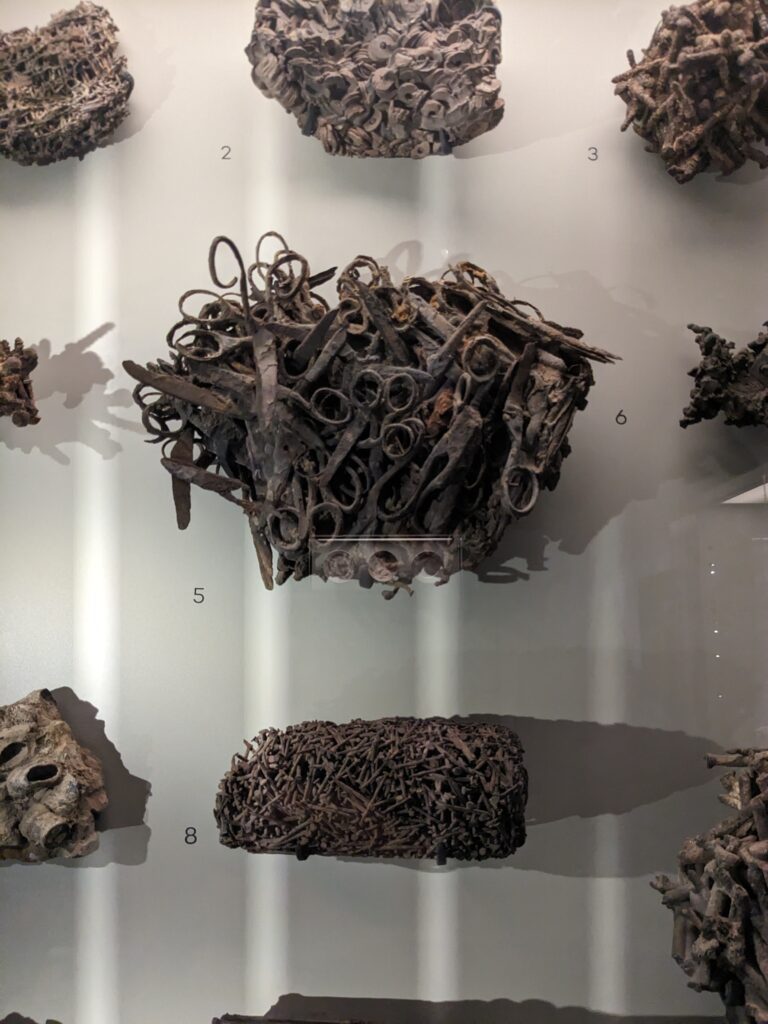
Imagine the heat that would weld together these metal objects. No one in the town stood a chance, except the one survivor who was a prisoner in an underground cell.


Dominica – A New Home for our Hearts

If you are looking for a Caribbean destination that has amazing hiking, stunning scenery and is not polluted with tourists, Dominica is the place for you. 

Not to be confused with the country of Dominican Republic in the Northern Caribbean, Dominica is an island nation in the Eastern Caribbean and is totally wonderful in its own right. It is an island of lush green vegetation, a huge variety of locally grown foods, and people about as friendly as anywhere you will encounter. 

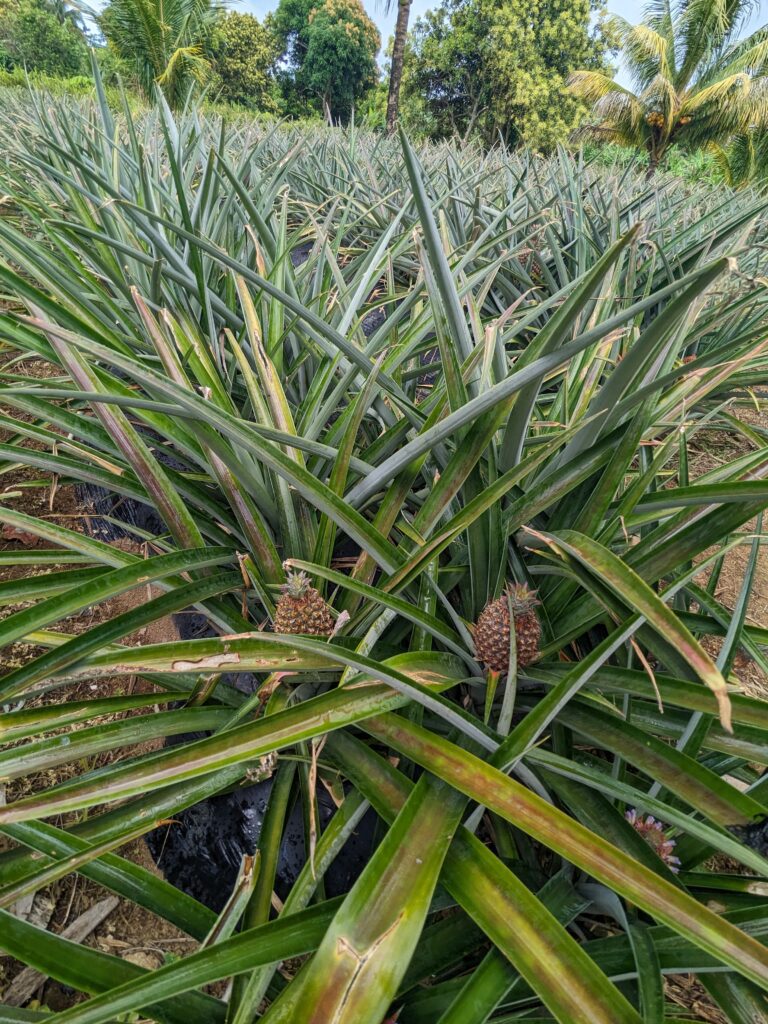
Adorable baby pineapples.

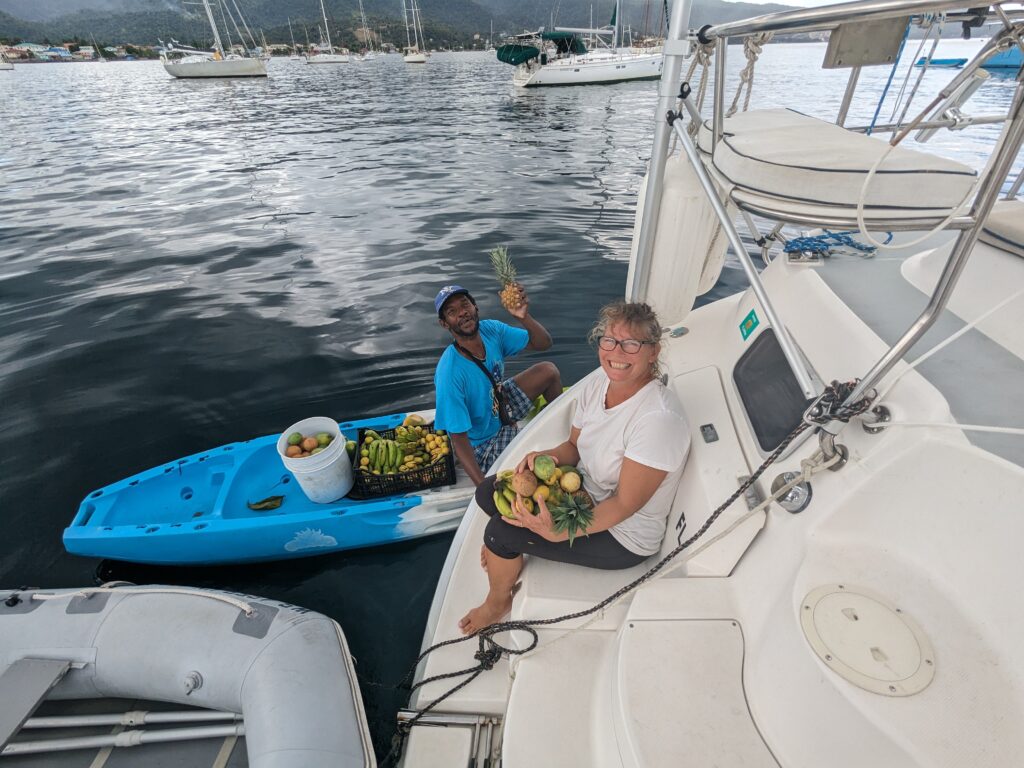
When we arrived in Dominica from Guadeloupe on March 21st, 2024, we immediately knew we were somewhere special. When we entered the harbor, a boat from the local mooring co-operative came out to help us get secured and offered us a friendly welcome. Within 15 minutes people came out to offer us various things for sale – roti, local vegetables, island tours even garbage removal. The offers were cheerful and pleasant – no pressure. 

What a way to buy fruit and veg!!

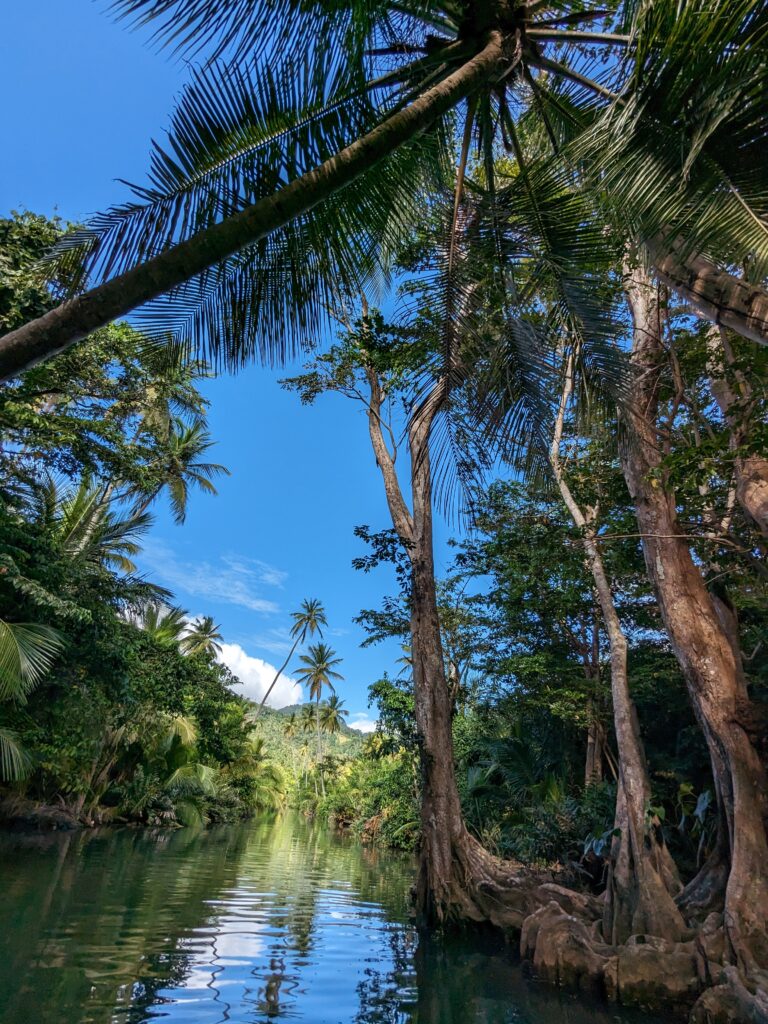
We booked various trips around the island with a local tour company, knowing that we would be moving on in a few days. We really wanted to get a feel for the island and the people, so tours rather than renting a car seemed to be the faster way to accomplish that. We were not disappointed. Our first tour was Indian river the evening we arrived. It was very beautiful, and part of the Pirates of the Caribbean was filmed there. 

It’s hard to believe it is a real place!

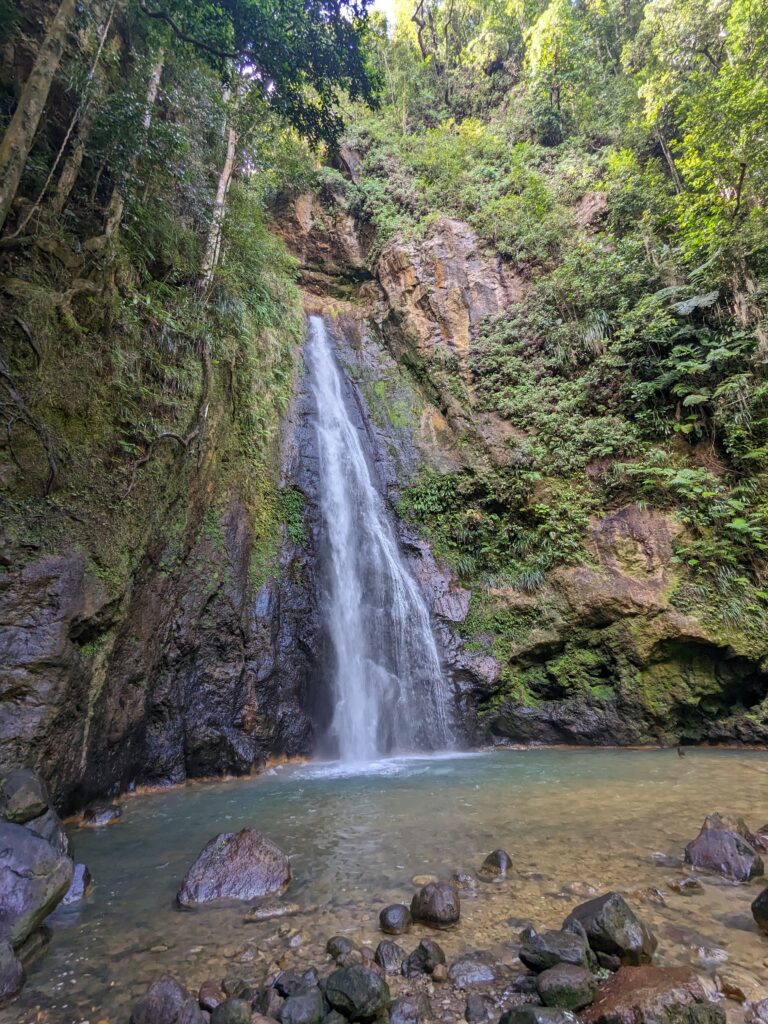
The next day we went on a day tour with guides Omar and Abby. We visited a working farm to pick coconuts, a beautiful waterfall and even an indigenous community. Throughout the rest of the Caribbean islands that we had visited, all the indigenous people had been killed by settlers of one type or the next, so this was a really interesting opportunity for us. We learned a lot and soaked up the beautiful scenery.

The island is dotted with amazing waterfalls like this.

The day after our tour around the island, Douglas and I left Gabby on the boat and headed out with Omar to do the famous boiling lake hike. This was a day long adventure driving though most of the island and hiking through a volcano for about 7 hours round trip – uphill both ways. On the way to the hike we stopped in the capital city for blood pudding and pig snout for extra strength and endurance.  

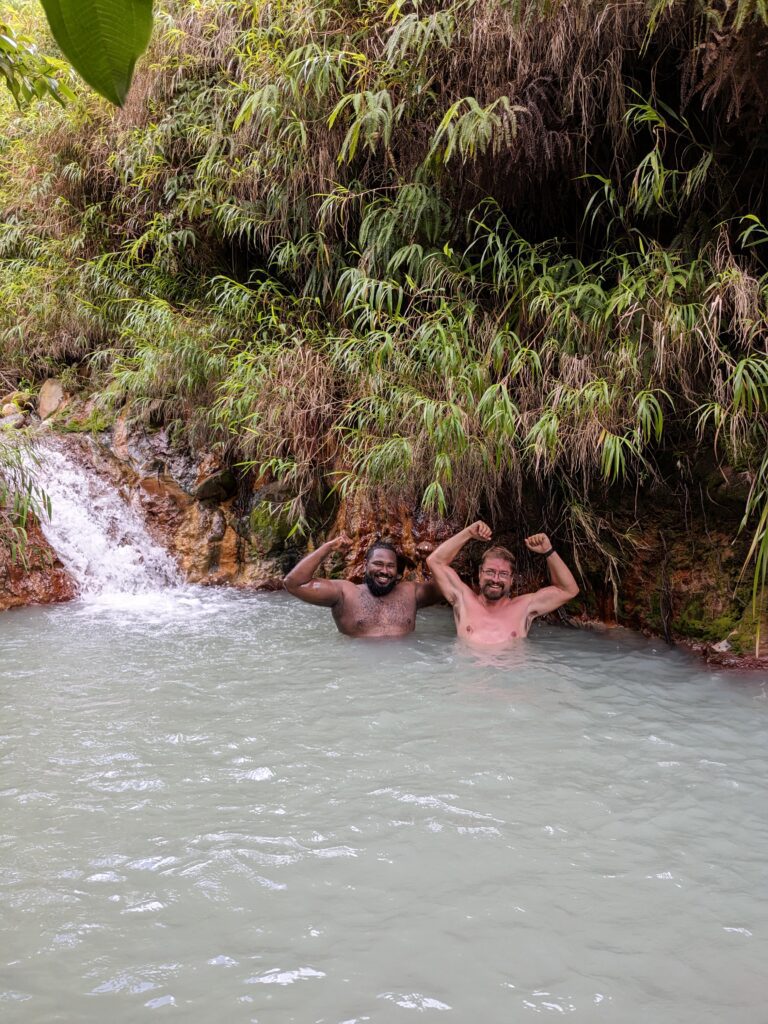
Douglas and Omar showing off their muscles in a hot pool.

The hike was very challenging with very steep sections, some with ropes to assist. At one point we stopped near where steam and hot mud vent out of the ground. We got sulfur facials from Omar and nearly burned our hands on the boiling water there which Omar said is usually much cooler. It was amazing, but also a little creepy in the fact that you are inside the caldera of a volcano, and all ways out are straight uphill.  

Yes, up hill both ways!

We continued on and after much more uphill and downhill and crossing hot streams and pools, we finally reached the boiling lake….. It was not boiling. Omar was surprised. He said he had heard this had happened a few days before and no one knew why. Typically, the lake has so much boiling activity that you have to wait for the wind to blow away the steam to see the water. The lake was still and you could see the entire thing. Despite the fact that it was beautiful, it was actually very unsettling and I couldn’t wait to get down and off the trail. 

The usually boiling lake was flat calm….

The next day Douglas and I were stiff and sore and hardly moved out of bed. Gabby jumped at the chance to head to the city with her new friend Abby to have a day hanging out with someone her own age. During the day Douglas and I studied the weather and decided to leave Dominica earlier than planned because of an incoming system might stick us there for longer than we had time for.

We were very sad to leave Dominica, and will return when we have more time to explore. Next time though we will skip the volcano hikes and just enjoy the scenery and interesting local foods.  


Paradise Found in Guadeloupe

We will return to Terre de Haute for this view!

After spending a few days in Montserrat on March 11th we had good weather to make the 45 nautical mile passage to the French Island of Guadeloupe. It was a very nice day sail, and we arrived at Deshaies on the northwest side of the island in the afternoon. 

One of us is having fun!

We had heard a lot of complaints about french moorings, and now we learned that they are true. The balls are attached to a chain and they will not lift one inch when you catch them. Gabby and I basically ripped off our arms trying to get lines on it, and then pulled it alongside the boat to a lower spot while Douglas hung upside down to secure it. Not fun, but very sturdy! 

The cutest town, with the toughest mooring balls around!

We really enjoyed exploring Deshais. It is where the television show “Death in Paradise” is filmed, which we didn’t know of until the Facebook comments started pouring in on our pics. We found some good French restaurants and a good bakery. Gabby and I even visited a botanical garden just outside of town for a day. 

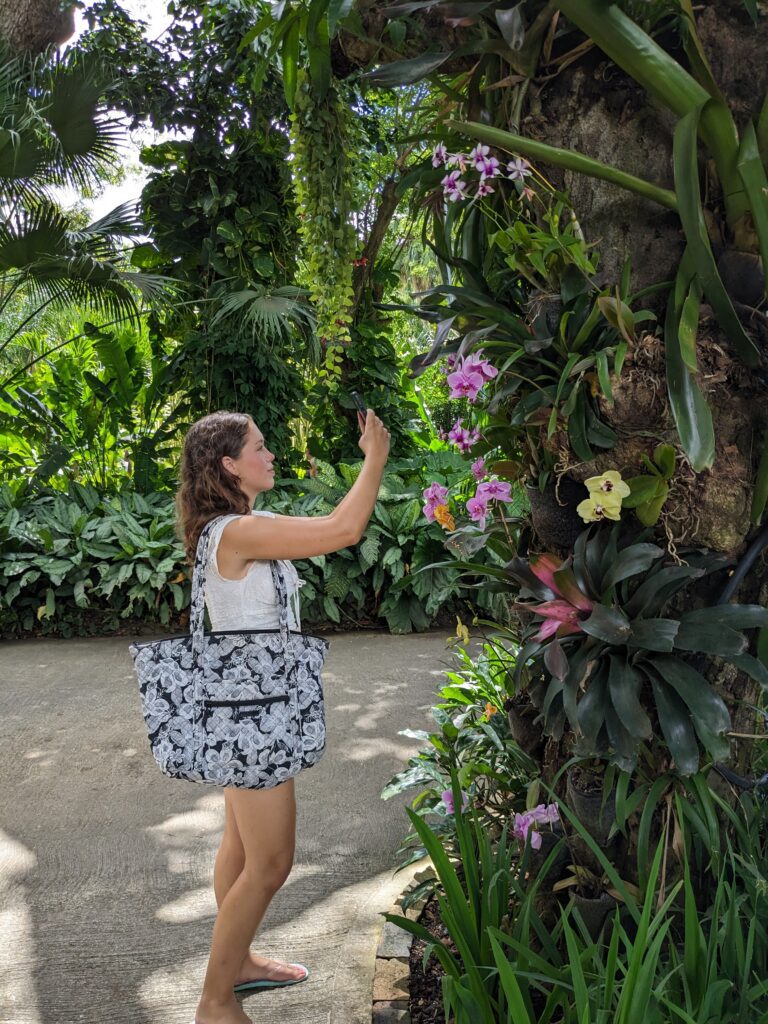
My daughter, so pretty with all the pretty flowers!

After a few days in Deshais we decided to set off for Terre de Haut in Iles des Saints on the South coast of Guadeloupe. We had to get fuel, but ended up being blocked out of the fuel dock by cruise ship tenders. We then went and grabbed another mooring to wait. This time we grabbed the mooring from the stern and it was really easy to deal with. Lesson Learned. 

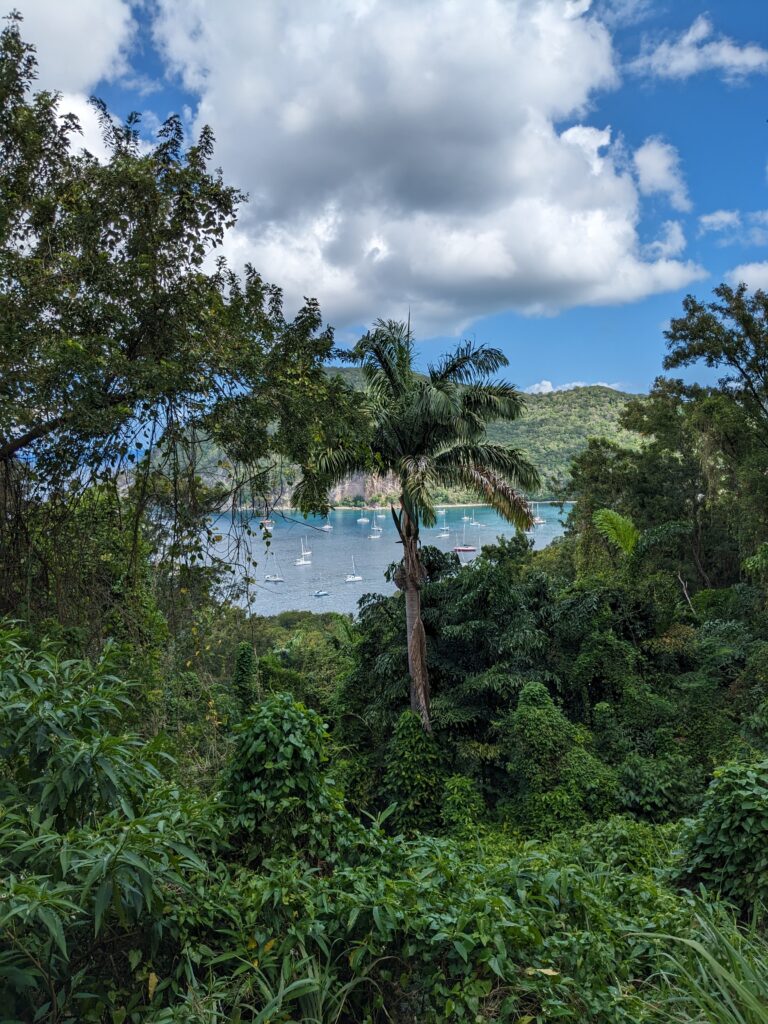
What a view!

Since the waiting made us leave so late, we just went 12 Nautical miles down the coast to Anse de Bouillante. This anchorage is known for a hot water spring at the beach. We took the dinghy in to check it out but the dinghy dock was closed, so we tied up to a buoy a few hundred yards from shore to swim in. During the swim I got a nasty jellyfish sting so we only stayed in the hot water for a few minutes before heading back to the boat to treat it. It took a few weeks to heal! 

The water looks nice, but lurking below the surface is the dreaded jelly fish, and not like the nice ones at home!

That night all heck broke loose in the anchorage. We were all anchored in about 30 feet of water, so everyone had a lot of scope out and everyone was pretty close to start with. As the wind began to turn we could see a lot of boats coming very close to each other. Then at about 11 PM the boat on one side of us started blowing their horn and freaking out. As it turns out, another boat had drug anchor, hit them, and kept dragging out over a mile from shore. The owners were not on the boat, but came back and made it out in time to rescue it. 

This lighthouse has probably seen a lot of crazy stuff, like what happened the night we were there.

We had a bad sleep the rest of that night, as we got up and saw other boats dragging sporadically throughout the night. Our Rocna anchor held great, but that won’t keep other boats from hitting you. Nor will your anchor alarm tell you when someone else is about to hit you. Anchoring near other boats is one of the most stressful things about cruising. 

All the nighttime stress fades away when you reach an anchorage like Terre de Haut!

As soon as the sun rose we left Anse de Bouillante and headed for Terre de Haut. We began to fall in love with it as we were approaching the town. It is just absolutely idyllic: Small, beautiful, great restaurants, beaches everywhere with good snorkeling, and interesting streets and alleys to wander around. We could barely drag ourselves away from there after five days. Definitely a highlight and a place we will return! 


Exploring Montserrat: Life in the Shadow of a Volcano

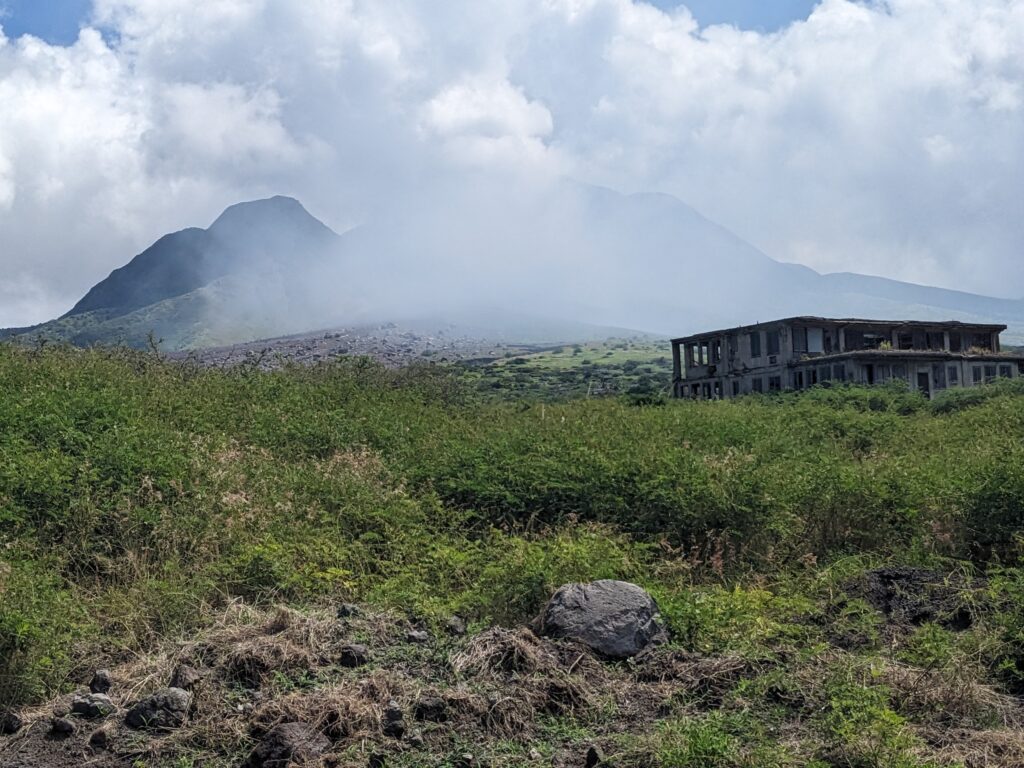
This former multi-story hotel continues to get buried by the volcano in its back yard.

We always knew that the Caribbean islands were formed by volcanoes, but we never thought about how volcanoes had and continue to have serious and sometimes deadly impacts on the lives of the people living here. We began to understand the human impact of volcanoes when we sailed to Montserrat and spent a day touring the island with a local guide.

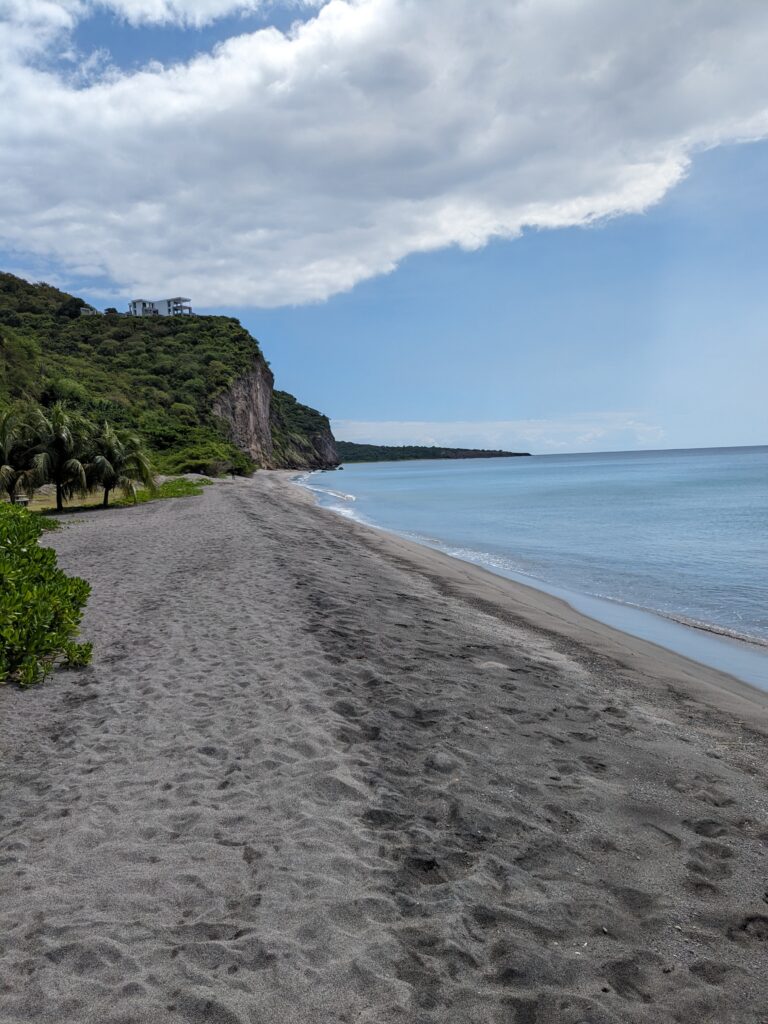
Different from typical white sand, Montserrat beaches have soft black volcanic sand.

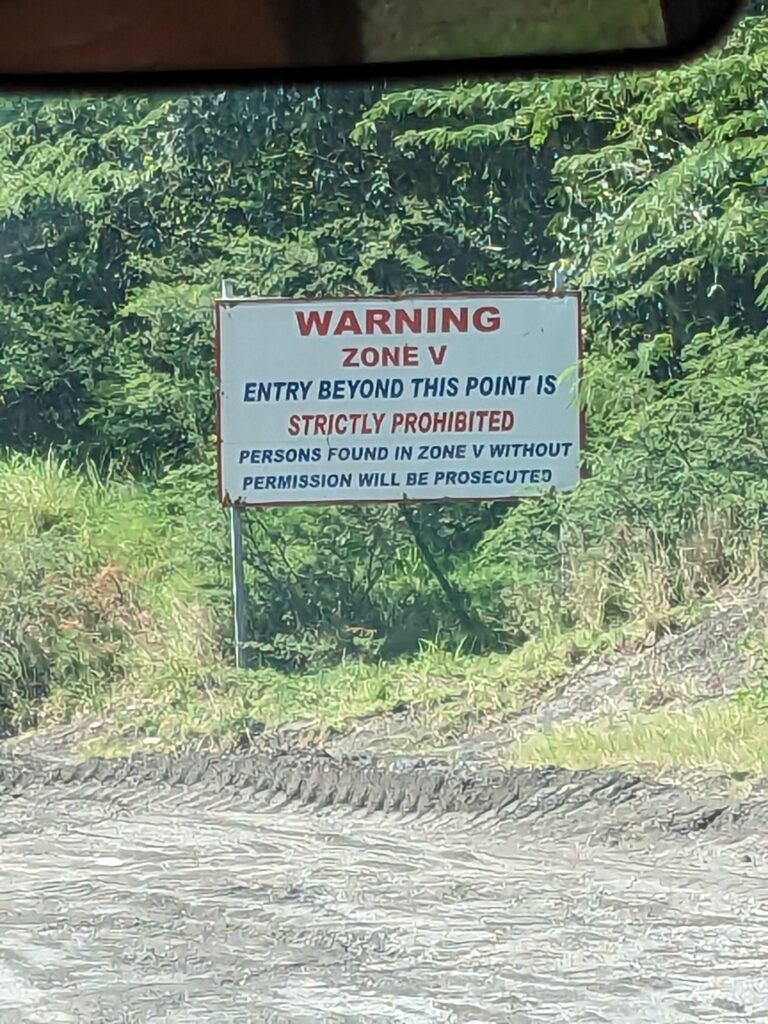
This small and isolated island lies approximately 40 nautical miles southeast of Nevis, providing us with a sporty sail in about 18 knots of wind forward of beam. Two thirds of the island is sectioned into exclusion zones, where traveling without a licensed guide and even anchoring is forbidden due to continued volcanic activity. We entered Montserrat at the one approved anchorage on the northwest coast, and dropped anchor in the early afternoon of March 9th. 

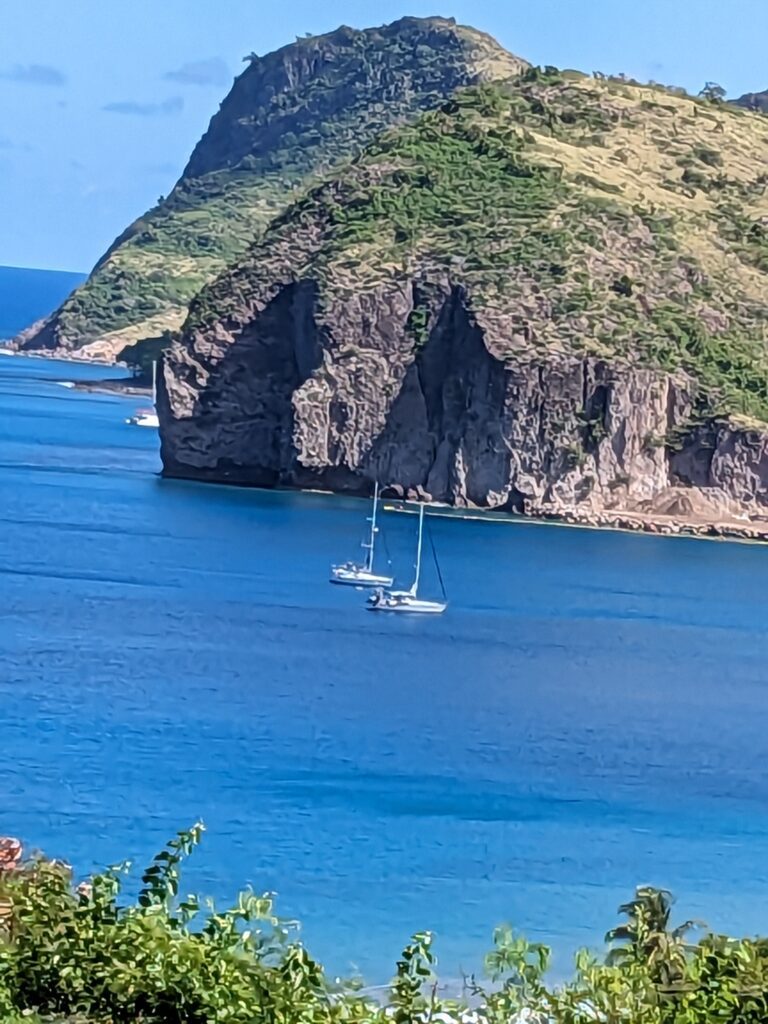
Sail La Vie (in the back) enjoying another gorgeous anchorage!

We had only just begun learning about Montserrat in cruising guides, and decided to visit because we became intrigued with the history. It is best known for the volcano that destroyed its capital city and the area surrounding it in the late 1990s, and displaced 90% of the island’s population. Before the volcanic activity, artists including Paul MacCartney, Stevie Wonder, and Elton John, came to Montserrat to record albums and enjoy the secluded privacy that the island offered. 

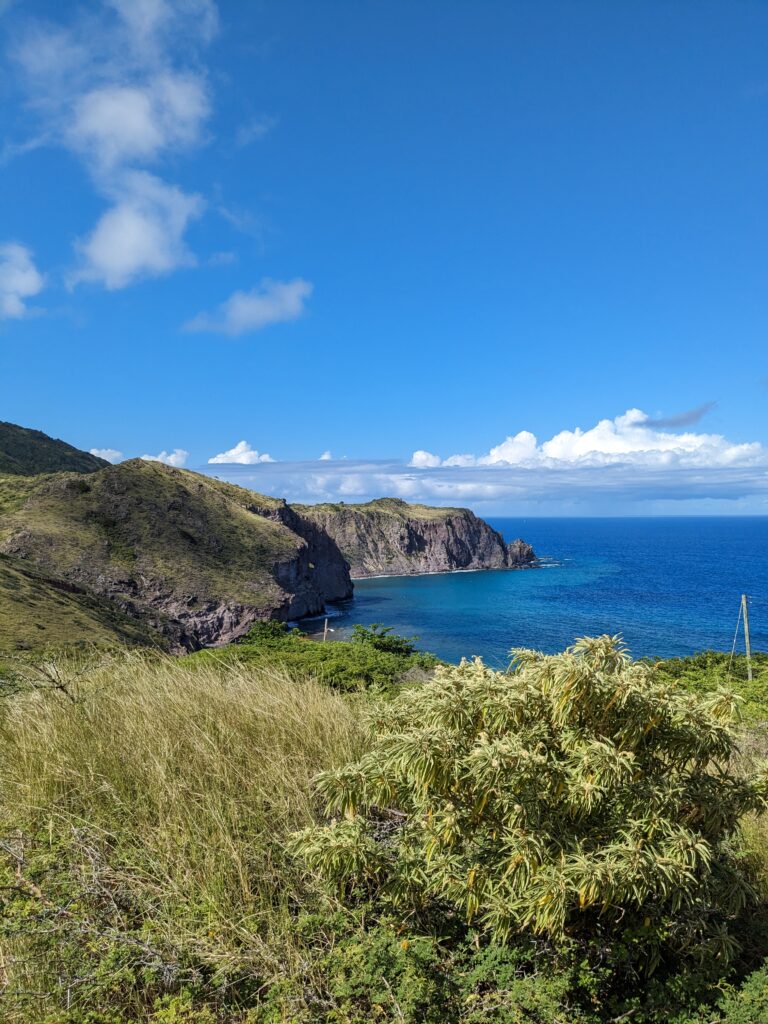
Montserrat has a similar ruggedness to Cape Breton, and also not a lot of people.

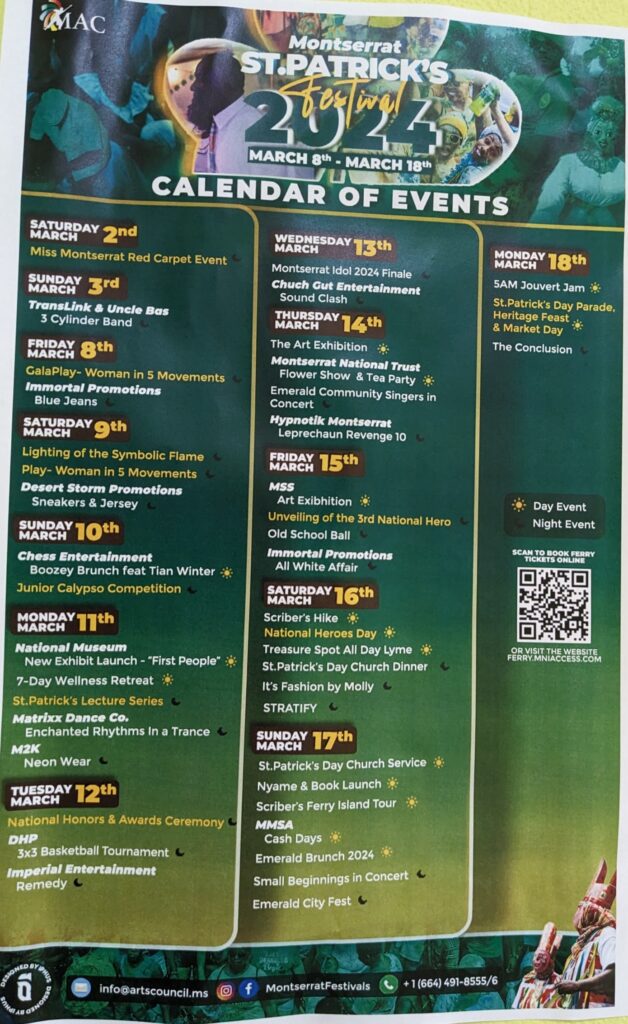
Further back in history, the first people to live on the island were the Carib, but they had left it uninhabited (probably because of volcanoes) by the time the Spanish mapped it in 1493. The island is officially an overseas colony of Britain, after many battles over it between the French and the English. The first settlers to arrive were Irish indentured servants in the 1630s, and later slaves from Africa were brought there in the 1660s. The culture today is an interesting mix and Montserrat is the only place outside of the UK that celebrates St. Patrick’s Day as an official holiday. There are also a lot of Irish names there, including Lake. 

We were tired so didn’t go into shore for the party, but we heard it until 8AM.

We arranged a day tour of the island with licensed tour guide Sunny, who was raised on the island after his American parents decided to move there in the 1970s. Sunny picked us up near the dinghy dock in the morning. From the time we set out, he was on the phone with officials coordinating our arrival time at the exclusion zone, where they would let us through a gate and wait for us to exit. Constant monitoring of the volcano ensures that if we are in the exclusion zone and anything changes they can get us out immediately. While in the exclusion zone, Sunny was in constant radio contact with the park staff. He was also not permitted to turn off the vehicle, in case it couldn’t start and we needed to leave quickly.

This felt serious…. plus the locked gate, and security.

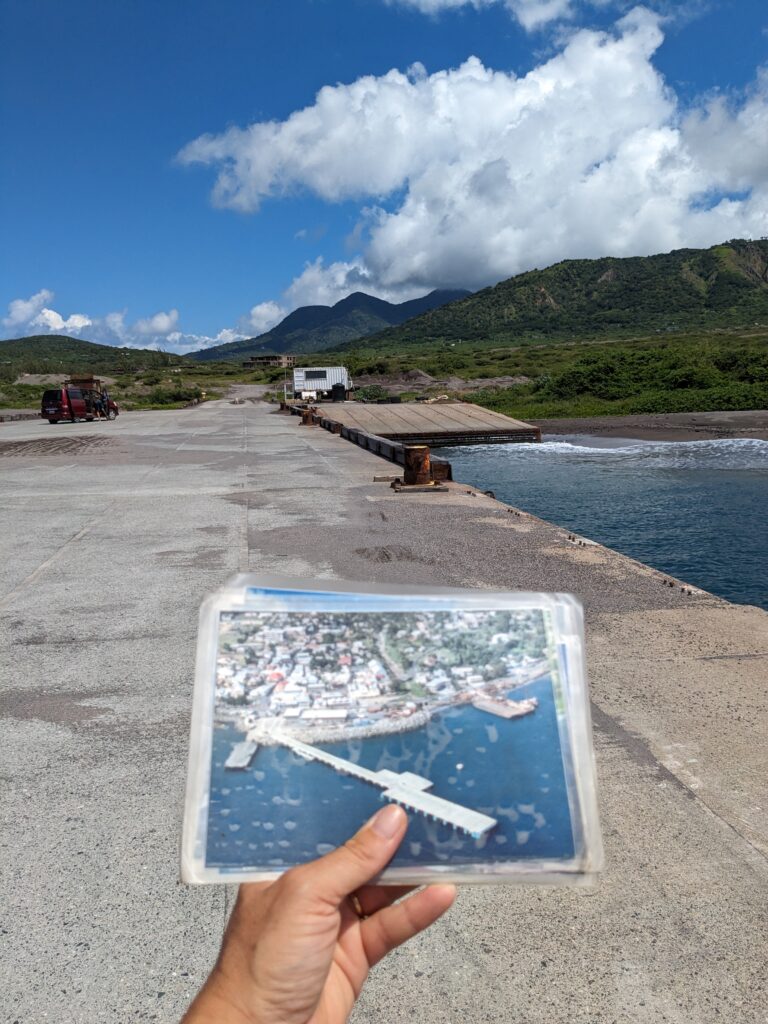
As we entered the highest level exclusion zone Sunny shared stories and photos from before the eruption with us. Listening to the stories and watching the devastation outside the car windows was a surreal experience. Interestingly, this was not one event that caused all the damage, it was a series of eruptions over a number of years. The volcano was being monitored so the people were given evacuation notices. They had 5 days to leave, and the first eruption took place a few weeks later. Over the years the volcano continued to erupt sporadically and eventually ended up burying most of the capital city, layer by layer. 

The square my thumb is pointing at in the photo is the square now on the shore to the right side of the dock. Hundreds of feet of water was filled in and the city was buried.

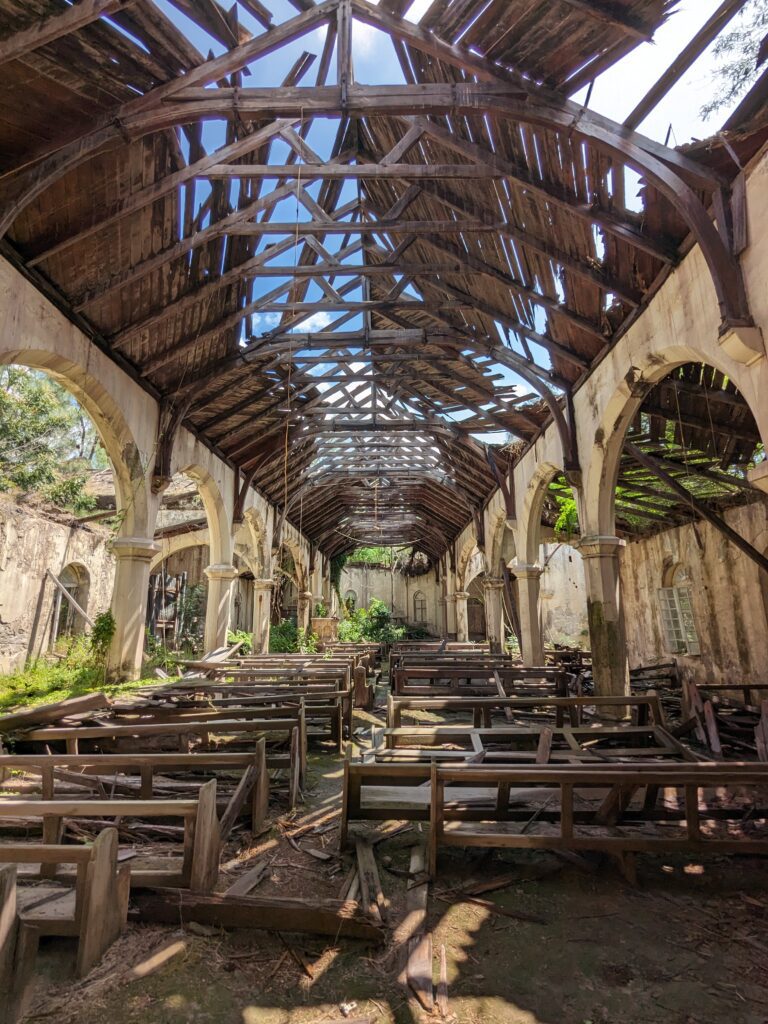
During our time in the exclusion zone we walked around the capital, looking inside some buildings, stood on the old city dock, and walked around an old hotel. The most emotional stop for us was at an old church, that we were able to peek in, but not enter due to safety concerns. Much debris hasn’t hit it, but the acidic rain from the volcanic gasses has eroded the entire roof and demolished the windows. It exists now in this surreal space between being inside and outside at the same time. The pews and altar are still intact and it is easy to imagine the weddings, funerals and baptisms that took place there for so many years.

It was oddly emotional to visit this site. Nature always finds a way.

After we left the exclusion zone, Sunny brought us to the volcano observation center and then to another part of the island where we could see a debris field that created a huge new portion of land over a few days as it ran into the ocean. This area is also where the majority of the 19 people who died during the eruptions lived. The scenery is stunning;  it’s not hard to tell why it was a hot spot for celebrity travelers. 

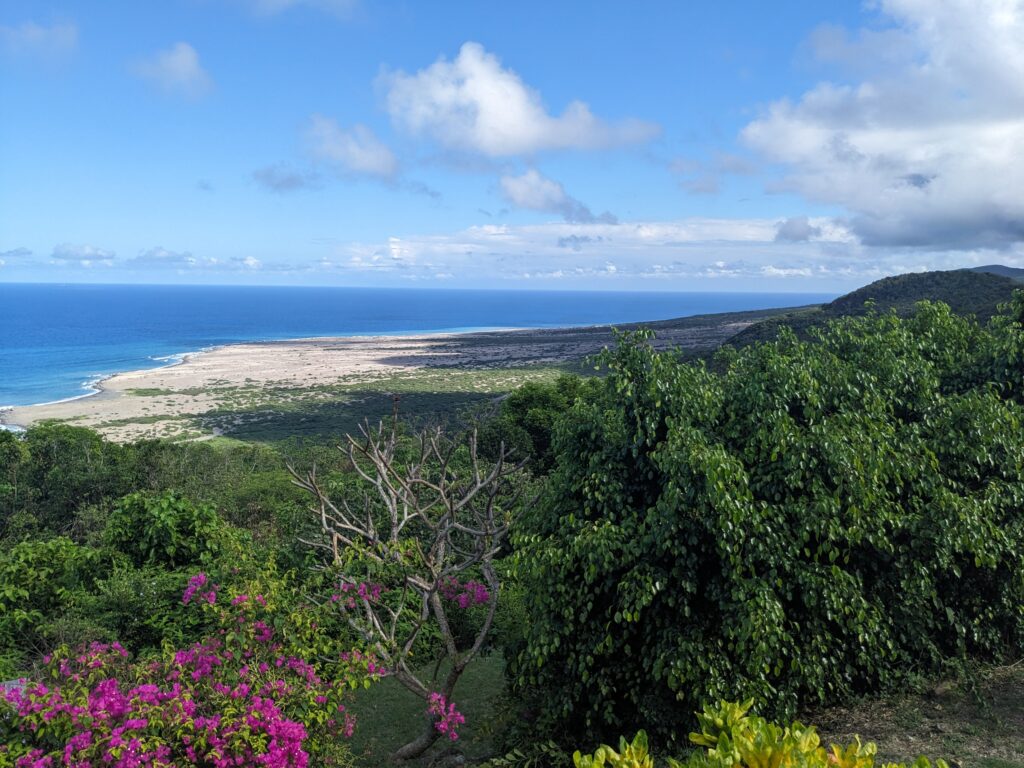
All of the flat land in the distance is new land created over a few days by the volcano.

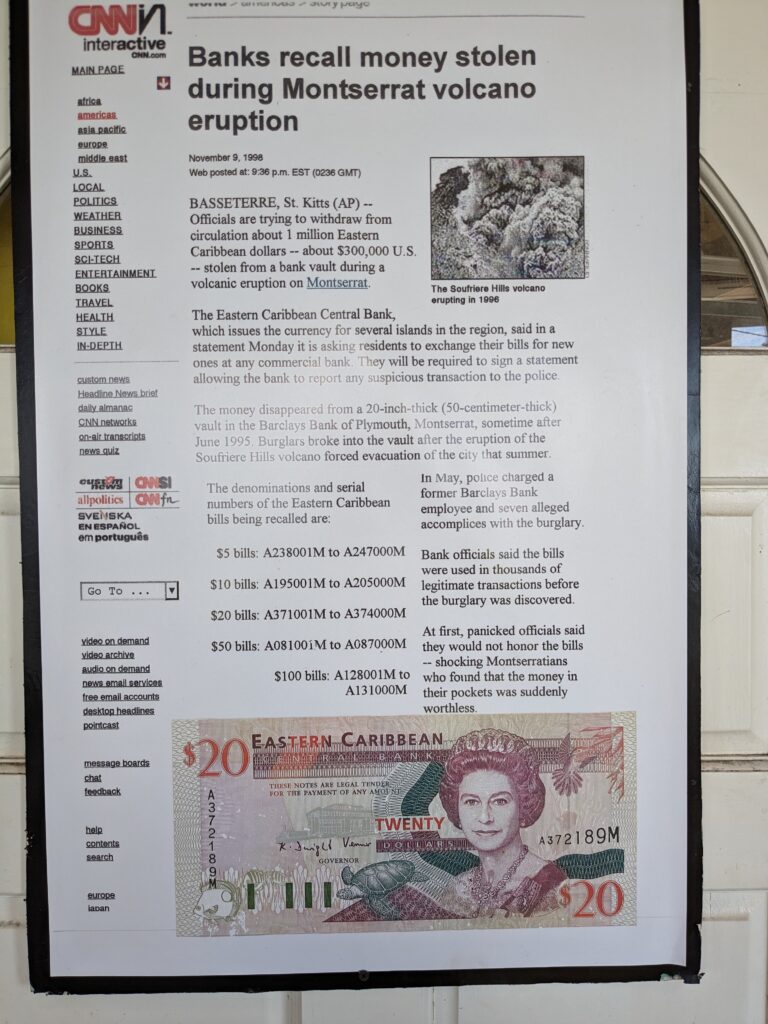
While visiting Sunny’s family’s de facto museum we learned that in between the first evacuation notice, and a few years later when it was discovered, there was a bank robbery. A group of people broke into the deserted bank in the capital and stole all the money that was left behind in the safe. Eventually authorities figured it out, but by that time the money had circulated thousands of times around the island. Eventually the bank had to take the cash out of circulation by exchanging it with all the people who had it but were not involved with the robbery. The guilty parties were arrested; one of them had worked in the bank. 

A modern day bank heist adds to the drama of the destruction of the capital.

During the evacuations people lost their jobs, businesses and homes which they were still paying mortgages on without knowing if they could ever return. It became exceedingly difficult to stay on the island, so approximately two third of the population left in the years after the first eruption. The people who have stayed are resilient, hopeful and committed to the place. They are building up their tourism infrastructure with ferries from Antigua and plans for a cruise ship terminal. So make sure to visit if you get the chance, you will enjoy the beauty, and come away from it with a better appreciation of how vulnerable we are to the power of nature. 

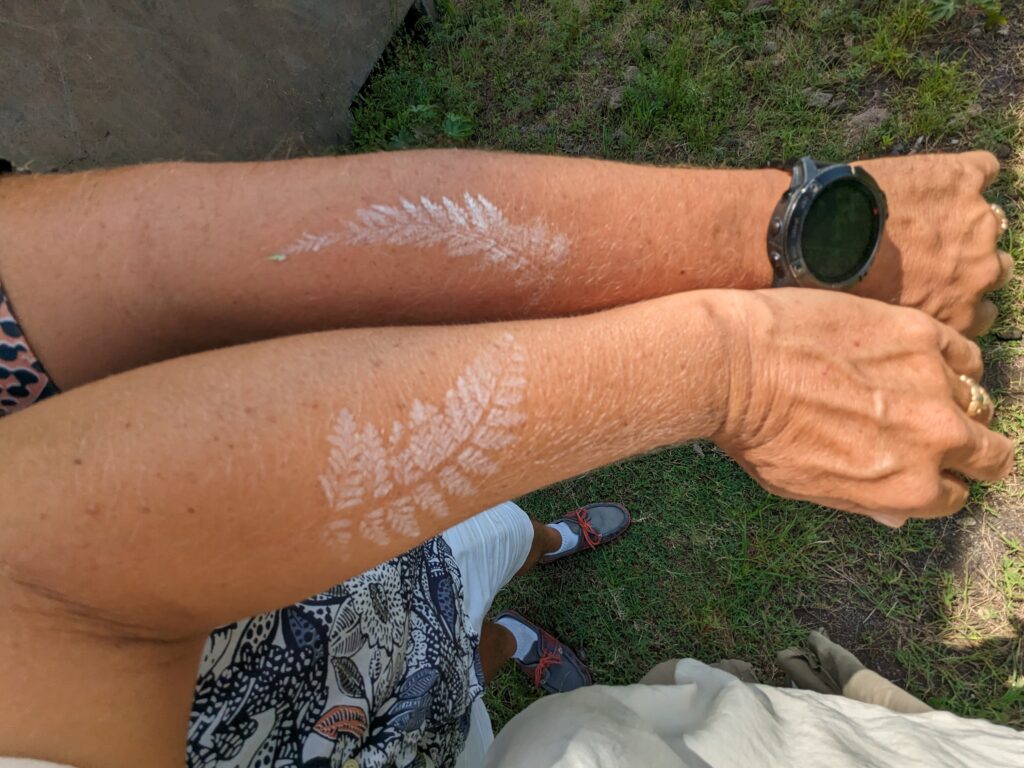
Our guide gave us Montserrat tattoos by slapping a fern onto our arms!

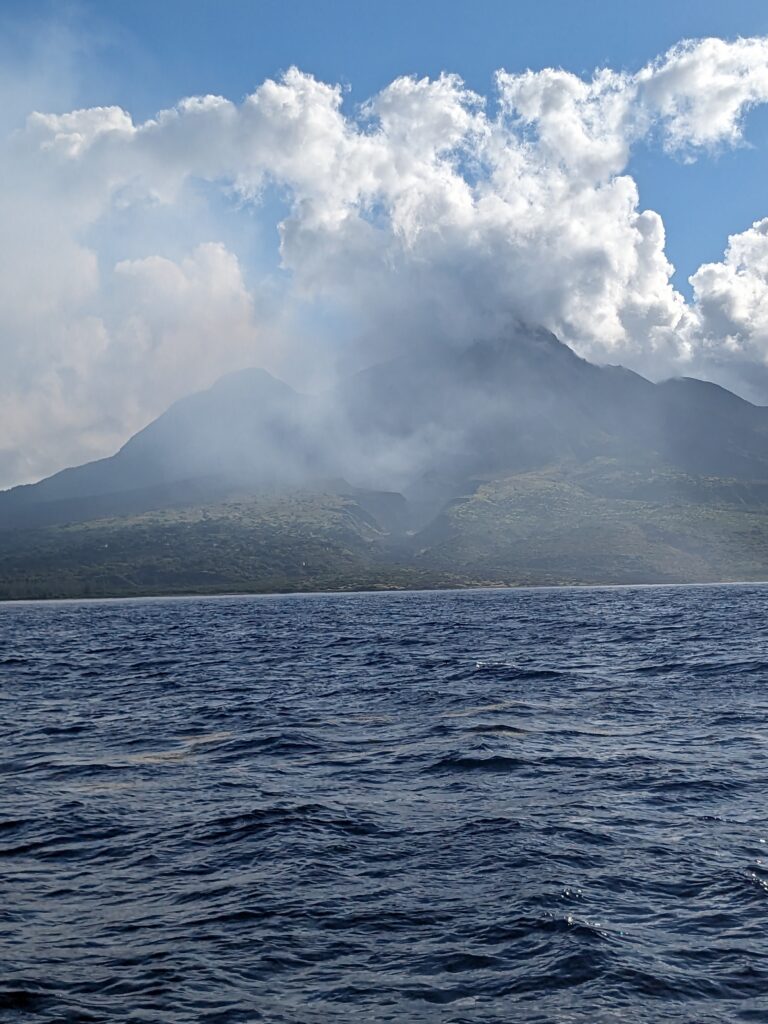
We had to leave Montserrat after our second night there because the wind was forecast to shift and the anchorage would be unprotected. So we got permission to travel down the west coast to avoid the heavier seas on the east coast, as we continued on to Guadeloupe. As we sailed past the volcano we could smell sulphur and see great clouds of gas and vapor. It felt like the perfect way to sum up our short stay in Montserrat, looking at the beautiful scenery, but with the backdrop of a deadly volcano always standing by ready for it’s next actions. This experience has helped us connect more deeply with the Caribbean and the people who call it home. It’s not all sun and fun after all.

Sailing by made it clear that this is still an active volcano! The sulphur made our eyes sting.


St Kitts and Nevis

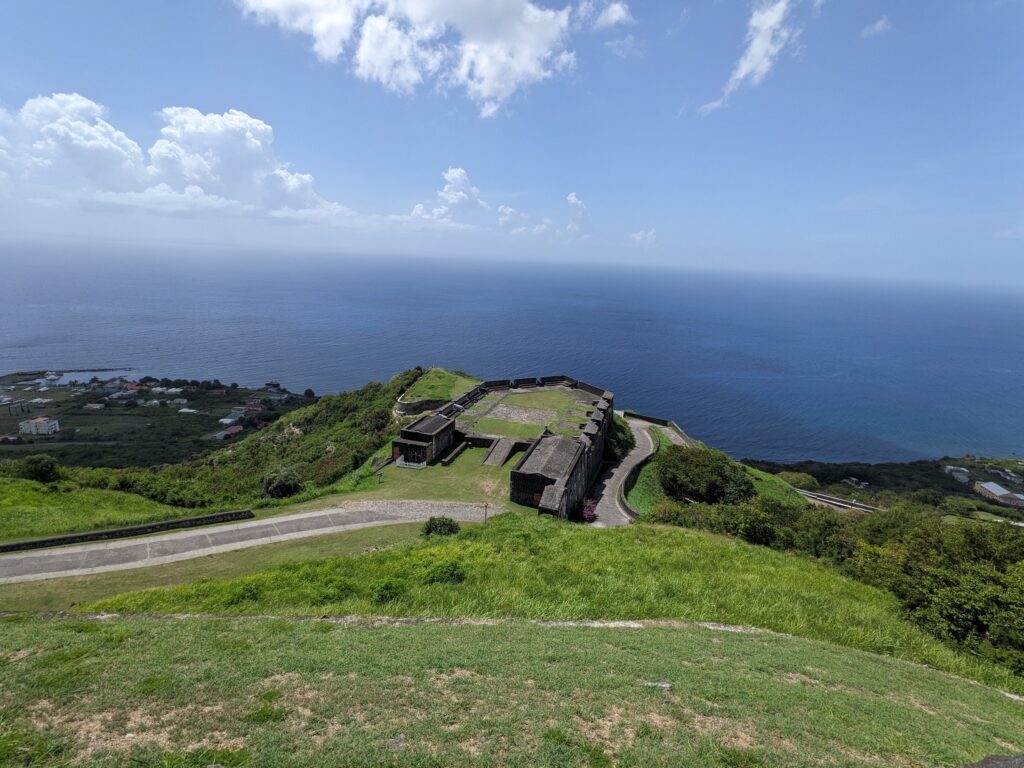
The St. Kitts fort, overlooking the coast we sailed down to Basseterre.

After the rolly nights in Gustavia, St. Barths we were ready to move on, so we set sail for St. Kitts on February 24th. The weather models were all showing light winds in the 8 knot range, but we had great wind of 18 to 20 knots most of the way. Finally the wind was on our beam instead of our nose! The sea state was just a little lumpy too, so it was a perfect day! 

Finally on a beam reach!!

We dropped anchor in Basseterre by mid-afternoon, and Douglas went to shore to get us checked in. It seemed pretty calm, but as the night fell, the rolling started again. We had a pretty terrible night sleep being woken up by creaking noises. Every time you stop one noise, another one replaces it.  So the next morning we reserved a slip at the marina. 

It may look pretty but the rolling was not cool.

The marina was set up with a very short dock and two poles out further.  We had to back in and get bow lines around the poles before the stern got to the dock. Our buddy boat, Blue Mist, helped us in and then we helped them in because it was so tricky. We made it without damage and it felt good to be tied up for a change at a flat marina with no worries of anchor drama. From the marina we took a tour of St. Kitts with a local taxi driver, and saw all the major sights including the huge fort, an old church and an old plantation where they still made rum and batik dyed fabrics. 

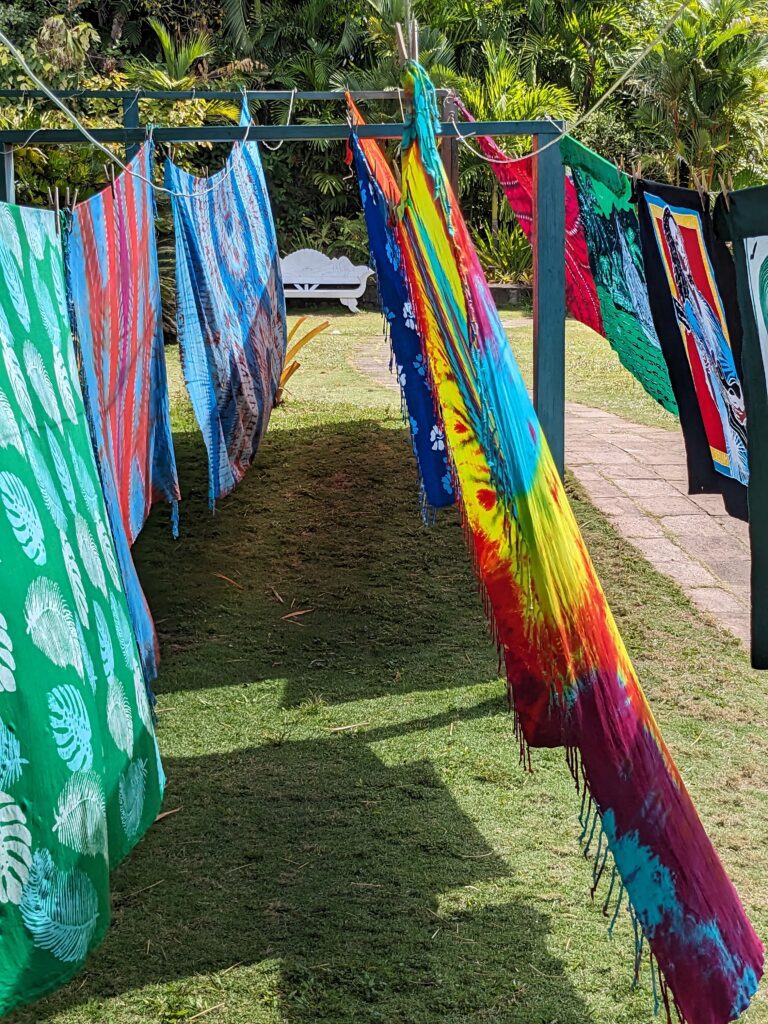
Batik dyed prints drying in the sun.

After a few days at the marina we decided to move to the anchorage at Friars Bay. We left the marina at 7 AM just before the wind picked up. By 7:30 the wind was at 35 knots, which would have made leaving that tricky dock a nightmare. We found a spot with a little more protection and we dropped the hook there. Blue MIst soon came to join us, since the anchorage they were in was getting huge gusts, and Ross with other sailors had to keep an unattended dragging boat off the rocks while waiting for the owners to return for half of the morning. 

You can’t see the wind, but it was unhappy.

Once the wind died down at Friars it became one of our favorite anchorages to date. The beach was beautiful with a coral reef that extended almost the whole way, and it had several good beach bars. We relaxed there for the next 3 days before heading out to Nevis on March 5th, which was only a 2 hour motor sail away. 

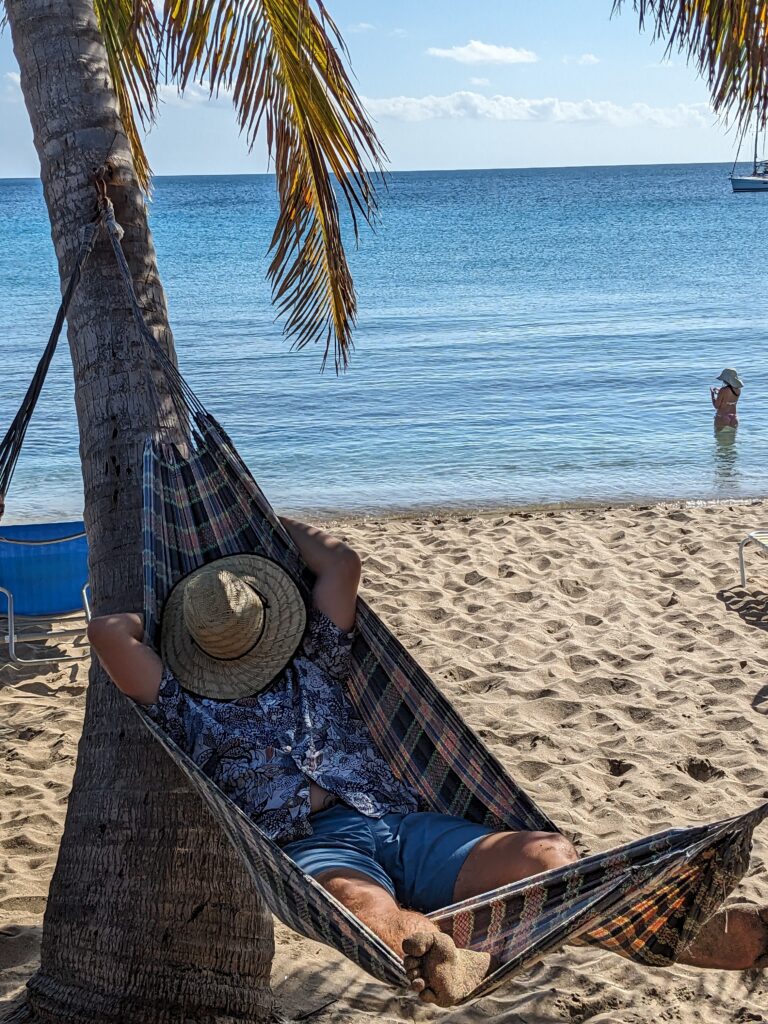
Douglas living the life!

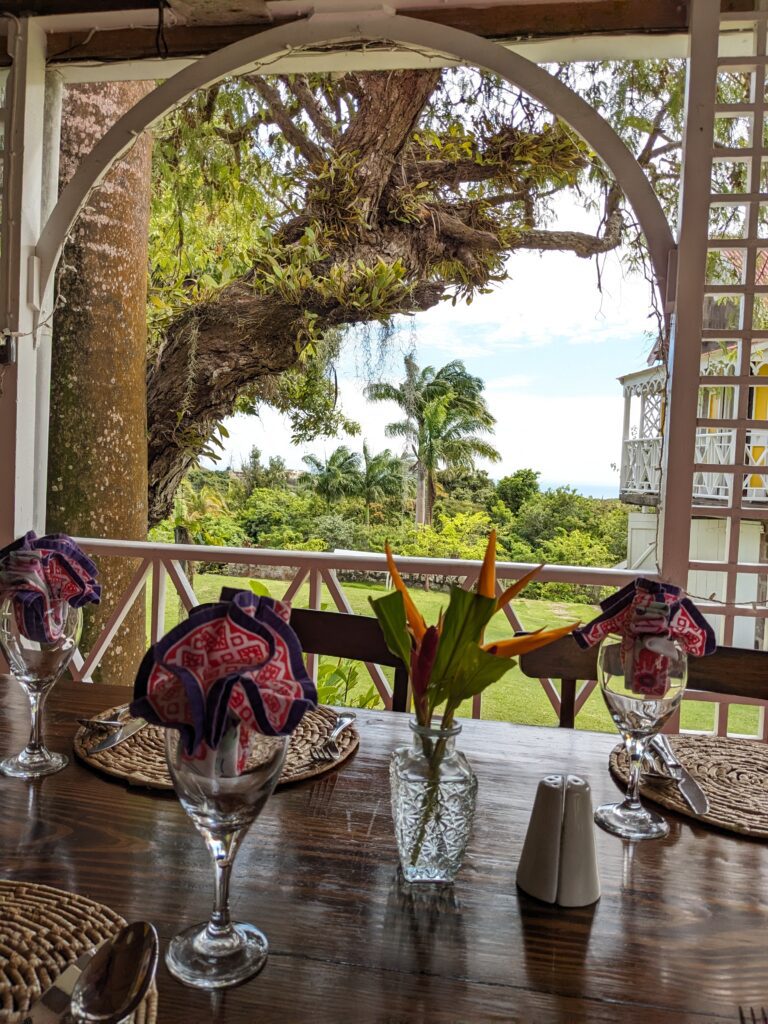
Once in Nevis we went into shore to pay for the mooring and went to an excellent local restaurant for an authentic Nevis style meal of whole fish. It was like being in someone’s home. Very welcoming and very low key. A real treat! The next day we took a tour of Nevis and ended at an amazing resort/restaurant called the Hermitage. It was so peaceful and beautiful! We could have stayed there for a week, but dragged ourselves back to the boat after a few hours. 

The Hermitage in Nevis gets all the details spot on.

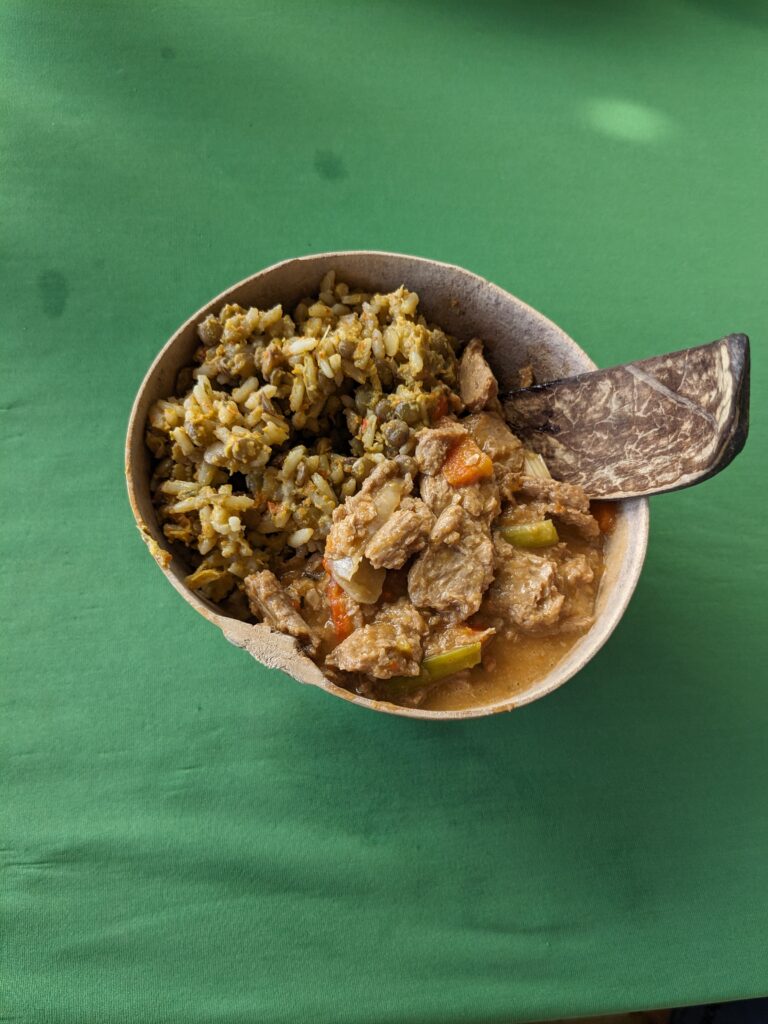
In Nevis we did a lot of provisioning in the supermarket and also the excellent farmers market for the next leg of our journey. We also went to an authentic Rastafarian Ital beach restaurant and had excellent vegan curry served in calabash bowls with coconut shell forks. 

Our first authentic Ital dish – Very tasty!

Sadly, Nevis is where we had to say goodbye once again to our good friends on Blue Mist as they continued on to Antigua and we went to Montserrat. Like the last time the band split up, it was a see you later, not a goodbye!

A sad, “See ya later” to these lovely people – Ross and Louise of SV Blue Mist.